

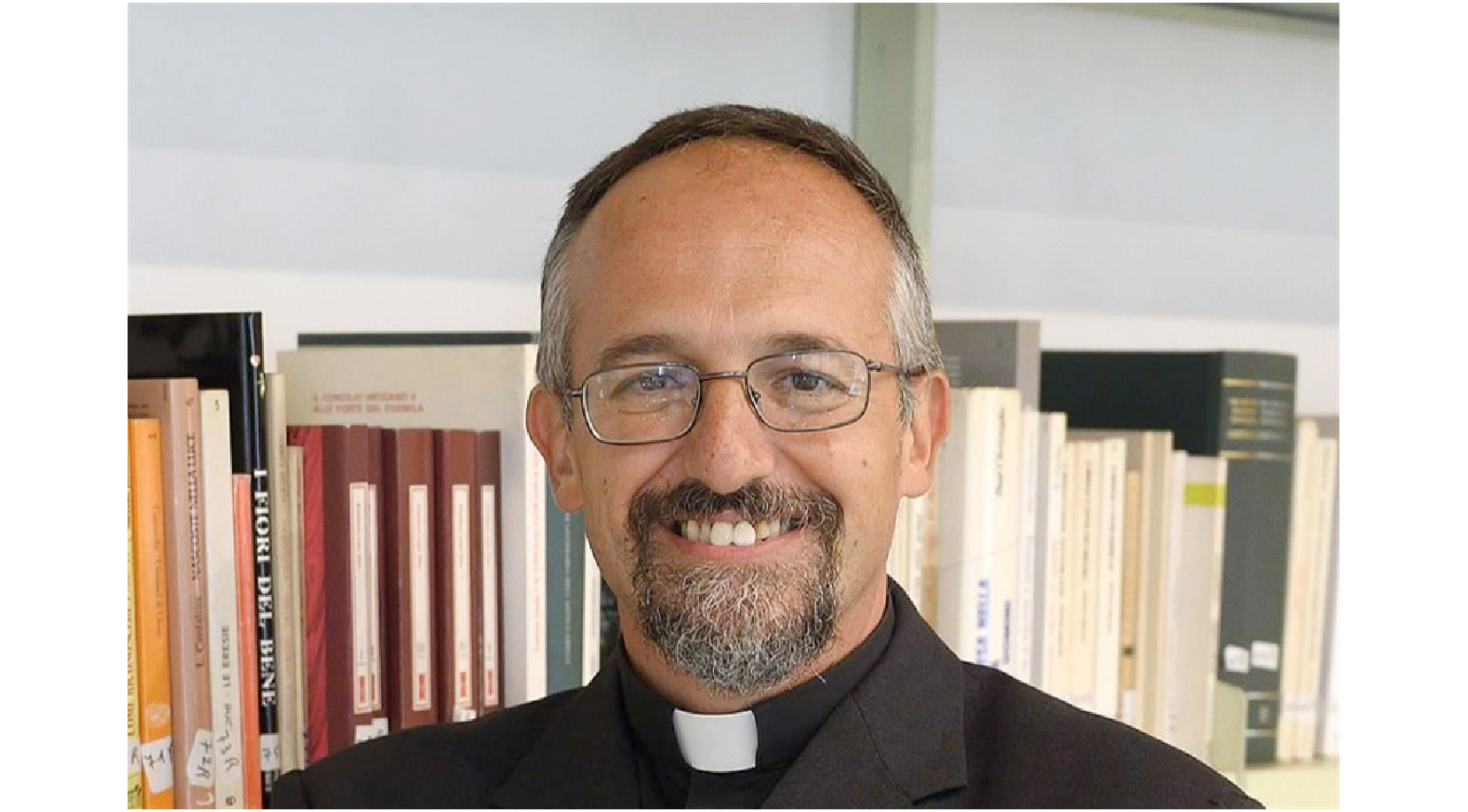
(ZENIT News / Turin, 10.07.2025) – After being discovered in 2002, Asteroid 114772 (2002NM5) has been named Luca Peyron. Who is Luca Peyron? Why was this asteroid named after him?
The UCCR portal, a Website that expresses the thoughts of young Catholics on various topics, with the aim of delving deeper into the reasons for God’s existence and the foundations of the Christian faith, conducted an interview with this priest on June 20, to whom the Astronomical Union gave his name to the asteroid for having «been able to connect astronomy with collective science, using the deep sky not only for scientific purposes, but also for cultural and educational growth» with his publications.
Luca Peyron is a cheerful Italian priest, writer, and founder of the Digital Apostolic Service of the Archdiocese of Turin.
In the interview with UCCR, he explained a relevant fact about his work in astronomy: «Today, the deep sky, nebulae, galaxies, and meteorites are part of the spiritual tools with which I try to proclaim the Gospel and weave a dialogue between different knowledges. A private passion that, in fact, soon became a spiritual tool: I understand that it is a vocational deformation.»
On the relationship between his scientific work and his pastoral care of young university students, he emphasizes the usefulness of the dialogue between science and faith: «The years spent in the halls of the Polytechnic and the University of Turin have led me to convince myself that dialogue is essential.»
He clarifies the role of the connection between faith and life: «I believe that one of the great issues of our time is to show the pertinence of faith with life, and this happens today through a life deeply marked by a scientific and technical culture (. . . ). Giving an account of faith today and confirming to those who live the faith is not so far from the scientific proofs of the existence or non-existence of God. It goes through the path of the Three Wise Men, who make science a path that leads to the questions with meaning, to meet the One who gives meaning to each question.»
I see the closeness between faith and science as more than just a coincidence: «Rereading the pages of the Bible with eyes turned to the heavens is a source of ever-new discoveries, extraordinary visions and spiritual suggestions. Starting with the two simplest: Our Father who is in Heaven and the God in whom I believe, Father Creator of the heavens. Is it a complement of place or the revelation of a connection between the fatherhood of God and the beauty that colours the night?»
In response to the insistence on the scientific mind and God, he suggests a profound reflection: «The authentic believer is a person who never stops asking questions and does not settle for clichés. He needs a concrete and real encounter, an existential intelligence (. . . ). Heaven, whatever the reason through which it is seen — science, poetry or an Internet blackout — is undoubtedly one of the best launching points for an adventure of meaning and faith. That is why rediscovering it and giving it back to people turns off some unnecessary lights.»
To those who think there is no trace of higher help to save us from our vices, Father Luca responded: «I do not feel privileged at the expense of others. I feel invested with a beauty that makes me happy, makes me feel loved and wanted. And I hope it is not only mine or only for me. He is right (Karl Sagan) when he says that we are irrelevant, the worms of Jacob (. . . ). I am grateful that the Sun invades the Earth and warms it. I am grateful that Christ has passed through my human nature and redeemed it. Yes. This help has come. Not from somewhere else, but from always.»

Publicaciones relacionadas:
 Order of Malta welcomes 100 MEPs to Rome to talk about Christianity
 Vietnamese President To Visit Vatican: Historic Signing of An Agreement That Could Inspire China
 In An Address to European Lawyers, Pope Reveals He Is Writing A Second Part To Laudato Si’ (Full Text)
 Miracle at Lourdes: Church gives official recognition to miracle number 71 in the history of the sanctuary
