

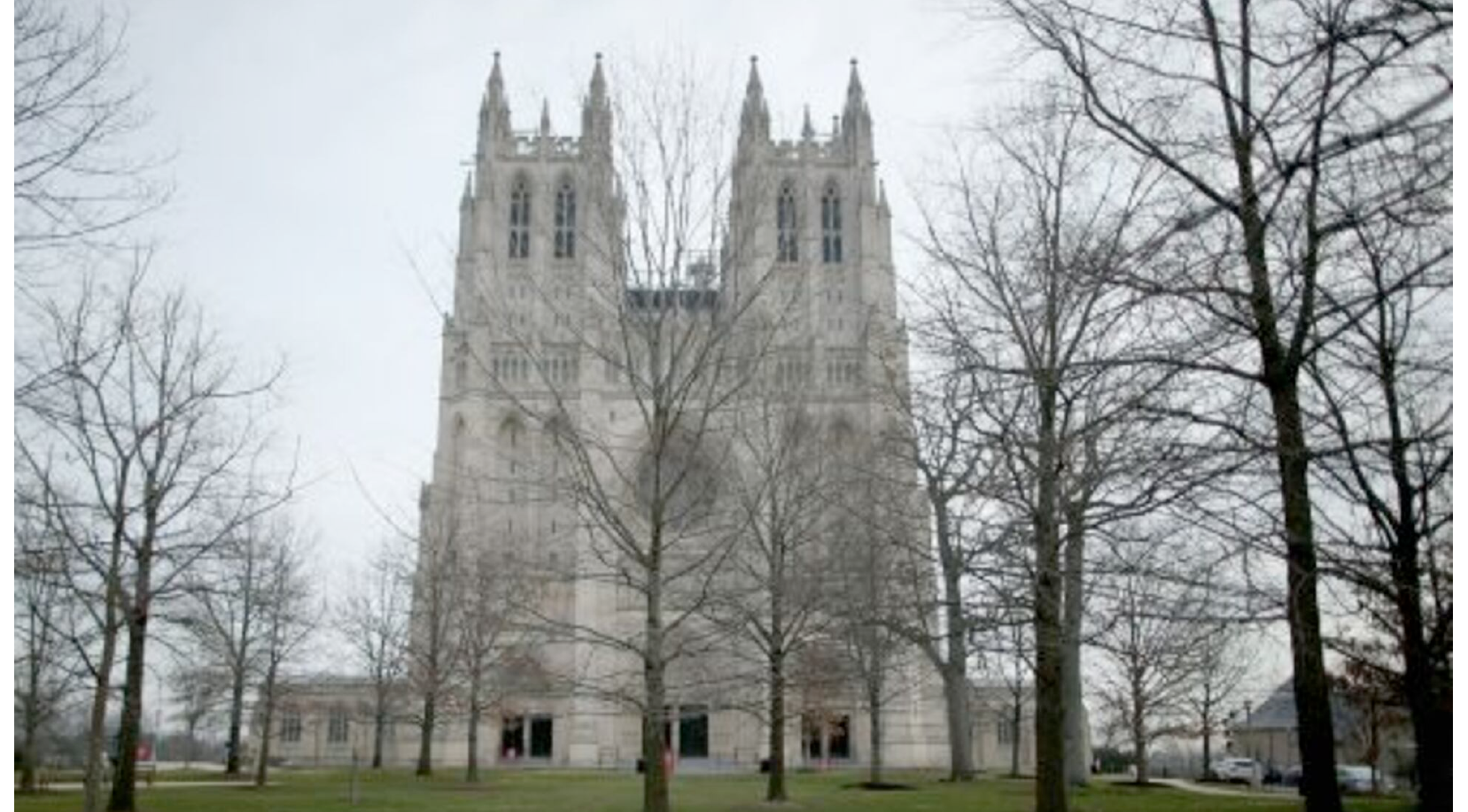
(ZENIT News / Washington, 10.09.2025).- On what should have been a quiet Sunday morning of prayer and ceremony, the steps of St. Matthew’s Cathedral turned into the scene of a chilling discovery. Police arrested 41-year-old Louis Geri of Vineland, New Jersey, after finding more than 200 improvised explosive devices in his possession—an arsenal authorities believe was meant for the Red Mass, the liturgy invoking divine guidance on judges, lawyers, and public officials.
The arrest came just hours before the ceremony was to begin, marking the opening of the new Supreme Court term. Security teams clearing the area noticed a tent pitched on the cathedral steps. Inside was Geri, who refused to leave and warned officers that he was armed with explosives. What began as a routine security sweep rapidly escalated into a bomb threat in the heart of the capital.
When confronted, Geri handed police a handwritten “negotiation” document, threatening to detonate his devices unless his demands were met. Investigators later found that the notes revealed deep-seated hostility toward the Catholic Church, the Jewish community, U.S. immigration authorities, and the Supreme Court itself. In his writings, Geri raged against what he described as “institutions of hypocrisy and oppression.”
According to court documents, some of the confiscated vials contained nitromethane, a highly volatile compound used in the Oklahoma City bombing of 1995. The collection also included modified bottle rockets and homemade grenades fitted with elastic-triggered detonators. Federal officials later confirmed that the devices were “fully functional.”
The Red Mass, celebrated annually since 1953 in Washington but with roots dating back to medieval Europe, traditionally gathers Supreme Court justices, members of the legal community, and government officials to pray for wisdom and moral clarity. This year, no justices attended. The discovery of Geri’s explosives just before the event likely prevented a national tragedy.
Authorities say Geri had already been banned from the cathedral due to previous incidents. His ideology, described by investigators as “militant left-wing with extremist anti-religious overtones,” reflects growing anxiety among federal security agencies about politically motivated violence targeting faith institutions. The FBI and the Bureau of Alcohol, Tobacco, Firearms, and Explosives are jointly overseeing the investigation.
The incident comes at a tense moment in Washington. Just days earlier, a Maryland man who plotted to assassinate Justice Brett Kavanaugh was sentenced to eight years in prison—a ruling many conservatives criticized as too lenient. The two cases, though unrelated, have renewed debate about the rising hostility directed at members of the judiciary and the ideological polarization feeding it.
Commentators such as Federalist editor Mollie Hemingway have drawn a direct line between the sentencing of Kavanaugh’s would-be killer and the thwarted cathedral attack. “When political violence is treated as a symptom instead of a crime, it invites repetition,” she wrote.
In recent years, the Red Mass has drawn both reverence and controversy, with critics questioning the intersection of faith and law. Yet for believers, it remains a symbolic act of unity—an appeal for justice to be grounded in moral conscience.
For now, Louis Geri sits in federal custody facing multiple charges, including possession of weapons of mass destruction and intent to commit a hate crime. His motives, investigators say, were “part political, part personal, and deeply ideological.”
The cathedral’s steps have since been cleared and reopened. But for many who were meant to attend the Red Mass that morning, the image of police robots retrieving homemade bombs from one of Washington’s most sacred spaces lingers as a stark reminder: in an age of rage, even prayer requires protection.
Thank you for reading our content. If you would like to receive ZENIT’s daily e-mail news, you can subscribe for free through this link.

Publicaciones relacionadas:
 Turkey: Catholic church attacked during mass. There is one dead
 Burkina Faso: Islamist attack on Catholic church leaves 15 dead
 Haiti’s Way of the Cross continues: Two religious sisters murdered
 Bishop of Santa Fe reinstated to the presbytery a man who left the priesthood and was married to another man
