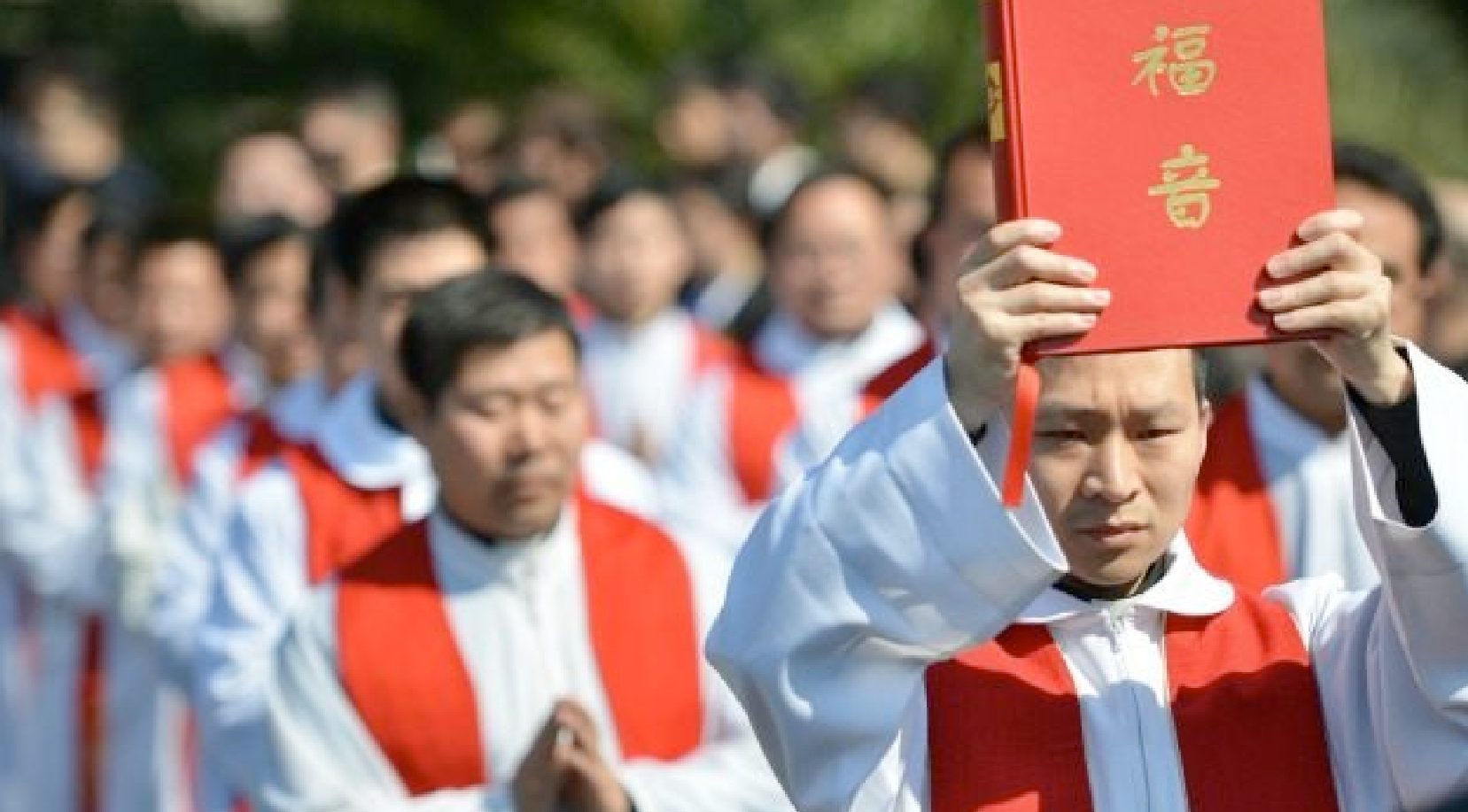
(ZENIT News / Beijing, 02.10.2026).- The official body of Catholic bishops recognized by the Chinese state has publicly aligned itself with new government restrictions that bar unregistered clergy from pastoral ministry and prohibit religious activities in non-approved venues. The move underscores, once again, the fragile and contested space in which Catholic life unfolds in the People’s Republic of China.
In a statement published on 4 February 2026 on its official website, the Conference of Catholic Bishops of the Catholic Church in China (BCCCC) expressed explicit support for the government’s Regulations on Religious Affairs. These regulations, the bishops said, concern “vital interests” of believers and therefore must conform to what they described as the “national and public interests” of the country.
The declaration frames religious practice primarily as a legally regulated civic activity. According to the text, religious activities are a concrete expression of citizens’ right to freedom of religious belief, but one that must be exercised “in accordance with the law.” The bishops insist that religious groups are obliged to comply with all relevant laws and administrative norms when conducting worship or pastoral work.
At the center of the statement is Article 40 of the Regulations on Religious Affairs, a cornerstone of the Chinese Communist Party’s (CCP) policy on religion. This article establishes that collective religious activities should normally take place in officially registered religious sites and be presided over by authorized religious personnel who meet state-defined qualifications. The activities, it adds, must conform not only to religious doctrines but also to government regulations.
The bishops’ conference elaborated on this point, stressing that collective worship must be held exclusively in registered locations and led by clergy who are both certified and entered into the state registry. Only those individuals, the statement emphasizes, are permitted to carry out pastoral activities. “No other person may preside over religious activities,” the document states, leaving little ambiguity about the exclusion of unregistered clergy.
The declaration also addresses the internal governance of religious sites. Each approved place of worship, the bishops note, must establish management bodies through what they describe as democratic consultation and must operate under robust administrative systems. These structures, according to the statement, are necessary not only for internal order but also for public security, fire prevention and epidemic control. In this framing, religious management becomes intertwined with broader state concerns about safety and social stability.
While the regulations allow for some flexibility, it is tightly circumscribed. Religious groups may hold activities in so-called “temporary locations,” but only with prior authorization from government bodies such as local departments of religious affairs. Even temporary arrangements, therefore, remain firmly under state supervision.
This public endorsement comes against the backdrop of China’s long-standing dual system for Catholicism: an official church structure recognized and controlled by the state, and an underground church that remains loyal to Rome but refuses registration. Although China’s constitution formally guarantees freedom of religion, international human rights organizations consistently rank the country among the world’s most restrictive environments for religious practice.
Since Xi Jinping assumed the presidency in 2013, the CCP has intensified its oversight of all religious communities. A key element of this approach is the policy known as the “sinicization” of religion, which seeks to align religious beliefs, practices and institutions with socialist values and Chinese national identity as defined by the Party. In practice, this has meant stricter laws, increased surveillance and harsh measures against unregistered religious groups.
All religious communities and clergy in China are required to register with state-approved bodies in order to operate legally. Those who refuse often face fines, closures of worship sites, detention or other forms of pressure. The Catholic underground clergy, in particular, have been frequent targets of these measures.
The broader consequences of this system are reflected in international assessments. Open Doors, a US-based Christian advocacy organization, currently ranks China 17th out of 50 countries where Christians face the most severe forms of persecution. While this ranking encompasses multiple Christian denominations, it highlights the persistent tension between constitutional promises and lived realities.
Thank you for reading our content. If you would like to receive ZENIT’s daily e-mail news, you can subscribe for free through this link.