

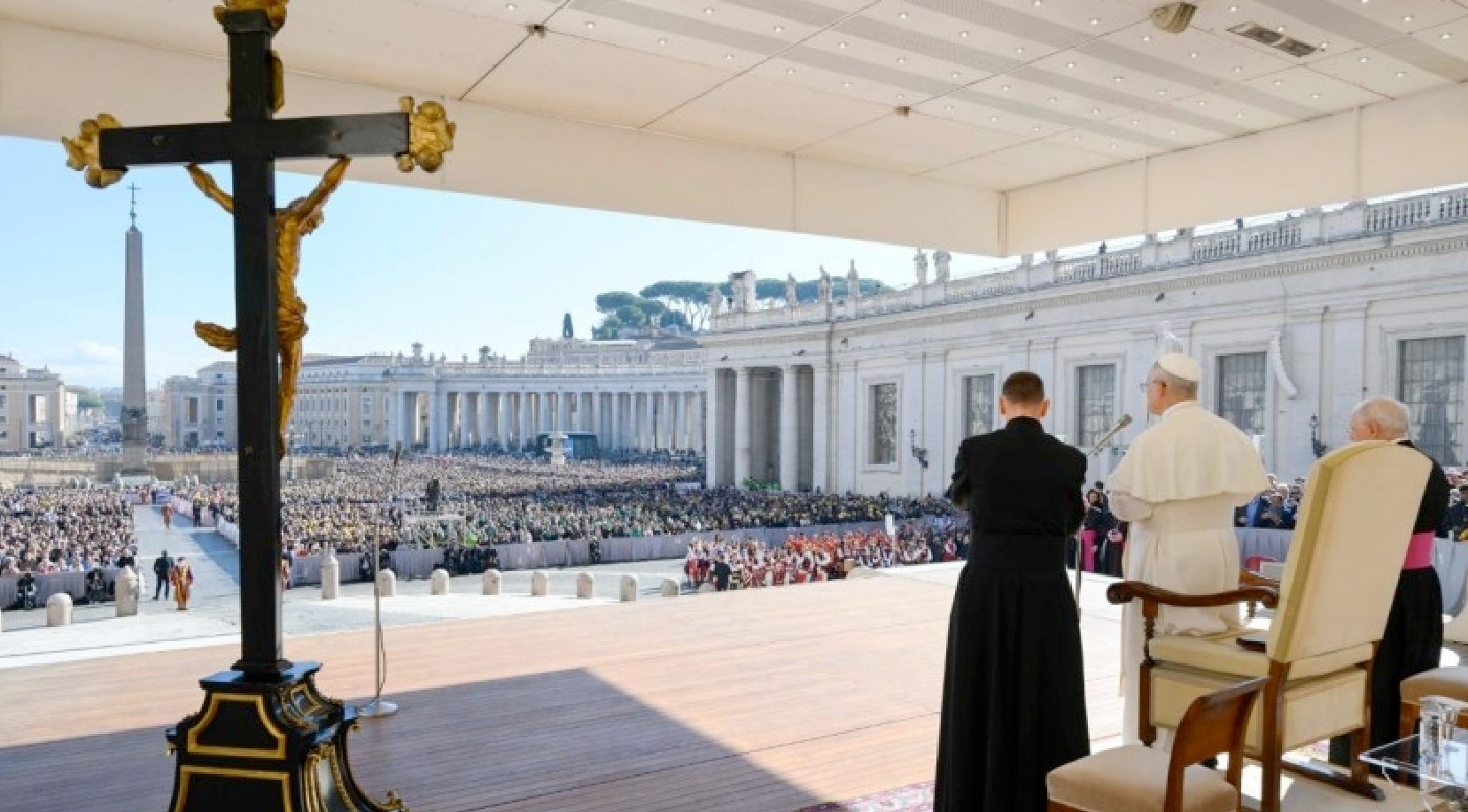
(ZENIT News / Rome, 11.13.2025).- By late October and early November 2025, the Vatican has confirmed that nearly 30 million pilgrims have crossed the threshold of St. Peter’s Basilica during the Jubilee of Hope. Rome has once again become the beating heart of Christian pilgrimage, with streams of faithful filling squares, basilicas, and narrow Roman streets in a shared rhythm of faith and renewal.
And yet, as the Holy Year moves into its final weeks, attention is already shifting beyond it, toward a future that looms immense on the Christian calendar: the year 2033, marking two millennia since the death and resurrection of Jesus Christ — the central mystery of Christianity and a moment destined to redefine the spiritual and cultural landscape of the century.
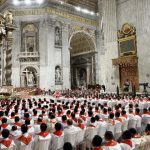
Before that future takes shape, though, the final chapter of the current Jubilee remains rich with significance. November and December bring some of the most symbolic celebrations of the year: the Jubilee of Choirs on November 22, filling the Vatican with sacred song; the Jubilee of the Poor on November 26, embodying the very theme of hope; and, perhaps most strikingly, the Jubilee of Prisoners on December 14, when men and women behind bars will be remembered and prayed for throughout the Church.
Each of these moments builds toward the closing of the Holy Door on January 6, the Solemnity of the Epiphany, when the Basilica of St. Peter and cathedrals around the world will ceremonially end this time of grace. Tradition holds that every pilgrim who has passed through that threshold does so not merely as a visitor to Rome, but as a traveler of the soul — someone who has walked through a door of mercy, into reconciliation.
Yet even as this door begins to close, another is slowly opening in the minds of Church leaders. The next great horizon is already visible: the Holy Year of 2033, the bimillennium of Christ’s Paschal mystery — His death and resurrection — which will mark 2,000 years since the dawn of Christianity itself.
Archbishop Rino Fisichella, Pro-Prefect of the Dicastery for Evangelization and the veteran organizer of three Jubilees — in 2000, 2015, and now 2025 — has been candid about the magnitude of what lies ahead. “We began preparing this Jubilee two years in advance and saw that it was not enough,” he explained recently. “The preparation for 2033 requires at least five years. Governments, parliaments, and institutional bodies must take this into account. A Jubilee cannot be improvised; it must be planned with vision and foresight.”
The remark carries more than logistical weight. The 2033 Jubilee will not only be a spiritual milestone but also a global event — one poised to draw pilgrims, world leaders, and religious communities to Rome in numbers that could far exceed those of the present Holy Year. The Vatican, aware of this, has already begun sketching out the vast network of coordination such a celebration will require: infrastructure, hospitality, security, and above all, a coherent message that speaks to the needs of a fragmented world.
The Jubilee of Hope has served, in many ways, as a testing ground for this next chapter. After the pandemic years and amid widespread social unrest, it has reminded millions that faith still gathers, still heals, still unites. The scenes from Rome over the past months — priests hearing confessions in a dozen languages, pilgrims crossing bridges under the Roman sun, choirs rehearsing in chapels — have shown that even in an age of disconnection, the act of pilgrimage continues to resonate as something profoundly human.
As 2025 draws to an end, the Vatican’s planners are already thinking not only in terms of events, but of eras. The Jubilee of 2033 will not be simply another celebration. It will be, as some in the Curia are already calling it, “the Jubilee of the Resurrection” — a global thanksgiving for 2,000 years of Christian faith and witness, but also an invitation to rediscover the meaning of that faith in a century that often seems to have misplaced it.
Thank you for reading our content. If you would like to receive ZENIT’s daily e-mail news, you can subscribe for free through this link.

Publicaciones relacionadas:
 How Is the Jubilee Going and What Impressions Do Those Who Organized It Have? ZENIT’s Interview with Monsignor Rino Fisichella
 The encounter with the risen Christ that changes existence and illuminates affections, desires, and thoughts: Leo XIV’s homily to young people
 Blood That Unites: Pope Leo XIV to Lead Ecumenical Memorial for Modern Christian Martyrs
 What is the grace that can touch the life of a student? Pope Leo XIV answers pontifical universities
