

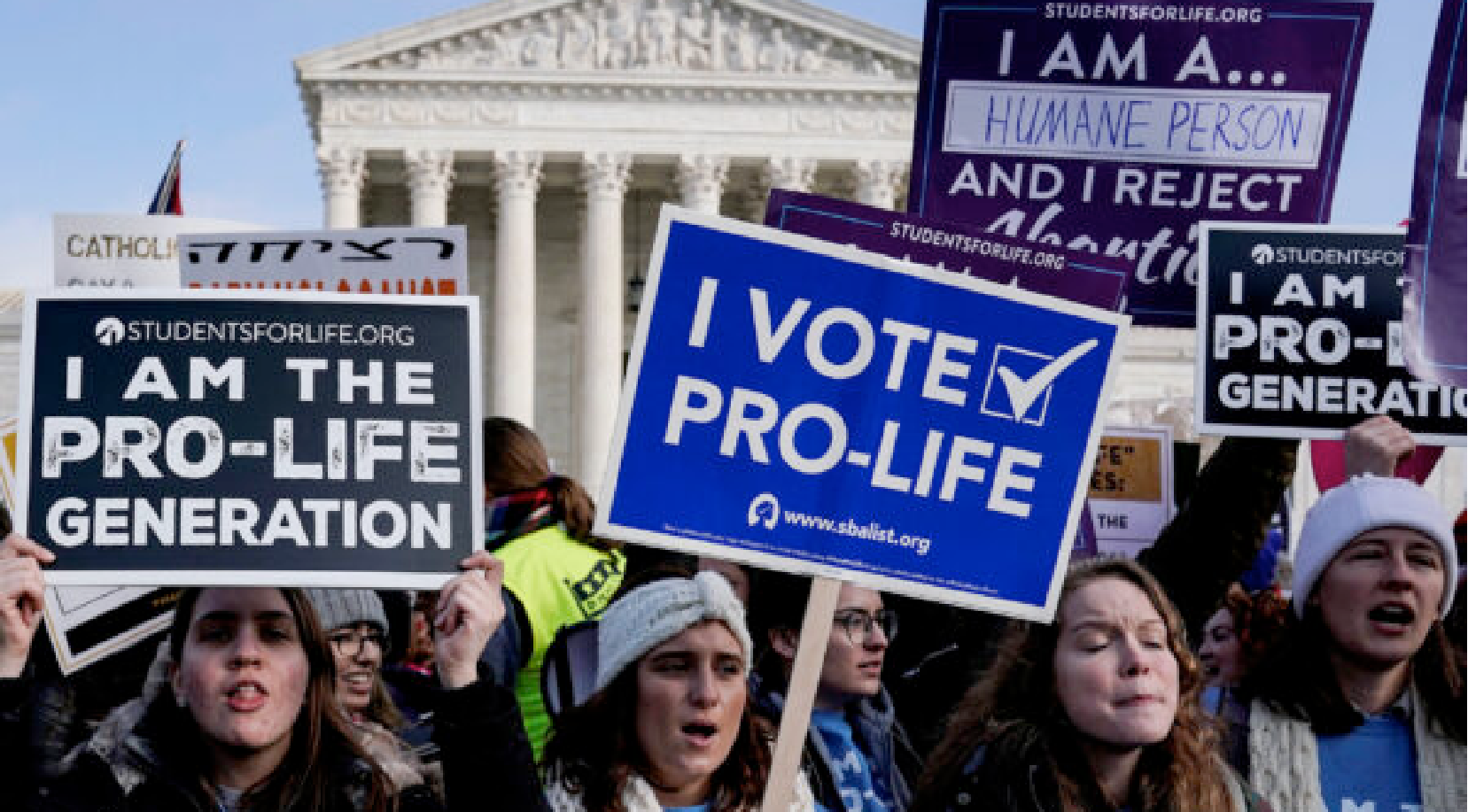
(ZENIT News / Washington, 08.02.2025).- Three years after the seismic Supreme Court decision in «Dobbs v. Jackson Women’s Health Organization», the cultural and moral terrain of the United States continues to evolve—and, for the first time in a while, the pro-life movement has concrete reasons to feel a rising tide of public support.
On July 25, 2025, the Associated Press and the NORC Center for Public Affairs Research released the results of a national survey conducted in mid-July among over 1,400 adults. The numbers speak clearly: support for legal abortion has declined, while those who believe abortion should be illegal in all or most cases have grown by seven percentage points since June 2024. This marks the highest level of pro-life sentiment recorded by AP/NORC since the initial leak of the «Dobbs» decision in May 2022.
The findings challenge prevailing narratives often echoed in mainstream media—that abortion restrictions are deeply unpopular and out of step with public sentiment. Instead, the data suggests a more complex, and now shifting, moral landscape.
When asked about abortion in specific circumstances, such as in cases where a woman does not wish to carry a pregnancy for personal or economic reasons, the percentage of respondents supporting legal abortion declined in each scenario. Particularly striking was a five-point drop in support for abortion when no specific reason was given other than not wanting a child.
These results align with similar data published earlier this summer by Gallup. Their annual Values and Beliefs survey reported a modest but significant increase in the number of Americans identifying as “pro-life,” along with a rising percentage who view abortion as morally wrong.
Observers of American public life may recall how, in the months following «Dobbs», pro-life activists were on the defensive. A backlash surged in many states, with ballot measures favoring abortion rights and pundits forecasting long-term damage to pro-life causes. But the latest polling suggests that this backlash may be receding. As Ramesh Ponnuru, a longtime pro-life commentator, predicted, emotional reactions to «Dobbs» may have peaked early and are now giving way to deeper moral reflection.
This shift also appears to be mirrored in political outcomes. The 2024 election cycle saw a number of pro-life candidates win key races, and pro-life legislation gained traction, including the passage of a federal budget that removed funding for Planned Parenthood. While no single poll or election can serve as a final verdict, the trend lines are encouraging for those who see the defense of unborn life not as a political slogan, but as a moral commitment rooted in human dignity.
None of this means the national debate is ending. Far from it. The country remains divided, and opinions vary sharply by region, age, and religious affiliation. But these new numbers suggest that the narrative is no longer one of inevitable erosion for pro-life values. Instead, a new chapter may be unfolding—one in which quieter cultural shifts begin to support a deeper ethic of life.
Thank you for reading our content. If you would like to receive ZENIT’s daily e-mail news, you can subscribe for free through this link.

Publicaciones relacionadas:
 Mob Surrounds and Attacks Pro-Life Students of Manchester University: Threatened to Violate the Pro-Life Women
 USA: 12 Christian universities break with abortionist Planned Parenthood
 Analysis shows that almost a third of Generation Z does not exist due to abortion
 Shifting Tides in the UK: A Generation Turns Toward Life Amid Record Abortion Number
