

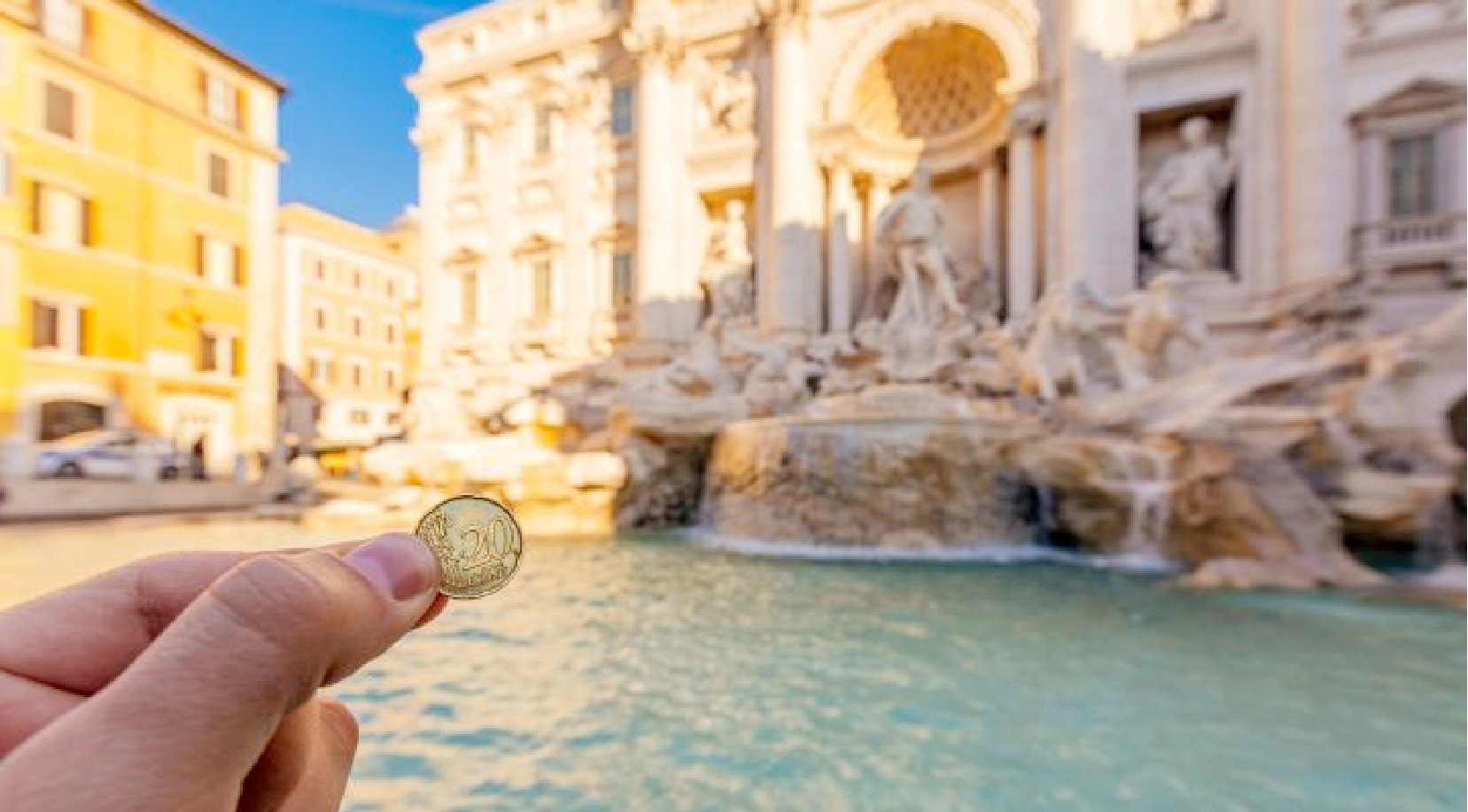
(ZENIT News / Rome, 01.12.2026).- For generations of visitors, the Trevi Fountain asked for little more than a backward toss of a coin and a wish to return to Rome. Beginning February 1, however, proximity to the Baroque masterpiece will come with an actual price tag. The city of Rome will charge non-resident visitors a fee of 2 euros (about 2.35 dollars) to access the area closest to the fountain during peak hours, marking a significant shift in how one of the world’s most iconic public monuments is managed.
The new fee applies only to those who wish to approach the fountain at ground level, directly in front of its cascading waters. The panoramic view from the upper piazza remains free of charge, preserving at least one way to admire the monument without opening a wallet. Access after nightfall will also continue to be open and free.
City officials present the measure not as a revenue grab but as a tool for crowd control and preservation. According to Rome’s estimates, the modest charge could generate around 6.5 million euros (approximately 7.6 million dollars) per year, funds that would be directed toward maintenance and the broader conservation of the city’s vast cultural heritage.
The decision follows more than a year of debate and experimentation. During a trial period, authorities introduced a system of queues and controlled entry and exit routes to limit the number of people allowed directly in front of the fountain at any given time. The results were deemed sufficiently positive to make the system permanent. From 9:00 a.m. to 9:00 p.m., access will now be regulated, with tickets available online in advance, at nearby tourist points, or while waiting in line.
The scale of the challenge is immense. Since the beginning of the year 2025, roughly 9 million people have queued to reach the fountain’s edge, with peak days seeing as many as 70,000 visitors, according to Rome’s mayor, Roberto Gualtieri. Numbers like these help explain why Trevi has become a testing ground for new forms of tourist management in a city that struggles daily with overtourism.
Rome is not acting in isolation. The Trevi fee mirrors the ticketing system introduced at the Pantheon and echoes the more complex day-tripper tax imposed by Venice last year in an effort to make the lagoon city more livable for residents. In all these cases, locals are exempt. In Rome, the Trevi charge accompanies a broader cultural policy that includes a new 5-euro fee for entry to certain museums, balanced by plans to expand free museum access for registered residents.
“Culture is a fundamental right of citizens,” Gualtieri said when announcing the measures, stressing that Roman residents should not be priced out of their own heritage. The 2-euro fee at Trevi, he argued, is low enough not to deter visitors, while still allowing for a more orderly and dignified experience.
The fountain itself has long been entwined with papal history. Pope Urban VIII first commissioned the project in 1640, though work stalled for decades. It was Pope Clement XII who revived the initiative in 1730, leading to the construction of the fountain largely according to the designs of Roman architect Nicola Salvi. The result is a monumental theatrical façade, with towering travertine rocks, cascading water, and the commanding central figure—often described as the titan Oceanus—set within a grand architectural frame.
Trevi’s global fame owes as much to cinema as to architecture. The shallow turquoise pool became immortal through Federico Fellini’s La Dolce Vita, when Marcello Mastroianni and Anita Ekberg waded into the fountain in a scene that defined postwar Italian cinema. Bathing is now strictly forbidden, but the image continues to draw crowds in search of the perfect photograph.
Behind the spectacle lies a serious hydraulic system, still fed by an ancient aqueduct, and a preservation burden that grows heavier with every passing year. Coins alone—though they are collected and donated to charity—no longer cover the costs of managing millions of daily visitors.
The legend, at least, remains unchanged. Toss a coin over your shoulder, and Rome will call you back. From February onward, answering that call—at least at arm’s length from the Trevi Fountain—will cost a little more than tradition ever required.
Thank you for reading our content. If you would like to receive ZENIT’s daily e-mail news, you can subscribe for free through this link.

Publicaciones relacionadas:
 On Sunday, Pope attends Italian Senate for death of former Italian president
 What Concessions Is Italy Making to the Vatican? Developments in View of the 2025 Jubile
 Explanatory Note Regarding the Faculties to Preach and Hear Confessions in the Territory of the Diocese of Rome During the Jubilee 2025
 “Julia”, Rome Capital’s new virtual assistant for Jubilee pilgrims
