

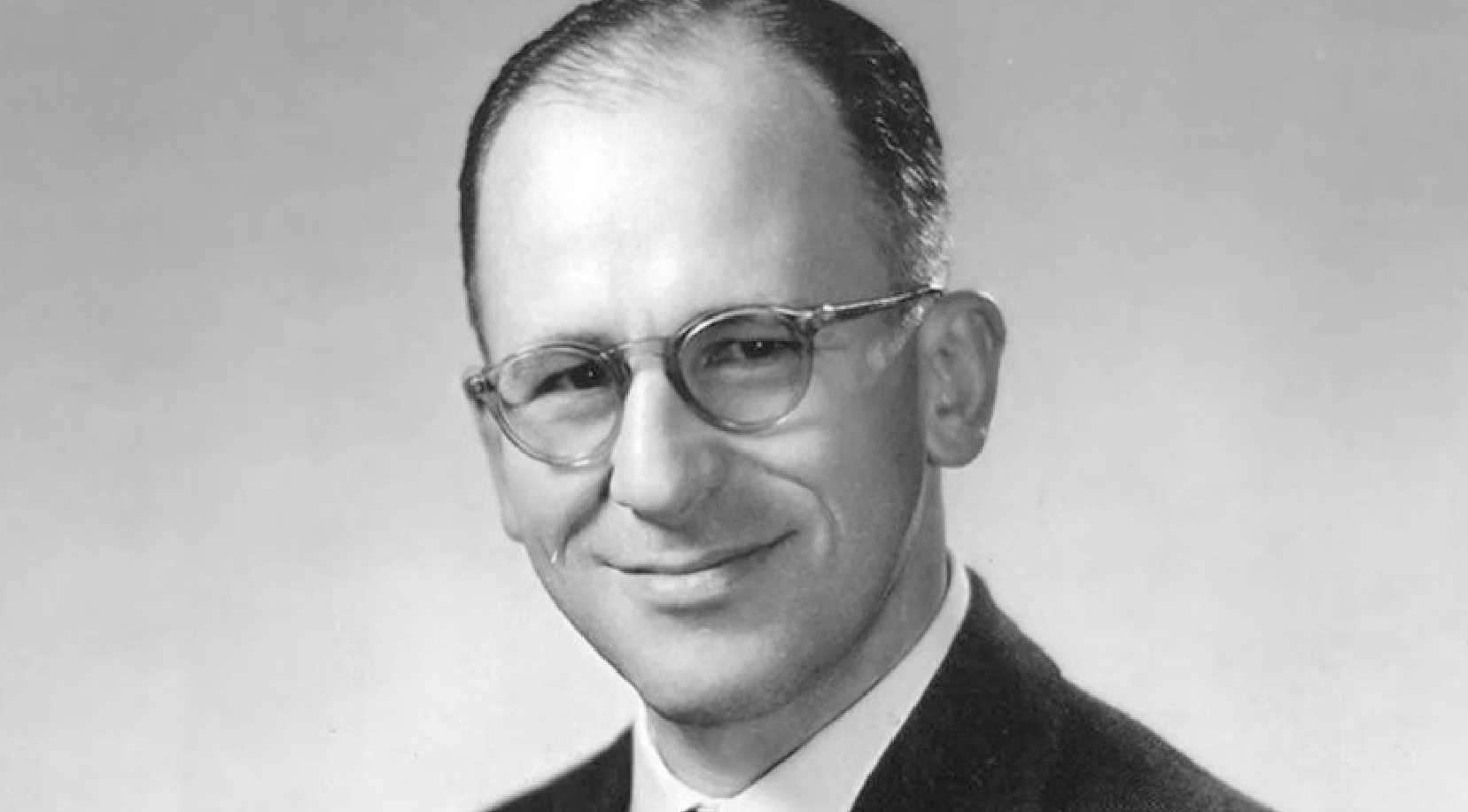
(ZENIT News / Buenos Aires, 12.21.2025).- With a discreet but decisive gesture, Pope Leo XIV has opened the door to a new beatification that speaks as much to modern economic life as it does to traditional models of sanctity. On December 18, the Pope authorized the decree recognizing a miracle attributed to the intercession of Enrique Shaw, an Argentine layman, businessman, husband and father of nine, clearing the final canonical obstacle on his path to the altars.
The decision followed an audience with Cardinal Marcello Semeraro, prefect of the Dicastery for the Causes of Saints, and marked the culmination of a long and meticulous process. Shaw, who lived between 1921 and 1962, had already been declared Venerable after the recognition of his heroic virtues. What remained was a miracle — and, in this case, it emerged not from a distant past but from a dramatic episode in contemporary Argentina, examined under the full scrutiny of modern medicine.
The healing in question dates back to June 2015, when a young child suffered catastrophic head trauma after being struck by a horse on a rural property in the province of Buenos Aires. The prognosis was bleak. The injuries were severe, the neurological damage seemingly irreversible, and surgical intervention appeared inevitable. As the family mobilized emergency care, they also turned, with growing intensity, to prayer — specifically invoking Enrique Shaw, whose witness was well known among Catholic business leaders in Argentina.
What followed defied medical expectations. Just as surgeons prepared for a critical procedure, the child’s condition changed abruptly: intracranial pressure normalized without intervention, fluid began to drain naturally, and the operation was cancelled. Physicians could describe the phenomenon, but not explain it. The child recovered fully and, a decade later, shows no lasting effects of the accident.
The Vatican’s medical board, theologians and finally the assembly of bishops and cardinals of the dicastery each issued favorable judgments, concluding that the healing exceeded scientific explanation and occurred in response to a specific prayer of intercession. Pope Leo XIV’s approval of the decree formally sealed that conclusion.
Beyond the miracle itself, Shaw’s life story offers a striking portrait of lay holiness shaped not in monasteries or sacristies, but in factories, family life and public institutions. Born in Paris and raised in Argentina after the early death of his mother, Shaw was educated by the De La Salle Brothers and later entered the Argentine Naval Academy. Even during his naval service, colleagues noted a quiet but resolute faith that translated into apostolic commitment.
Marriage and fatherhood would become central to his vocation. In 1943 he married Cecilia Bunge, and together they built a large family while Shaw discerned a decisive change of course. Leaving the Navy in 1945, he felt drawn not to the priesthood but to what he understood as a missionary task within the world of work. Against his own initial instinct to become a factory laborer, spiritual guidance led him instead to embrace leadership, bringing the Gospel into the heart of industrial and economic life.
As a senior executive at Cristalerías Rigolleau, Shaw became known for a style of management rooted in the Church’s social doctrine long before such language became commonplace. He defended jobs during economic downturns, treated workers as members of a shared community, and opened his home to union representatives. For him, business was not merely productive machinery or a vehicle for profit, but a human reality ordered toward the common good.
That conviction shaped his broader public engagement. Shaw was a driving force behind the creation of the Christian Association of Business Leaders (ACDE), serving as its first president, and played key roles in the founding years of the Catholic University of Argentina, Catholic Action and the Christian Family Movement. He also advocated for social legislation, including family allowances, at a time when such policies were far from universally accepted.
Shaw died in 1962 at the age of 41 after a long battle with cancer, leaving behind his wife and nine children. His reputation for holiness endured quietly, sustained by those who had known him and by later generations who discovered in his life a compelling synthesis of faith, work and family responsibility.
In recent remarks, Pope Leo XIV described Shaw as a man who understood industry not as an impersonal system but as a community of persons called to grow together. Leaders of Catholic organizations in Argentina have echoed that assessment, seeing in his forthcoming beatification not only a personal recognition but a powerful sign for the Church’s social witness today.
If proclaimed beato, Enrique Shaw would stand as one of the rare examples — and perhaps the most prominent — of a business leader officially proposed by the Church as a model of sanctity. His story suggests that holiness, far from being confined to explicitly religious spaces, can take root in balance sheets, board meetings and family dinner tables — wherever the Gospel is lived with coherence and courage.
The date and place of Shaw’s beatification are expected to be announced shortly. When that moment arrives, it will mark not just the recognition of a miracle, but the elevation of a vision: that the economy itself can be humanized, and that sanctity can flourish at the very center of modern life.
Thank you for reading our content. If you would like to receive ZENIT’s daily e-mail news, you can subscribe for free through this link.

Publicaciones relacionadas:
 Barcelona: Antonio Gaudí’s Beatification Process Advances
 A saintly samurai: progress and hopes for the canonization of the «Samurai of Christ
 The smiling Carmelite is on her way to the altars: she is recognized as a “servant of God”
 Where does a young man get the strength to resist corruption? Leo XIV’s answer with the life of a new Blessed
