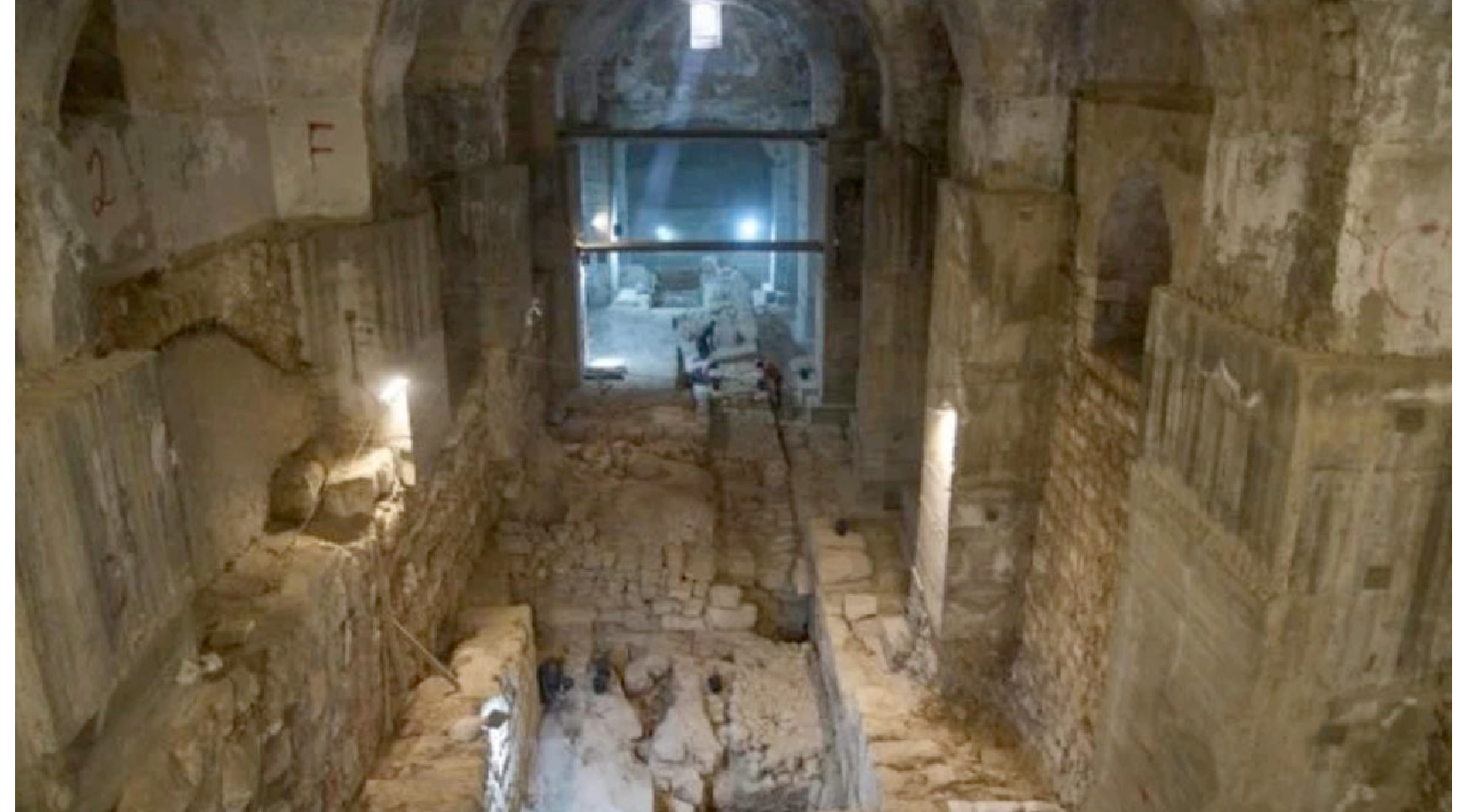
(ZENIT News / Jerusalem, 12.20.2025).- The longest section of the ancient wall that surrounded Jerusalem has been found under the Tower of David Citadel Museum in the Old City, with possible evidence of a peace agreement made in the late 2nd century BC between two warring kingdoms.
The excavation led by the Israel Antiquities Authority to prepare the new Schulich Wing of Archaeology, Art and Innovation at the Museum has exposed the foundations of the walls around Jerusalem during the Hasmonean Kingdom, in the period of Hanukkah, which means dedication in Hebrew, for the festival of the rebuilding of the Temple in Jerusalem in the 2nd century B.C., after a small group of Jewish fighters expelled foreign occupying forces from the Temple.
The construction of the Hasmonean Wall began a few decades after the events of Hanukkah. The excavated section measures 50 meters in length and supported walls higher than the current walls surrounding the Old City of Jerusalem, which were built hundreds of years ago during the Ottoman period.
The Hasmonean walls enclosed a much larger area than the present-day Old City of Jerusalem. They featured 60 watchtowers, each 33 feet high according to ancient writings. The recently discovered section is one of the longest stretches of the Hasmonean walls found intact.
An interesting aspect of the foundation was that the wall appears to have been intentionally dismantled to a uniform height, not chaotically destroyed by the ravages of time or war, said Dr Amit Re’em, an archaeologist with the Israel Antiquities Authority project, as led to the wall’s dismantling. Other sections of the Hasmonean wall discovered in Jerusalem were not dismantled. Perhaps only the excavated portion was brought down for the foundation of Herod’s palace during his reign in the 1st century B.C., as a clear message of his sovereignty over Jewish Jerusalem, explained Peleg-Barkat, since it seems unlikely that Jerusalem would have remained unprotected and without walls for more than a century.
Another explanation is that the Hellenistic king Antiochus VII, heir to Antiochus VI, besieged Jerusalem and the Kingdom of Judea in 132 or 133 B.C., according to the ancient Jewish historian Flavius Josephus. While the Jewish army fought, the Jewish king John Hyrcanus I decided to make a deal with Antiochus, plundering the tomb of King David to obtain 3,000 talents of silver and adding 500 hostages, including his own brother, according to Josephus’s writings.
Re’em concluded: «We simply believe we found the archaeological proof of this, so it’s quite amazing. Archaeology and ancient history combined give Jerusalem its magic.»