

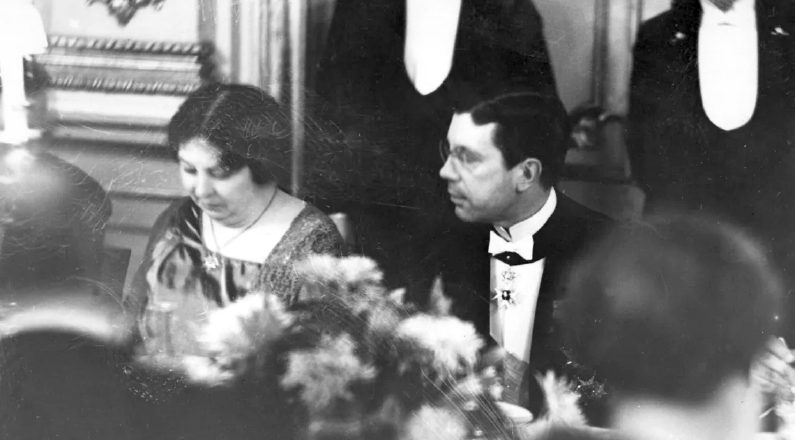
(ZENIT News / Selja Island, 07.09.2026).- One of Scandinavia’s greatest literary figures may soon be remembered not only for her novels, but also for her witness to the Christian faith. The Catholic Church in Norway has announced its intention to open the canonization cause of Nobel Prize-winning author Sigrid Undset, presenting her life as an example of how intellectual brilliance, personal conversion and perseverance through suffering can become a path toward holiness.
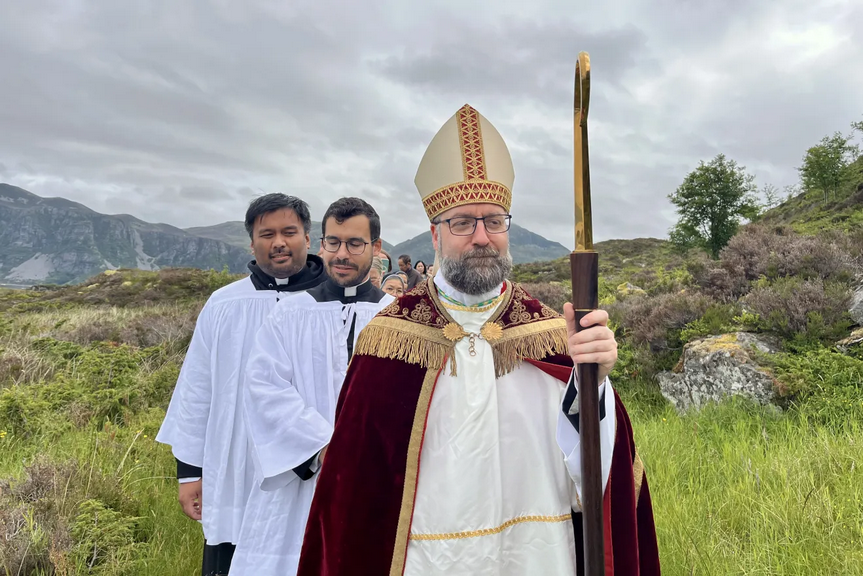
The announcement was made on July 8 by Bishop Fredrik Hansen of Oslo during the feast of St. Sunniva on the island of Selja, regarded as the cradle of Norwegian Christianity and home to the country’s first episcopal see. The location carried particular symbolism: exactly a century earlier, Undset herself had visited the island, drawn by the medieval Christian heritage that would later shape both her writing and her spiritual journey.
Rather than introducing her primarily as one of Norway’s most celebrated novelists, Bishop Hansen presented Undset as «a model of Christian faith, a life lived in virtue and the pursuit of holiness.» For the bishop, her legacy extends far beyond literature, encompassing her public defense of Catholicism, her care for the poor, her unwavering devotion to her disabled daughter, her defense of human dignity and her courageous opposition to Nazism during one of Europe’s darkest chapters.
The future cause is especially significant for Norway’s small but steadily growing Catholic community, which has expanded in recent decades through immigration and adult conversions while seeking stronger roots in the nation’s own Christian history. If the process advances, Undset would become one of modern Norway’s most prominent Catholic candidates for sainthood.
Her life, however, hardly resembles a conventional saint’s biography.
Born in Denmark in 1882 and raised in Norway by largely non-believing parents, Undset entered the workforce at just 16 after her father’s death left the family in financial difficulty. Those early years as a secretary also marked the beginning of her literary vocation.
Her first novel, Fru Marta Oulie, caused an immediate sensation. Opening with the striking confession, «I have been unfaithful to my husband,» it challenged the conventions of Norwegian society and established her as a bold new literary voice.
Personally, she was equally unconventional for her era. Known for her strong temperament, sharp wit and independent spirit, she lived through emotional struggles and controversial relationships, eventually marrying painter Anders Castus Svarstad after a complicated courtship. Together they raised three children, including a daughter with disabilities, while Undset also cared for children from her husband’s previous marriage.
Supporters of her canonization argue that these imperfections do not weaken her witness but rather illuminate it. Her story reflects one of Christianity’s central convictions: holiness is not the reward for a flawless life but the fruit of God’s grace working through repentance, conversion and perseverance.
That transformation reached a decisive moment in 1924 when, after years of studying medieval Christianity, Undset entered the Catholic Church despite living in a predominantly Lutheran nation where such a decision attracted considerable criticism. Four years later she became a Dominican laywoman and received the Nobel Prize in Literature, largely in recognition of Kristin Lavransdatter, the historical trilogy that secured her international reputation.
Set in medieval Norway, the novels explore enduring Christian themes including sin, forgiveness, sacrifice, grace and redemption. Literary critics have long noted that these themes increasingly mirrored the author’s own spiritual development after her conversion.
Undset did not retreat from public life after embracing Catholicism. Instead, she became one of Scandinavia’s most articulate Catholic intellectuals, writing essays that defended the faith while challenging ideological movements reshaping Europe. She was among the early critics of Adolf Hitler and National Socialism. After Nazi Germany occupied Norway during the Second World War, she fled to the United States, where she spoke forcefully in support of the Norwegian resistance and against totalitarianism before returning home after the war.
Her admiration for Catholic writer G. K. Chesterton also reflected the intellectual world she had embraced. She is reported to have met him personally and translated some of his works into Norwegian, helping introduce his thought to Scandinavian readers.
Before announcing the initiative publicly, Bishop Hansen consulted both the Nordic Bishops’ Conference—which includes bishops from Denmark, Finland, Iceland, Norway and Sweden—and scholars familiar with Undset’s life and writings. The diocesan phase of the cause is expected to begin formally this autumn.
Once opened, Undset will receive the title «Servant of God,» the first formal stage in the Church’s canonization process. If investigators conclude that she lived the Christian virtues to a heroic degree, she could later be declared «Venerable.» As with most canonization causes, one authenticated miracle attributed to her intercession would ordinarily be required for beatification, followed by a second miracle for canonization.
For Bishop Hansen, the initiative is about far more than honoring one of Norway’s literary icons. He believes Undset offers a compelling witness to contemporary Christians: a woman of exceptional intelligence who engaged the culture of her time without abandoning her faith, who experienced personal failures without surrendering to them, and whose life demonstrates that sanctity is not reserved for the extraordinary few, but remains the universal calling of every baptized Christian.
If her cause ultimately succeeds, Sigrid Undset may become remembered not only as the Nobel laureate who brought medieval Scandinavia vividly to life through literature, but also as a modern Catholic laywoman whose own journey of conversion, sacrifice and fidelity continues to speak powerfully to the Church in the twenty-first century.
Thank you for reading our content. If you would like to receive ZENIT’s daily e-mail news, you can subscribe for free through this link.

Publicaciones relacionadas:
 Next Argentinean saint «performs miracle»: Javier Milei and Pope Francis at the Vatican
 Call to beatify 171 Sri Lankan martyrs on anniversary of church bombing
 The process of beatification of King Baudouin of Belgium officially begins: Vatican and Pope give their approval
 From Boardroom to Beatification: How an Argentine Businessman Is Redefining Holiness
