

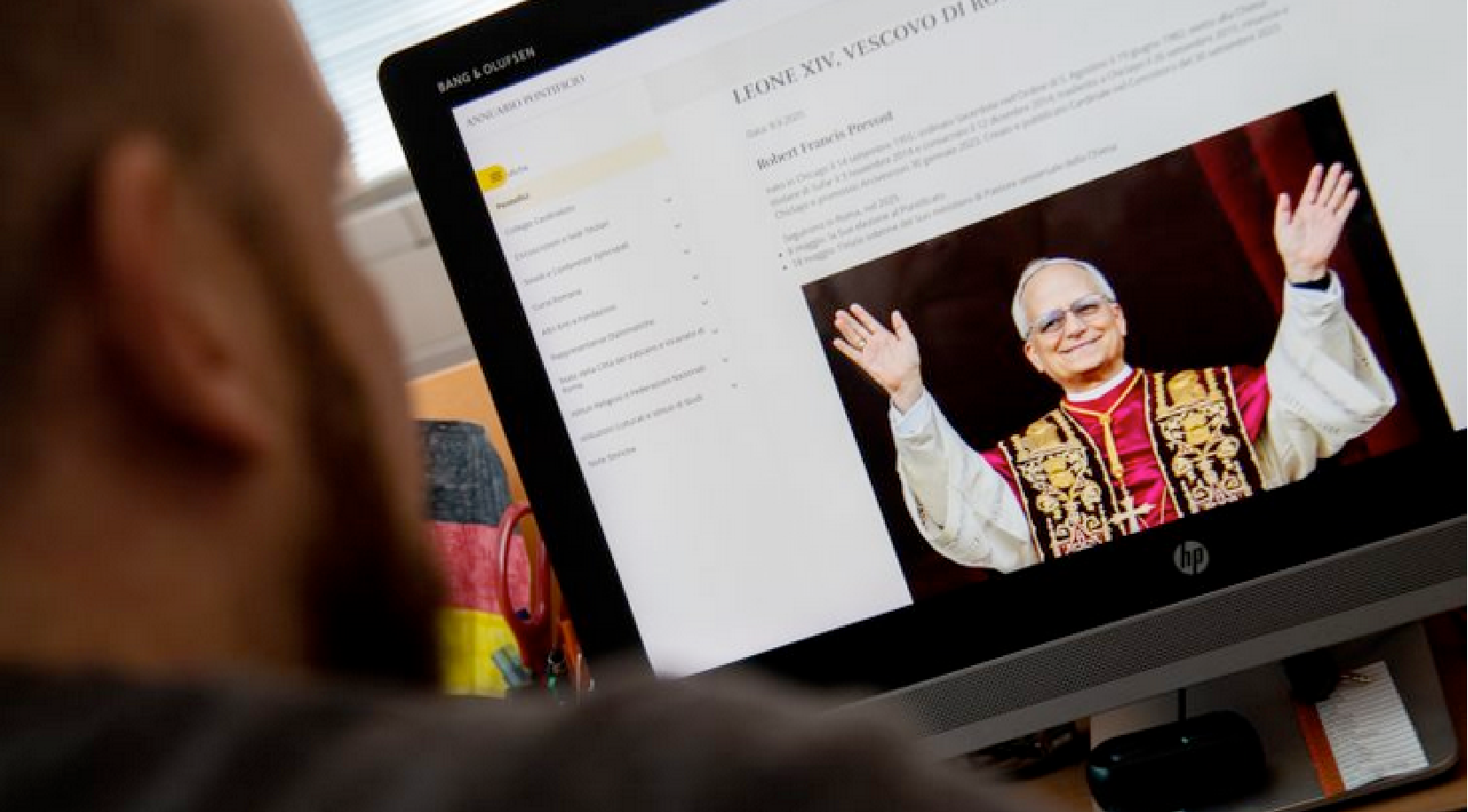
(ZENIT News / Rome, 12.08.2025).- The Holy See has taken a decisive step into a new era of ecclesial information management with the launch of the fully digital Pontifical Yearbook, a tool designed to present the institutional life of the Catholic Church with a speed and accessibility that earlier generations could scarcely have imagined. The initiative, released on the Solemnity of the Immaculate Conception, represents far more than a technological upgrade; it signals a shift in how the Vatican understands transparency, service and global communication.
The project, developed jointly by the Secretariat of State and the Dicastery for Communication, places online a reference work that has long been the backbone of official Church data. For decades, the Annuarium Pontificium has been indispensable to curial offices, diplomats, researchers and journalists who needed authoritative information on dioceses, bishops, religious orders, nuncios and Roman dicasteries. Its roots stretch back through the modern printed version to the medieval Liber Pontificalis, a testament to the continuity of the Church’s institutional memory. Now that legacy enters a dynamic online environment capable of updating daily—something impossible for any printed volume.
The digital launch received particular attention from Pope Leo XIV, who performed the platform’s first login during a presentation at the Vatican. Accompanied by Archbishop Edgar Peña Parra, the Substitute for General Affairs, and by Monsignor Lucio Adrián Ruiz, Secretary of the Dicastery for Communication, the Pope explored the interface himself and encouraged the project’s architects to preserve the spirit of service that guided their work. His remarks reflected both gratitude for the technical achievement and awareness of what is at stake: an instrument that offers the global Church a common, reliable foundation for understanding its own structures.
The new platform allows users to navigate the ecclesial landscape with an efficiency unattainable in print. Personnel changes, new appointments and structural updates—traditionally known only once a year—now appear online as soon as they are officially entered into the system. For Vatican dicasteries, which rely on accurate data for daily governance, the change is substantial. Apostolic nunciatures gain an immediately accessible diplomatic resource. Bishops in remote regions can consult information unavailable through local libraries or printers. Universities, research centers and media professionals receive an authoritative reference point that aligns with verified Vatican communications.
The interface supports advanced search functions, enabling queries by name, diocese, office, country or institutional category. These features reflect a broader architectural vision shaped by service designers and younger professionals who collaborated with the Vatican to ensure that the platform’s technological robustness would not come at the expense of usability. Behind the scenes, the Dicastery for Communication developed the technical infrastructure and database, relying on standardized information supplied by the Church’s Central Office of Statistics.
The transition to digital publication includes a subscription model distinct from the distribution of the printed version, which will continue to be issued annually. Users may choose between quarterly or annual access, with registration required through the website and payments currently processed via PayPal. Native applications for iOS and Android ensure that the Yearbook can be carried in a pocket or bag, giving pastors, diplomats and researchers the ability to verify data even while traveling or working in areas with limited resources.
For Archbishop Peña Parra, the initiative reflects a deliberate pastoral strategy. Making certified information available instantly and globally is, he argues, a direct expression of the Church’s commitment to transparency and responsibility. It reinforces the Vatican’s desire to offer tools that illuminate—not obscure—the contours of ecclesial life. In an era marked by rapid communication and high expectations for institutional accountability, such an approach underscores the Holy See’s willingness to adapt traditional instruments to contemporary realities.
The digital Yearbook is conceived as an evolving project rather than a finished product. Planned enhancements include multilingual expansion, integration of historical material from printed editions and archives, additional search capabilities and compliance with international accessibility standards. The Secretariat of State has opened a dedicated email for suggestions, inviting the global Church to participate in a process of continual refinement.
Beyond the technical details lies a more consequential development: a Church of more than a billion people now has immediate access to its own structural map, updated continually and accessible from virtually any corner of the world. In offering such a resource, the Vatican is not merely modernizing an administrative tool; it is reaffirming a principle that has shaped its best moments in communication—making accurate, trustworthy and timely information available as a service to the entire ecclesial community.
Thank you for reading our content. If you would like to receive ZENIT’s daily e-mail news, you can subscribe for free through this link.

Publicaciones relacionadas:
 First Woman with Dwarfism on the Path to Canonization Thanks to Leo XIV
 Pope Leo XIV grants his first “doctorate”: this is the saint named the 38th Doctor of the Church
 Vogue praises the Pope’s “elegance” and places him on its annual list of best-dressed people
 Photo Gallery: Leo XIV Now Has An Official Mosaic to Enrich St. Paul’s Basilica, and This Is How He Reacted When It Was Shown to Him
