

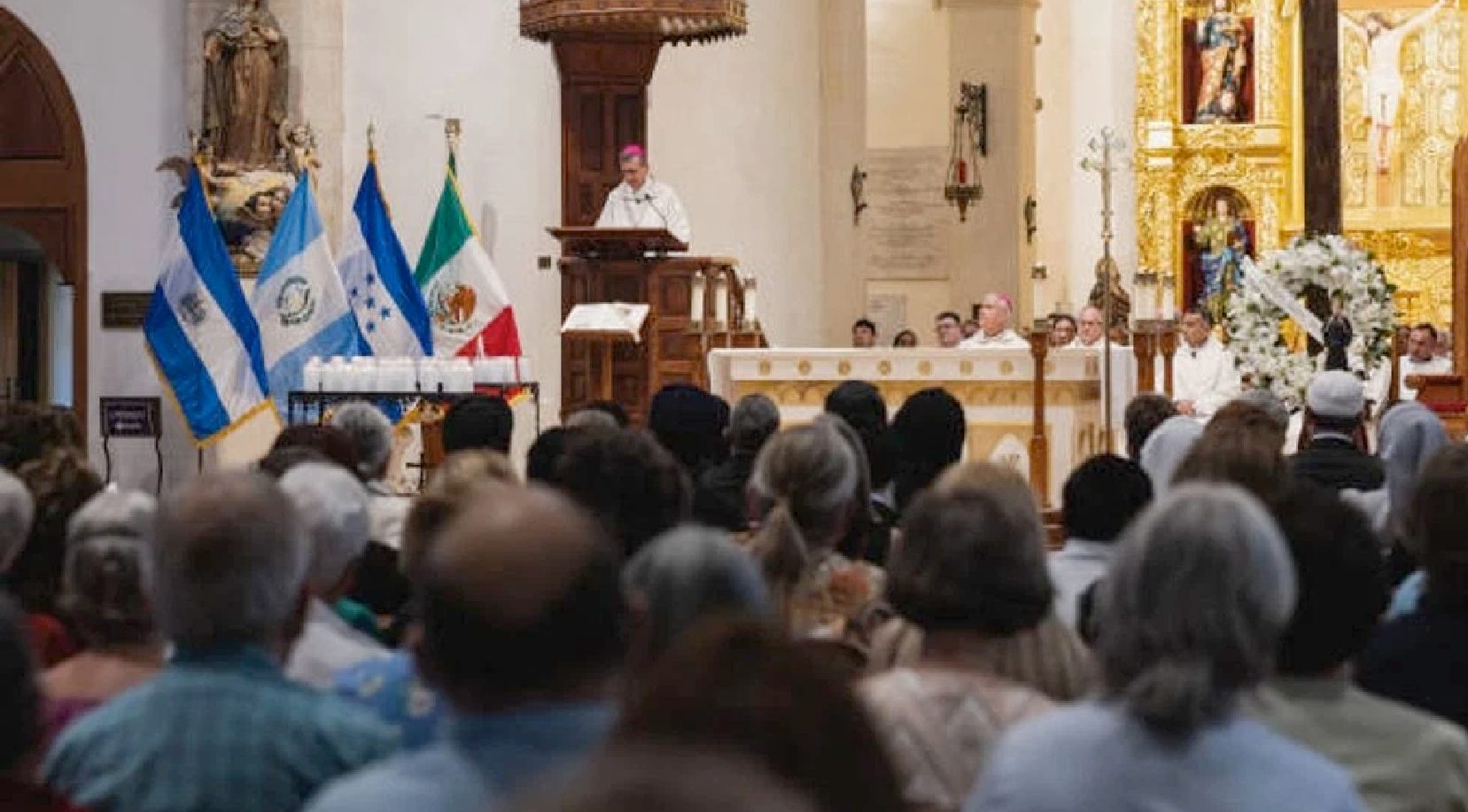
(ZENIT News / San Antonio, 10.24.2025).- When the Archdiocese of San Antonio discovered that hundreds of fundraising pages had been created in its name on GoFundMe—without its consent or participation—it didn’t take long to respond. In a bilingual statement issued on October 22, the archdiocese made one thing unmistakably clear: it does not, and will not, use GoFundMe to collect donations.
The revelation came after GoFundMe admitted to creating roughly 1.4 million donation pages for nonprofit organizations across the United States, drawing from publicly available IRS data and other third-party sources like PayPal Giving Fund. The stated intent was to make it easier for GoFundMe’s 200 million users to donate to registered nonprofits—even those that had never joined the platform.
But for the Archdiocese of San Antonio, and for a growing number of Catholic institutions and fundraisers nationwide, the gesture has raised red flags about consent, transparency, and ecclesial integrity.
“The Archdiocese of San Antonio does not use GoFundMe for any fundraising purpose,” the statement read, urging donors instead to give only through verified and secure channels listed on the official archdiocesan website, archsa.org. “This ensures that every donation reaches its intended purpose,” the statement added, emphasizing the importance of donor trust in the Church’s ministries, schools, and parishes.
The archdiocese’s warning joined a wider outcry from nonprofit leaders who see GoFundMe’s move as a troubling encroachment into spaces that rely heavily on reputation and faith-based accountability.
According to a report by San Francisco’s ABC affiliate KGO-TV, GoFundMe defended its decision as an “innovative way” to help users discover charitable organizations and support causes they care about—even when those groups have not actively created their own pages. Krista Lamp, the company’s senior director of nonprofit communications, told KGO that the new initiative reflected a preexisting user trend: “People were already coming organically to GoFundMe to support nonprofits.”
While GoFundMe allows organizations to claim their pages to access donor data and customize their branding, critics argue that the platform’s approach blurs ethical boundaries.
Nic Prenger, founder of Prenger Solutions Group, which provides digital fundraising services to more than half of the Catholic dioceses in the U.S., called the strategy “shockingly dishonest.” In a LinkedIn post on October 21, Prenger shared that after visiting one of the auto-generated pages, he was prompted to leave a “tip” of 16.5 percent to GoFundMe—on top of the platform’s standard 2.9 percent processing fee and $0.30 per donation. “That’s 16.5 percent in addition to credit card processing fees,” Prenger wrote, urging dioceses and nonprofits to locate any automatically generated pages in their name and request that they be taken down.
Others see the issue as more than a technical or financial inconvenience—it’s a moral and pastoral one.
Josephine Everly, chief philanthropy officer of the national nonprofit Stand Together, warned that Catholic organizations are particularly vulnerable to the implications of GoFundMe’s “auto-enrollment.” Writing in a LinkedIn essay titled The GoFundMe Nonprofit Page Controversy: Why Catholic Organizations Should Be Especially Concerned, Everly noted that “faith-based boundaries matter.”
“Catholic organizations carefully choose platforms that align with their mission and moral principles,” she explained. “Automatic enrollment violates the principle of informed consent that should guide all our collaborations.”
Everly also pointed to structural realities that GoFundMe’s algorithmic outreach seems to overlook. Many diocesan institutions, she noted, operate under governance systems that require formal approval for new fundraising initiatives. Moreover, the generic language used on GoFundMe’s autogenerated pages may fail to represent the faith or charism of Catholic entities—potentially mischaracterizing hospitals, parishes, or religious orders.
“A Catholic hospital page could misrepresent its bioethical commitments,” she warned, “or a religious community’s page might omit the spiritual dimension that defines its mission.”
Adding to the confusion, Everly said, GoFundMe’s data sources are based on IRS Form 990 filings that can be 18 to 24 months out of date—sometimes listing ministries that have since closed, merged, or relocated. “A well-intentioned parishioner might send a memorial gift to a ministry that no longer exists,” she observed, “or be redirected to an obsolete website, disrupting the giving process at a critical moment.”
For many in the Church, this is not merely a technical glitch but a question of stewardship and ecclesial trust. As Everly put it, “Catholic philanthropy is built on relationships, trust, and careful discernment—not on algorithmic assumptions about our data or needs.”
She concluded with a pointed reminder to digital fundraisers: “True partnership means asking first—and respecting our governance structures.”
In its statement, the Archdiocese of San Antonio echoed that sentiment, stressing that “the continued trust of those who generously give to archdiocesan entities is of the utmost importance.”
The controversy places GoFundMe at a crossroads between innovation and intrusion—raising deeper questions about who controls the digital spaces where generosity meets technology. For faith-based organizations, the lesson may be clear: in an age of automation, vigilance remains the first act of charity.
Thank you for reading our content. If you would like to receive ZENIT’s daily e-mail news, you can subscribe for free through this link.

Publicaciones relacionadas:
 Impressive Via Crucis and the Crucifixion of Jesus Returns to the Center of London and Is Seen by 20,000 People
 Congolese bishops: ‘Our country is not for sale’
 Knights of Columbus Remove Rupnik’s Mosaics from the Saint John Paul II Shrine in Washington, DC
 Immigration Fraud Crisis Delays U.S. Visas for Catholic Clergy
