

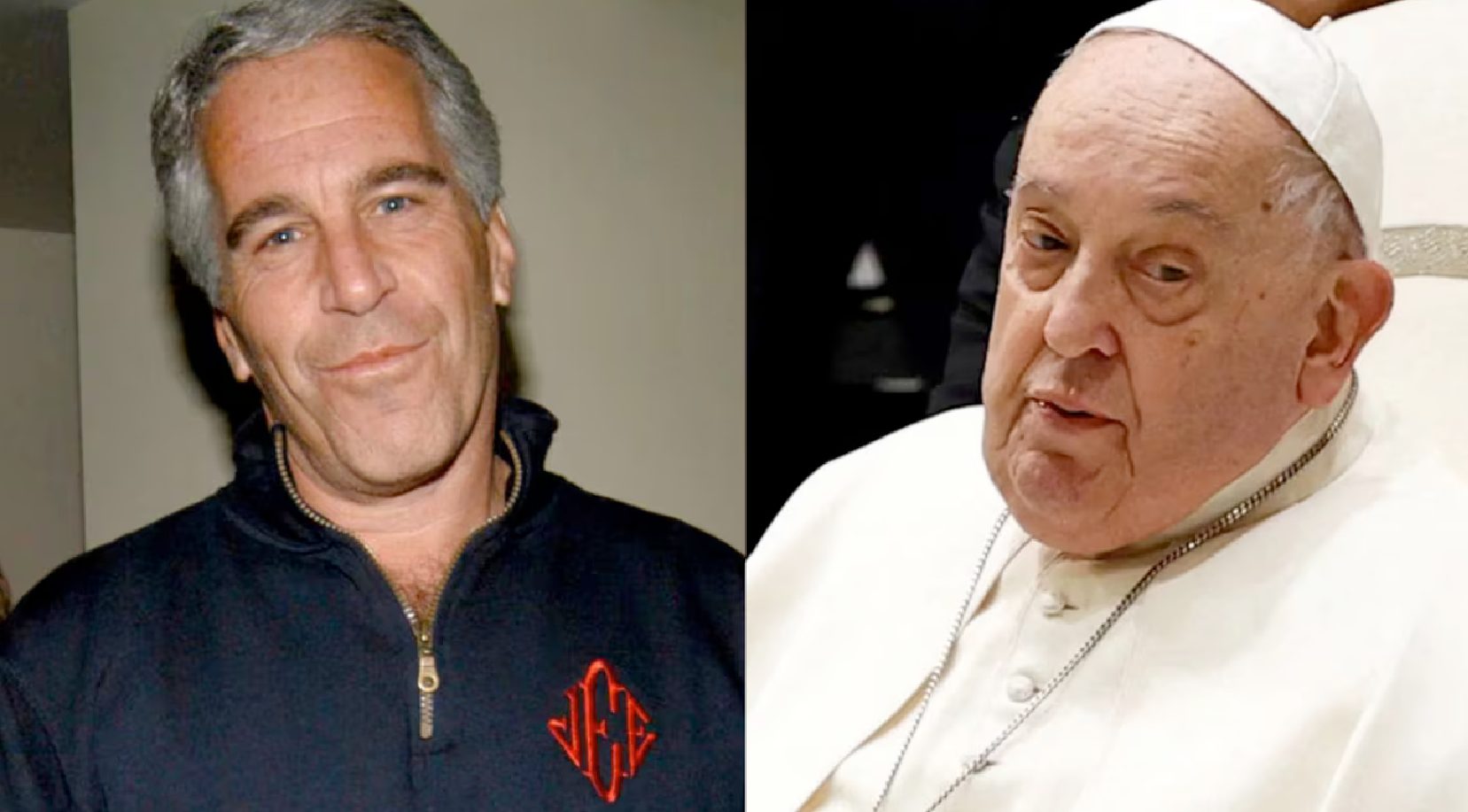
(ZENIT News / Rome, 02.13.2026).- Freshly disclosed documents from the U.S. Department of Justice offer an unsettling glimpse into how the Vatican—and Pope Francis in particular—figured in the calculations of disgraced financier Jeffrey Epstein and former Trump adviser Steve Bannon. The correspondence, which includes text messages and emails spanning several years, suggests that for a circle of political and financial operatives orbiting Epstein, the Holy See was not merely a religious institution but a node of geopolitical leverage.
In June 2019 exchanges, Bannon appears to have floated the idea that Epstein could serve as executive producer of a documentary based on a controversial book published that year by French journalist Frédéric Martel, In the Closet of the Vatican. Martel’s work, the product of extensive interviews and reporting, delved into what he described as a culture of secrecy and contradiction regarding homosexuality within Vatican circles. Upon release, the book ignited sharp backlash from conservative Catholic commentators, particularly over its claim that as many as 80 percent of Vatican clergy were gay—a figure widely disputed but potent in its rhetorical force.
According to Martel, Bannon expressed enthusiasm for adapting the book to film during meetings in Paris, including one at the penthouse suite of the Hôtel Bristol. “He loved the book,” Martel later told Religion News Service, adding that Bannon appeared animated by the prospect of a cinematic project. Martel has emphasized that he never accepted Bannon’s proposal and received no payment, as rights to the work were controlled by his French publisher. He has also stated that he had no contact with Epstein.
The tone of the Bannon–Epstein texts underscores how Francis was perceived in certain circles. In one message, Bannon appears to link the pontiff with a roster of global actors he opposed: “The Clintons, Xi, Francis, the EU… C’mon brother!” The line reads less like theological critique than political alignment, placing the Argentine pope alongside geopolitical rivals in a broader ideological struggle.
These conversations unfolded during a period of sustained «conservative» resistance to Francis within and beyond the Church. Since his election in 2013, the pope prioritized pastoral accompaniment over juridical rigor, especially regarding divorced and remarried Catholics and LGBTQ believers. The 2014–2015 Synod on the Family—an assembly of bishops convened in Rome—expanded internal debate on family life and culminated in an apostolic exhortation calling the Church to embody mercy more visibly. Critics argued that such an approach risked doctrinal ambiguity. A group of cardinals, including U.S. Cardinal Raymond Burke, formally submitted dubia—questions challenging aspects of Francis’ teaching.
Tensions intensified further when Archbishop Carlo Maria Viganò, a former papal nuncio to the United States, published a public letter accusing Francis of mishandling the case of former Cardinal Theodore McCarrick. For some traditionalists, the moment crystallized a broader narrative of crisis under Francis’ leadership.
Within that climate, the Martel book became more than a publishing event. Cardinal Burke severed ties with the conservative Dignitatis Humanae Institute after concluding that the organization had become too closely associated with Bannon and the proposed film adaptation. In a June 25, 2019 letter, Burke made clear he opposed turning the book into a movie.
The newly released material also reveals Epstein’s dismissive and at times crude references to Francis. When the pope visited the United States in 2015 and stayed near Epstein’s New York residence, Epstein joked in an email to his brother about inviting the pontiff for a massage, adding lewd remarks. The tone reflects a pattern of flippancy toward the papacy, even as Vatican affairs appeared to hold strategic interest.
That interest extended into financial matters. Epstein was familiar with Who Killed the Banker of God?, Edward Jay Epstein’s investigation into the finances of the Institute for the Works of Religion—the Vatican bank—and the 1982 collapse of Banco Ambrosiano. The failure of that Italian bank, and the subsequent discovery of its chairman Roberto Calvi hanging beneath London’s Blackfriars Bridge, remains one of the most notorious financial scandals linked to Vatican-era intrigue. For observers of the Holy See, the Ambrosiano affair became emblematic of a period when opaque financial structures and inadequate oversight exposed the Church to reputational and legal peril.
By the time of the emails cited in the Justice Department release, Francis had embarked on an ambitious reform of Vatican finances. He established the Secretariat for the Economy under Cardinal George Pell and shuttered thousands of suspect accounts held by non-residents of Vatican City. The aim was to align Vatican financial operations with international standards of transparency and compliance—a shift welcomed by some, resisted by others.
An August 2014 email from Italian cybersecurity researcher Vincenzo Iozzo to Epstein shows how the Vatican surfaced in discussions about blockchain and digital currencies. Iozzo suggested that small sovereign states such as Vatican City and Monaco could provide fertile ground for experimentation. “You said you like big hacks,” Iozzo wrote, proposing that selling to corporations or Western governments a currency that “does not really exist” might constitute “the biggest hack in the world.” The language is speculative and provocative, reflecting the techno-libertarian bravado common in certain cryptocurrency circles at the time.
An FBI report included in the Justice Department release references a source claiming that an Italian cybersecurity figure described as “Epstein’s hacker” may have possessed a Vatican City passport. Some media outlets have inaccurately extrapolated this to suggest that Pope Francis ordered hacking operations against Epstein. There is no evidence in the documents to support that claim. The reference concerns an individual’s possible travel document, not papal direction or Vatican-sponsored cyber activity.
Taken together, the correspondence portrays the Vatican as more than a spiritual authority in the eyes of Epstein and his associates. It appears as a pressure point in global politics: influential in debates over migration, environmental stewardship, populism and relations with China.
The Justice Department’s disclosures do not show a coordinated campaign against Francis reaching fruition. The mooted film was never produced. Martel declined involvement. Conservative dissent within the Church followed its own trajectory, independent of Epstein’s network. Yet the documents offer a stark reminder: in an age when power circulates through finance, media and digital infrastructure, even the Vatican can be viewed as terrain to be contested.
Thank you for reading our content. If you would like to receive ZENIT’s daily e-mail news, you can subscribe for free through this link.

Publicaciones relacionadas:
 Prime Minister of Ukraine Reveals That He Talked with the Pope in Private Audience
 Pope Francis receives in audience the President of Madagascar
 Pope Francis Intervenes in the Pontifical Urban University
 Pope Francis introduces monthly bonus for large families amid mixed reactions from Vatican employees
