

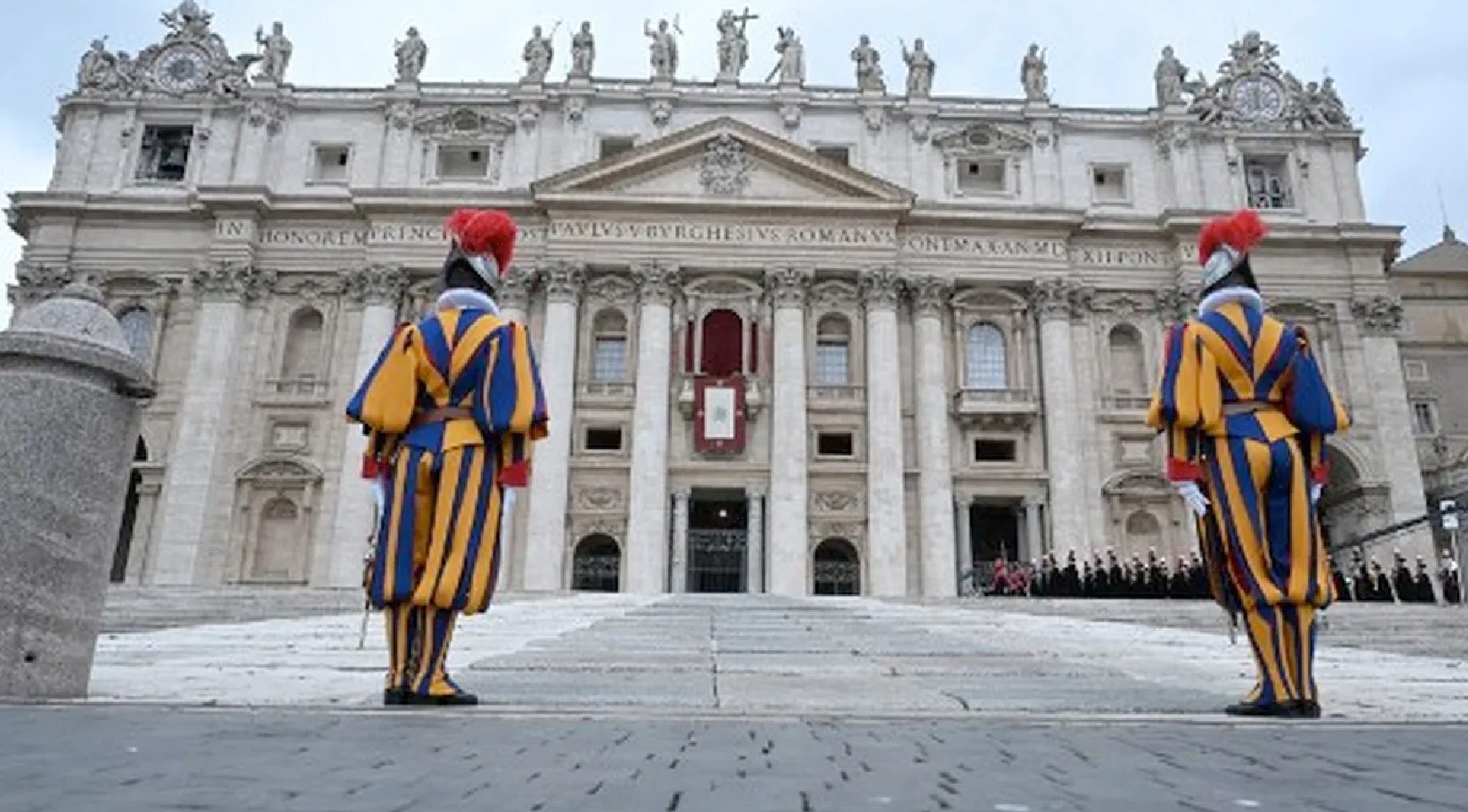
(ZENIT News / Rome, 01.27.2026).- An internal employee survey has recently stirred debate inside the Vatican, raising questions about workplace trust, transparency, and alleged instances of harassment. But Vatican labor authorities are pushing back against the idea of widespread dissatisfaction, insisting that the overall climate among Holy See employees remains largely positive—and that dialogue, not confrontation, is the path forward.
The controversy began with a questionnaire circulated by the Association of Lay Vatican Employees (ADLV), which gathered responses from about 250 people. Roughly 80 percent of respondents belong to the association. The findings pointed to unease in certain departments, including perceived opacity in management practices and claims of demeaning behavior by some supervisors.
In absolute terms, however, the sample represents a small fraction of the Vatican workforce. The Holy See employs around 4,200 people, a figure that rises above 6,000 when retirees are included. Most workers are not members of the ADLV.
Speaking to Vatican News, Monsignor Marco Sprizzi, president of the Office of Labor of the Apostolic See (ULSA)—the body responsible for regulating employment relations within Vatican institutions—sought to put the survey into perspective.
“I don’t see generalized discontent,” he said, noting that the respondents amount to less than five percent of employees. Still, Sprizzi emphasized that even a single complaint deserves attention. “Our doors are always open,” he insisted. “We listen to everyone. We are a structure of dialogue.”
ULSA occupies a unique role inside the Roman Curia. Unlike labor ministries in secular states, it operates within the framework of Catholic social teaching, balancing legal norms with the Church’s moral vision of work as a participation in human dignity and the common good.
That mission was recently reinforced when Pope Leo XIV approved new statutes for the office in December, strengthening its mandate to promote unity, representation, and workers’ rights. According to Sprizzi, rowing “in the same direction” does not mean weakening protections, but rather enhancing them through mutual trust.
He also highlighted ongoing cooperation with the ADLV, describing their exchanges as “frequent and constructive.” Technical working groups and joint commissions have been established to address specific problems. The goal, he said, is practical solutions that serve both employees and the Holy See, which “cannot accept situations of inequality or injustice within its own walls.”
While acknowledging areas that still need improvement—particularly aligning salaries more accurately with responsibilities—Sprizzi defended the Vatican’s recent record. During the COVID-19 pandemic, no Vatican employee was laid off, nor were wages reduced, despite serious financial strain on the Holy See.
He also pointed to family-oriented initiatives, such as a daycare center and summer camps for employees’ children, as well as Pope Leo XIV’s recent measures to improve accessibility for people with disabilities.
As for the survey’s references to workplace harassment, Sprizzi said he has no direct knowledge of any such cases. He stressed that legal channels exist for reporting abuse and added that, were substantiated claims to emerge, “the Holy Father himself would be the first to intervene.”
“There is a difference between rumors and verified facts,” he remarked, recalling that the Church’s concern for justice in labor relations stretches back at least to Leo XIII’s landmark 1891 encyclical Rerum novarum, which laid the foundations of modern Catholic social doctrine.
Beyond policies and procedures, Sprizzi framed the Vatican’s approach in spiritual terms. Employees of the Holy See, he said, share a common mission.
“We are like an orchestra,” he explained. “Each instrument has to contribute to the harmony.”
He connected this vision to what Pope Leo XIV often describes as synodality—a culture of listening, participation, and shared responsibility within the Church. In that spirit, ULSA aims to deepen dialogue with workers, both individually and through their associations, while serving as a bridge to Vatican employers.
The ultimate objective, Sprizzi concluded, is a labor environment shaped not by conflict but by communion—where conversations are “increasingly constructive and serene,” guided by the Gospel and the Church’s social magisterium, and grounded in concrete respect for workers’ rights.
Thank you for reading our content. If you would like to receive ZENIT’s daily e-mail news, you can subscribe for free through this link.

Publicaciones relacionadas:
 Vatican Sentences Cardinal Becciu: Prison, Fine and Not in Perpetuity Without Charges
 From Tourist to Pilgrim: Vatican launches mini-website to recount the experience of pilgrimage to 4 papal basilicas
 Why Did the First Smoke of the Conclave Take So Long? The Answers
 Pope Leo XIV inaugurates Borgo Laudato si’: Francis’ encyclical that became a reality in one place
