

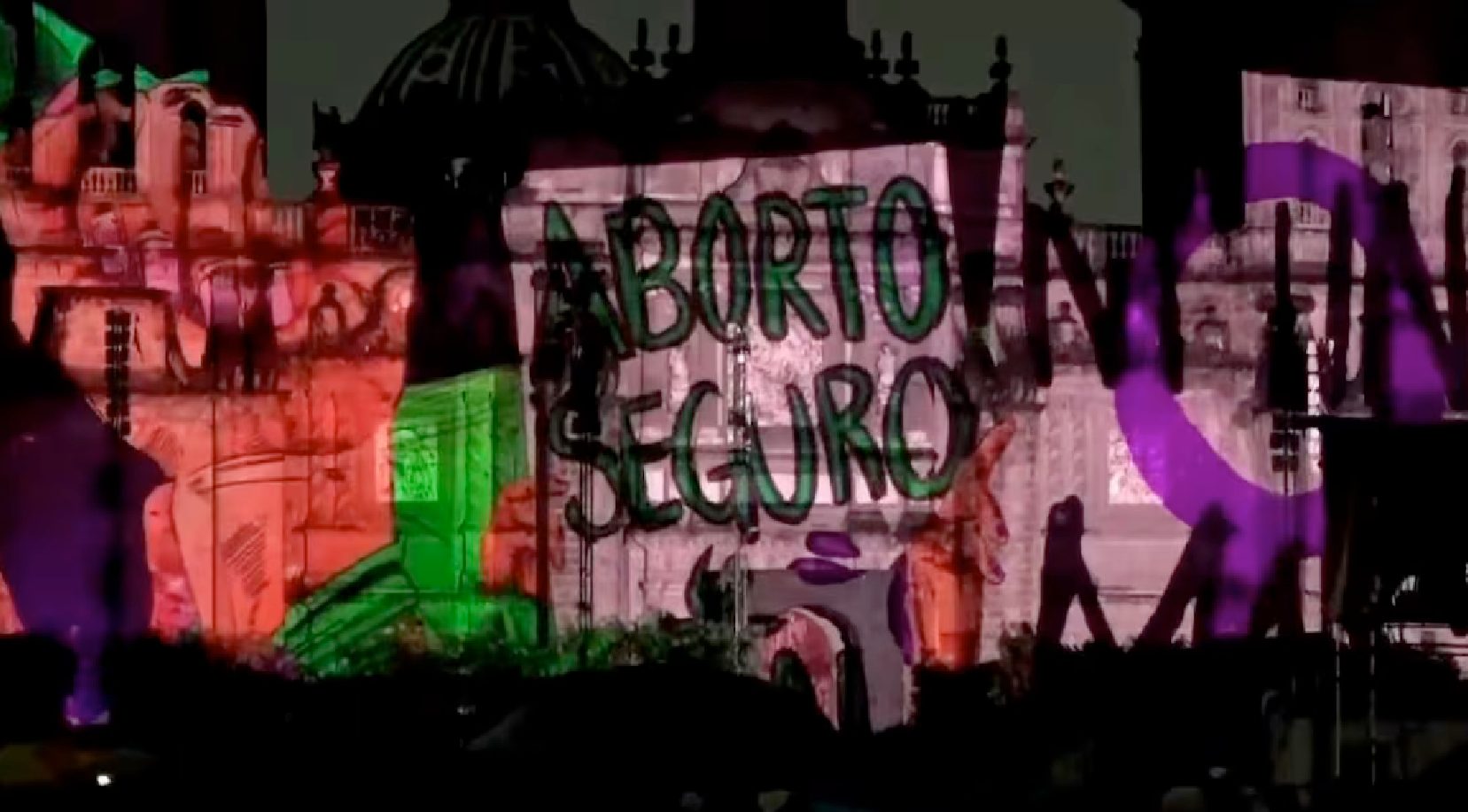
(ZENIT News / México City, 07.17.2025).- A luminous celebration of Mexico City’s seven-century history has stirred up an unexpected storm. The audiovisual spectacle «Memoria Luminosa. México Tenochtitlan 700 años», a grand video mapping event projected nightly onto the iconic façade of the Metropolitan Cathedral from July 11 to 27, has ignited a public clash between cultural narration and religious sensibilities.
The show opens with a dramatic retelling of Hernán Cortés’s arrival in 1519 and moves swiftly through centuries of transformation—from Aztec migration and empire-building to modern political milestones like the election of Mexico City’s first women mayors. But what drew fire wasn’t the bold sweep of the story—it was a particular chapter in it: the acknowledgment of legalized abortion as part of the capital’s recent history.
The Archdiocese of Mexico City issued a statement condemning what it called “deeply wounding images and ideas” that conflict with the faith and principles upheld by the Cathedral, one of Latin America’s most emblematic Catholic landmarks. Their criticism was about how such messages were being projected on the Cathedral itself.
The government’s initial response stressed the show’s intent to highlight key turning points and social movements that have shaped the city. «We do not aim to offend any form of devotion or religious principle,” read a statement from the local Culture Secretariat, which emphasized the show’s historical and cultural framing rather than any ideological stance.
Still, public sensitivity—especially given the setting—prompted action. Starting July 16, all references to abortion were quietly removed from the show. The Culture Secretariat acknowledged the Cathedral’s request and agreed to “act accordingly,” though it remains unclear whether the deleted content will reappear elsewhere or is gone for good.
The episode underscores an enduring tension in public storytelling. It’s not the first time Mexico’s religious and political timelines have collided—and likely not the last.
Thank you for reading our content. If you would like to receive ZENIT’s daily e-mail news, you can subscribe for free through this link.

Publicaciones relacionadas:
 The Apostolic Exarchate in Germany and Scandinavia switches to the Gregorian calendar
 USA: study reveals what men who will be ordained priests in 2023 look like
 Ash Wednesday Collection for the Church in Central and Eastern Europe Continues 35 Year History of Restoration and Healing
 Germany: Catholic excluded for the first time because of his political views
