

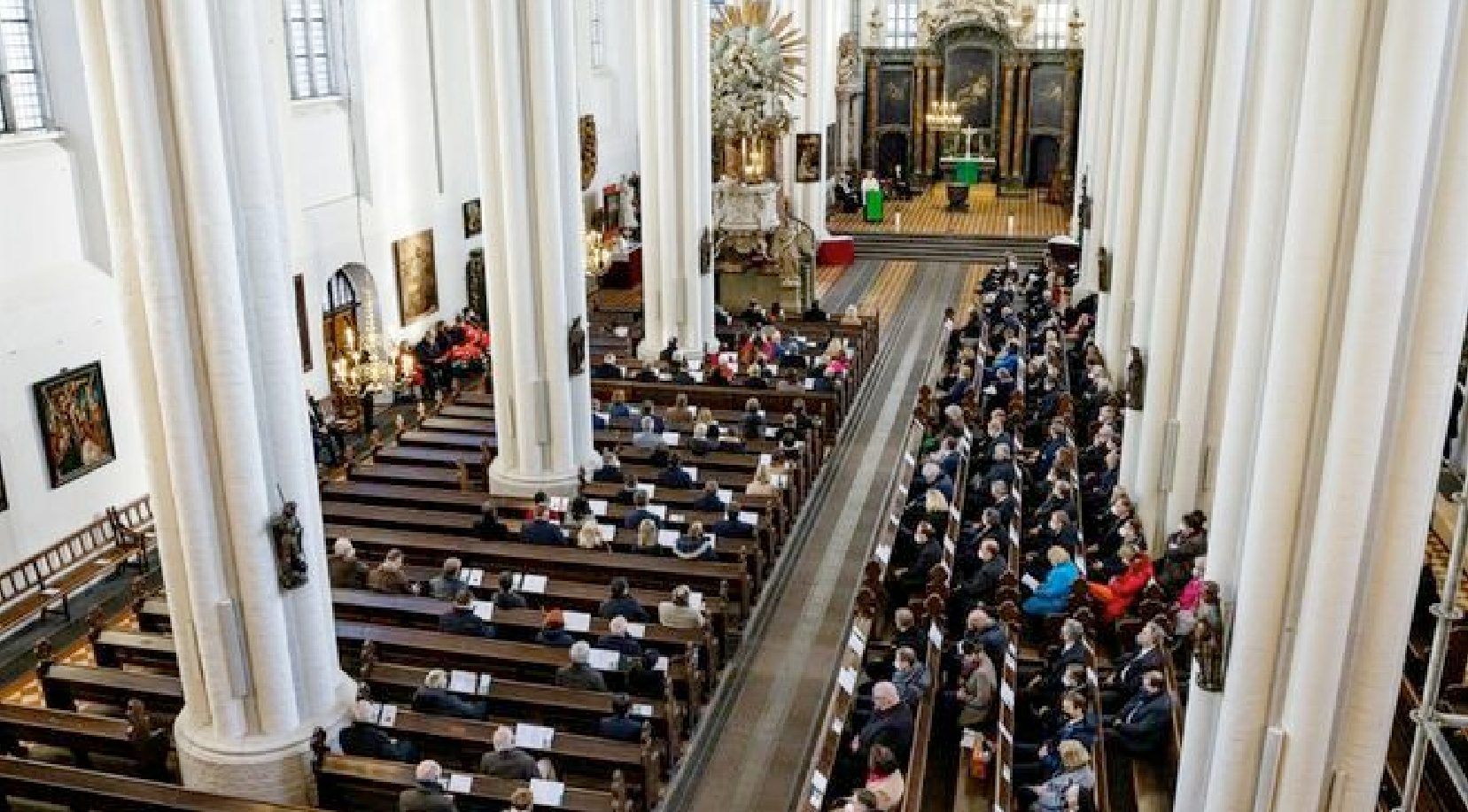
(ZENIT News / Berlin, 10.30.2025).- In a country once described as the cradle of both the Reformation and modern Catholic theology, Germany’s bond with its churches appears to be fading with remarkable speed. A new nationwide survey conducted by the Mentefactum Institute for the Worldview Research Group in Germany (Fowid) paints a sobering picture: the institutional Church—both Protestant and Catholic—is losing not only members, but also meaning in the everyday life of its own flock.
According to the study, which surveyed around 1,000 church members and was presented in Berlin this month, only 39 percent of practicing Christians in Germany say they would choose to belong to their church again if the decision were theirs as adults. Two decades ago, in 2005, that figure stood at 62 percent. The drop is not just statistical—it marks a generational and cultural shift that challenges centuries of religious tradition.
Perhaps even more telling is the decline in the number of people who would “certainly” become church members today. In 2005, more than a third—36 percent—responded affirmatively. In 2025, that number has dwindled to a mere 16 percent. The data suggests not only disaffection but growing distance: more than half of all respondents now say they would probably or definitely not rejoin the Church.
The causes of this erosion are complex, but one theme stands out clearly—many Germans still value the Church’s social mission, even if they have lost trust in its institutional presence. Programs such as Caritas (Catholic) and Diakonie (Protestant) remain the moral backbone of the Church’s public credibility. The survey found that a large majority of church members would consider leaving if these social outreach efforts were cut back or defunded. In other words, the Church’s relevance now rests more on its ability to serve the poor and vulnerable than on its ability to inspire faith.
Sociologist Carsten Frerk, who heads Fowid’s research team, calls this moment “a historic turning point.” For the first time in centuries, he notes, belonging to a church is no longer the social norm in Germany. Less than half of the country’s population now identifies as either Catholic or Protestant, and the trend shows no sign of reversing. “We are witnessing not just a statistical decline,” Frerk explains, “but a redefinition of what it means to be German in a post-Christian society.”
The weakening bond is visible across all denominations, though Catholics still display slightly stronger attachment than Protestants: 41 percent of Catholics say they would rejoin the Church, compared with 36 percent of members of the Evangelical Church in Germany (EKD). But the gap between genders reveals another layer of transformation. In 2005, two-thirds of women and more than half of men said they would choose to remain within their church. By 2025, those numbers have fallen dramatically—to 36 percent of women and 43 percent of men.
For many Germans, the question of church membership begins not with belief, but with baptism. Infant baptism remains the norm in both Protestant and Catholic communities, often performed in the first months of life. Yet as religious affiliation becomes increasingly cultural rather than spiritual, the sacrament risks becoming a social formality rather than a sign of lifelong faith.
The broader cultural implications are profound. The Church in Germany, once one of the wealthiest and most influential religious institutions in Europe thanks to the state-collected church tax, now finds itself navigating a crisis of identity. As financial and moral legitimacy wane, its future may depend on whether it can reinvent itself as a community of meaning rather than a bureaucratic relic of the past.
There remains, however, a paradox at the heart of this transformation. Even as traditional belief declines, the values historically nurtured by Christianity—charity, solidarity, compassion—continue to command deep respect. Germans may be leaving the pews, but many still carry fragments of the Gospel’s ethical legacy in their vision of social justice.
Whether the institutional Church can translate that residual moral capital into renewed faith remains an open question. For now, the numbers tell a story of quiet but steady withdrawal: a society where faith no longer defines identity, where the church door is left ajar not for conversion, but for service.
In the land of Luther and Benedict XVI, religion is not dead—but it is undeniably changing its face.
Thank you for reading our content. If you would like to receive ZENIT’s daily e-mail news, you can subscribe for free through this link.

Publicaciones relacionadas:
 Almost Half a Million Catholics of India Are Putting Themselves in Imminent Schism for
 This Is the Vocational Decline in Europe in 2023
 Cuba responds to the Pope by releasing half a thousand prisoners in the context of Jubilee 2025
 Gays in Seminaries? In Regard to Homosexuals and the Priesthood, the Norms Have Not Changed at All
