

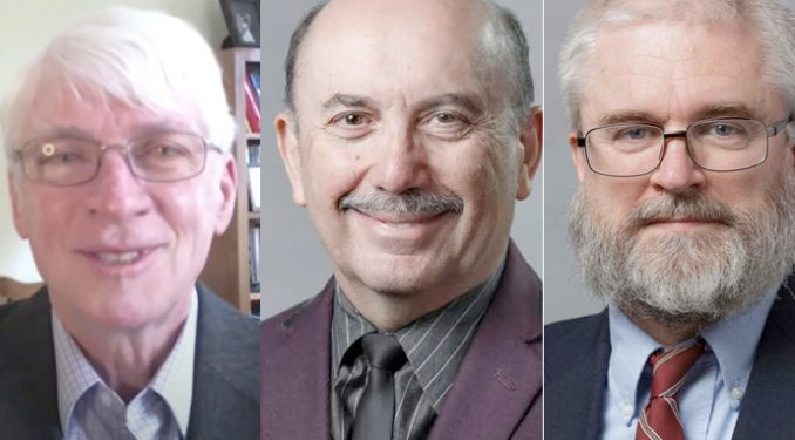
(ZENIT News / Detroit, 07.28.2025).- In a move that has sent tremors through, the new Archbishop of Detroit, Edward Weisenburger, has dismissed three of the most prominent conservative voices from the Sacred Heart Major Seminary within a matter of days. Without public explanation, theologians Ralph Martin, Eduardo Echeverría, and canon lawyer Edward Peters were removed from their posts in late July, prompting widespread concern over the direction of priestly formation under Weisenburger’s leadership.
Though the archdiocese has offered no official reason for the terminations—citing longstanding policies against commenting on personnel matters—many observers see the move as a deliberate shift away from the conservative theological roots that helped shape Sacred Heart into a flagship institution during the papacies of John Paul II and Benedict XVI.
For over two decades, Ralph Martin was a defining presence at Sacred Heart, championing the New Evangelization and heading the seminary’s pontifical licentiate program in Sacred Theology. “I was told there were concerns about my theological perspectives,” Martin said in a restrained but deeply personal public statement. “But no details were given.”
His colleague, Eduardo Echeverría, a Dutch-American systematic theologian with a reputation for intellectual rigor and fidelity to the Magisterium, confirmed his own dismissal but declined further comment, citing confidentiality agreements. Edward Peters, perhaps the most prominent lay canonist in the United States, was likewise let go, expressing sadness but also resolve, announcing he had retained legal counsel.
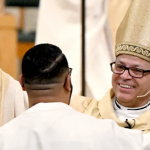
The removals come just months after Weisenburger, previously bishop of Tucson, was installed in Detroit by Pope Francis in one of the final episcopal appointments of the late pontiff. Known for his vocal support of pandemic-era restrictions, theological inclusivity, and outreach to LGBT Catholics, Weisenburger’s vision for the archdiocese appears to contrast sharply with that of his immediate predecessors.
Critics have not held back. Professor Janet Smith, a former colleague of the dismissed faculty, called the move “outrageous and terribly damaging to the seminary and the Church.” She lamented what she sees as the silencing of voices that had become critical of doctrinal ambiguities emerging from Rome in recent years.
“These men have served with distinction,” she said. “Their theological work is deeply rooted in the teachings of the Church. That they are now considered liabilities is deeply troubling.”
Similar concerns have been echoed by Catholic commentators across the ideological spectrum. Eric Sammons, editor of Crisis Magazine, called the dismissals “a political purge disguised as pastoral reform,” while Canadian commentator Brian Holdsworth observed that working within Church institutions has become increasingly precarious for faithful scholars. “You spend your life serving the Church,” he wrote, “only to find yourself discarded when new leadership takes over.”
Though Martin and his colleagues are not associated with traditionalist movements per se, they have not shied away from pointing out what they view as theological inconsistencies in recent papal documents, particularly «Amoris Laetitia». Their dismissal thus raises broader questions about ideological litmus tests in seminarian formation and the narrowing of intellectual diversity in Church institutions.
Weisenburger, for his part, has made no secret of his admiration for Pope Francis. At a press conference following the Pope’s death in April, he praised the late pontiff’s spontaneity, prophetic voice, and commitment to climate and migration issues. “He didn’t measure his words,” Weisenburger said. “He spoke from the heart, like the prophets of old.”
Pressed on how he intends to relate to Catholics uncomfortable with Pope Francis’s leadership, the archbishop replied, “There’s room for everyone in the Church. But whenever someone speaks prophetically, some people will be disturbed.”
Whether the archbishop sees Martin, Echeverría, and Peters as part of that disturbance is unclear. What is certain is that a new era has begun at Sacred Heart—and it is one marked not by dialogue or discernment, but by quiet, surgical dismissal.
The result, many fear, will be a chilling effect not just in Detroit, but in seminaries across the country. If some of the most faithful and respected educators in the Church are no longer welcome in classrooms, what message does that send to the next generation of priests? And what kind of Church will emerge from their formation?
Thank you for reading our content. If you would like to receive ZENIT’s daily e-mail news, you can subscribe for free through this link.

Publicaciones relacionadas:
 Prefect of Dicastery for Doctrine of the Faith criticizes gender ideology in speech to German theologians
 Archbishop of Homs, Syria, after last weekend massacre: “We do not want more bloodshed”
 Italian judiciary rules on accusation of Catholic archbishop in blasphemy case
 California bishop waives Mass precept for immigrant Catholics in the face of Trump raids
