

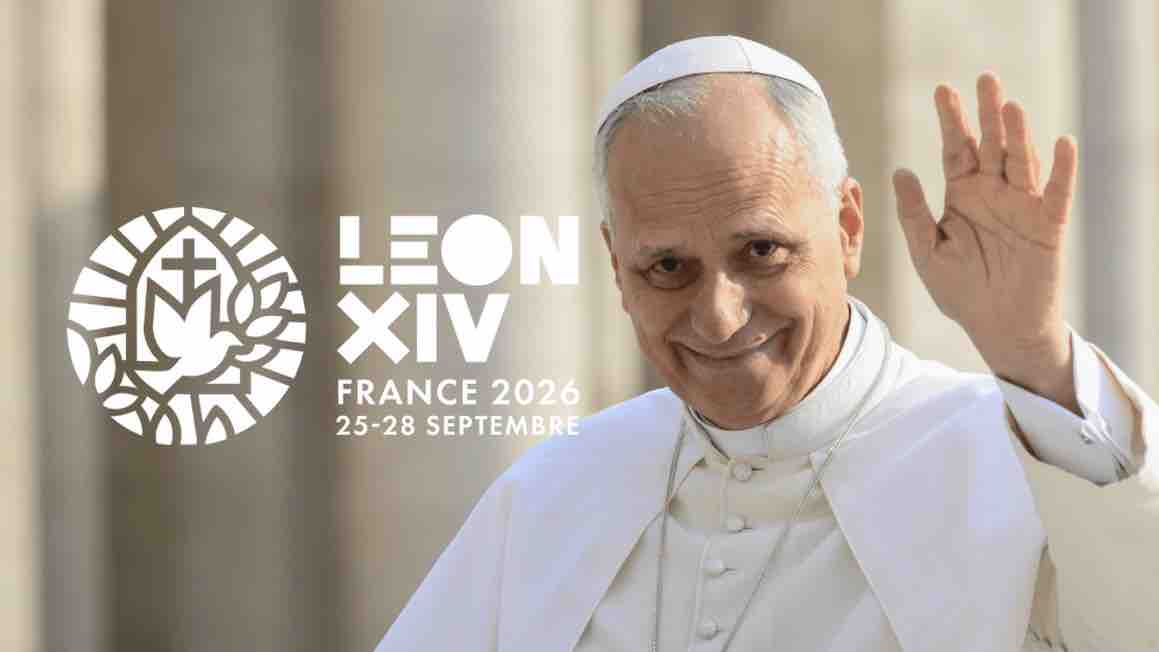
(ZENIT News / Paris, 09.18.2026).- Paris is preparing for Pope Leo XIV without the visual language usually associated with a papal arrival. There are no Vatican flags lining the avenues and no giant portraits of the Pope dominating the city. Instead, the most conspicuous sign of his presence is a construction site: Place de la Concorde is being transformed into an enormous open-air sanctuary for the Mass he will celebrate on September 26.
The contrast is revealing. France remains one of Europe’s most secular societies, yet the Pope’s visit is generating an extraordinary response. Between 600,000 and 800,000 people could gather along the Champs-Élysées to follow the Mass, with some estimates reaching one million. At the Stade de France, all 80,000 places for the young people’s prayer vigil were reserved within half an hour. Parishes are organizing accommodation, transport and reception, while some families have offered rooms to pilgrims arriving for only a day.
The scale of the preparations is matched by the security operation. Some 15,000 police officers, gendarmes and military personnel are expected to be deployed, together with an anti-drone system, in a security operation described as comparable to the one used during the Paris Olympics. Around 2,500 journalists have also been accredited.
Yet the most interesting story may not be the size of the crowds. It is the fact that France appears to be looking at the Pope with a curiosity that goes beyond conventional religious observance.
One reason is the unexpected revival visible in French Catholic life. More than 21,000 catechumens were expected at the Easter Vigil this year, around 20 percent more than the previous year. In a country that has spent decades confronting secularization and the consequences of the Church’s abuse crisis, the increase has altered perceptions of Catholicism.
The figure does not mean that France has suddenly become a practicing Catholic country again. It does, however, indicate that the story of religious decline is no longer sufficient to describe what is happening. The emergence of large numbers of adolescents and adults asking for baptism raises a different question: what is bringing people back to Christianity, or leading them to it for the first time, in a society where inherited religious practice has weakened so dramatically?
That question is likely to be more important for Leo XIV than the ceremonial dimensions of his visit.
The Pope will encounter a France marked by social tensions over migration, the cost of living, public finances, the war in Ukraine and the country’s political future. But he will also encounter a Catholic community that is trying to understand how to respond to those tensions without retreating into an exclusively internal life. The challenge, as one French Catholic journalist put it, is how a Church experiencing both fatigue and renewal can speak to a society beyond its own walls.
That makes the choice of places during the Pope’s four-day journey particularly significant. Paris will provide the largest public spectacle, Lourdes will place him at the heart of French Catholic devotion, and Metz will allow him to address Europe and its history. But the itinerary also includes the Maison Bakhita, a Paris center serving migrants and exiles, giving the Pope an opportunity to encounter people whose presence in France reflects the country’s increasingly diverse social reality.
The visit will also bring Leo XIV face to face with one of the most painful chapters in the Church’s recent history. At Lourdes he is scheduled to meet privately with seven people who suffered sexual abuse committed by members of the Church. The encounter will inevitably attract intense attention, but it belongs to the Church’s own internal responsibility as much as to public scrutiny. French Catholics themselves have demanded greater transparency and accountability since the national investigation into clerical sexual abuse.
Lourdes will therefore not be simply a devotional stop. It will bring together several dimensions of the Pope’s mission: prayer, suffering, healing, accountability and the dignity of the person.
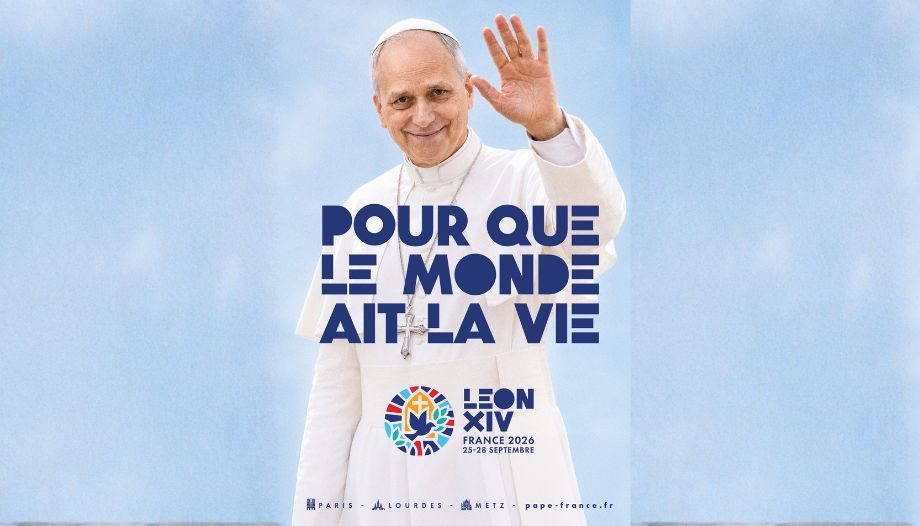
Another dimension will be more explicitly social. The French Parliament’s recent approval of assisted-dying legislation has left a substantial part of the Catholic community concerned about the legal and cultural consequences of changing the country’s approach to the end of life. According to Father Barly Kiweme, rector of the Italian Catholic Mission in Paris, Catholics are hoping for encouragement from Leo XIV for those who continue to defend human life. The theme chosen for the visit, “That the world may have life,” has particular resonance in that context.
The Pope’s message, however, is unlikely to be addressed only to French Catholics.
That becomes clear through the presence of another community preparing for the visit: the Italians of Paris. Some 500,000 Italian passport holders live in France, including about 53,000 in the capital, while twelve Italian Catholic missions operate across the country. Their participation illustrates something easily overlooked in discussions of national papal visits: a Catholic journey to one country can simultaneously become an encounter with a much broader Church.
For these communities, Leo’s arrival is primarily ecclesial. They see his presence as an opportunity to experience communion with the universal Church rather than as a specifically Italian event. Their involvement ranges from practical assistance with preparations to participation in the papal liturgies and prayer in their own parishes.
The Maison Bakhita visit carries particular meaning in this context. For the Italian Catholic Mission, the center represents a pastoral vision in which migrants are not treated as an external problem but as part of the Church and of the society in which they now live. The Italian community can recognize itself in that experience: immigrants who have established their lives in France while retaining elements of another cultural heritage.
It also illustrates a broader Catholic principle that will quietly run through the journey: the Church does not cease to be universal when it enters a particular culture. Rather, the local Church becomes one expression of a communion that crosses national borders. As the Italian chaplaincy’s leadership puts it, there is not an Italian Church alongside a French Church in competition with it; there is one Church lived through different languages, histories and communities.
There is, meanwhile, considerable public curiosity about what Leo XIV might say beyond the Church’s own concerns. An Ifop survey commissioned by French Catholic media found that only 6 percent of respondents expected the visit to influence the political debate before the next presidential election, while 26 percent thought it could breathe new life into the French Church. The survey therefore points toward an interesting distinction: expectations surrounding the Pope appear to be more religious and social than electoral.
Peace is another major expectation. France’s current tensions are unfolding against an international background dominated by war and geopolitical uncertainty. The Pope is widely expected to address peace and Europe, particularly in Metz. The European dimension of his visit fits a longstanding Catholic emphasis on international cooperation, the rule of international law and peaceful relations among nations.
That may ultimately prove to be one of the most consequential aspects of the journey. Leo XIV will not be arriving in France to offer solutions to every dispute dividing the country. Nor will the enthusiasm surrounding the Masses erase the wounds that have damaged the Church’s credibility. What he can do is place a different set of questions before a society accustomed to increasingly polarized arguments: what holds people together, what gives human life meaning, how can the vulnerable be protected, and what kind of future can still be imagined collectively?
The paradox of Leo XIV’s France visit is therefore contained in the empty streets around Place de la Concorde. Paris does not need to cover itself in papal imagery for the visit to be enormous. The evidence is already there—in the 80,000 young people, the tens of thousands seeking baptism, the hundreds of thousands preparing to gather for Mass, the victims waiting at Lourdes, and immigrant communities preparing to welcome the Pope as members of the same Church.
Thank you for reading our content. If you would like to receive ZENIT’s daily e-mail news, you can subscribe for free through this link.

Publicaciones relacionadas:
 A great homily of Leo XIV on the sacrament of the Eucharist: mercy, salvation and nourishment
 Pope Leo XIV indicates to bishops 4 theological cores and 4 indispensable virtues for a pastor
 Two Lessons from Saint Peter for When We Struggle to Accept and Understand God’s Ways, According to Leo XIV
 2 Ways (Explained) to Practice Mutual Love According to Pope Leo XIV
