

(ZENIT News / Rome, 11.19.2026).- The world’s religious map is heading toward a historic turning point. Muslims could surpass Christians as the largest religious group as early as 2035, according to new projections by the Pew Research Center, but the shift is less a story of mass conversion than of births, age, and the changing geography of humanity.
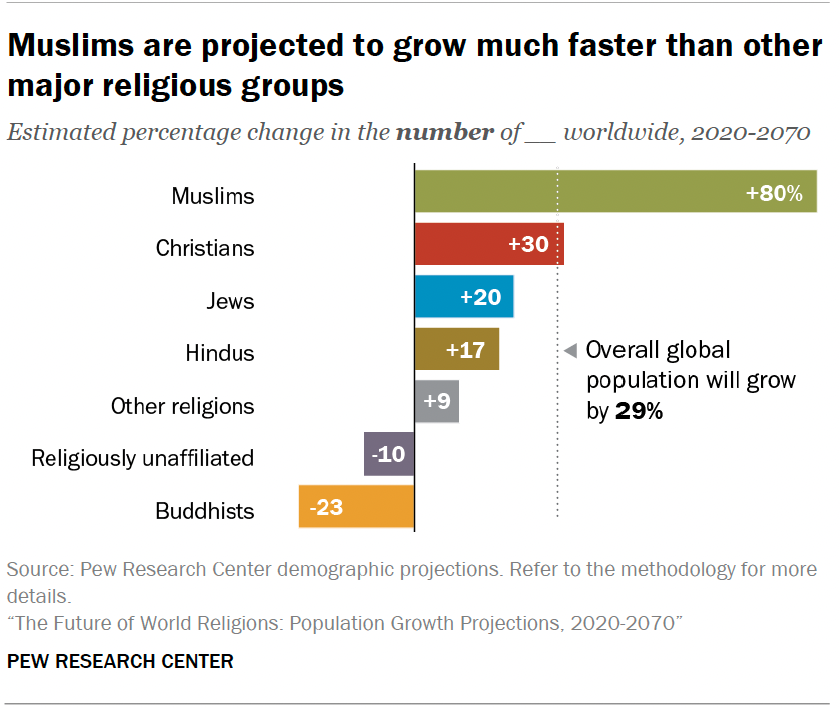
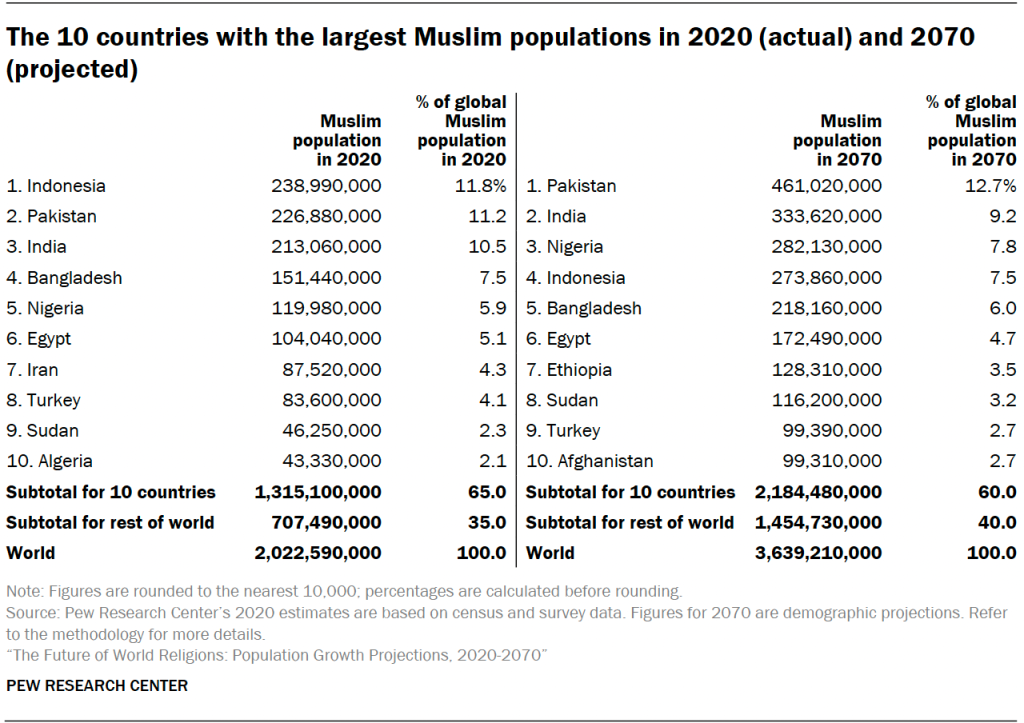
The two faiths are not moving in opposite directions: both are expected to grow in absolute numbers. The difference lies in their pace. Between 2020 and 2070, the Muslim population is projected to increase by 80%, compared with 30% for Christians, while the world’s population grows by 29%. By the end of that period, Muslims could number more than 3.6 billion, against just under 3 billion Christians.
The figures reveal the powerful influence of demographics on religious life. Muslim women had an estimated fertility rate of 3.1 children between 2020 and 2025, compared with 2.5 among Christian women and 1.6 among women belonging to other religious groups. The replacement-level rate is generally estimated at around 2.1 children per woman. The age difference is equally significant: in 2020, Muslims had a median age of 24, while non-Muslims averaged 33.
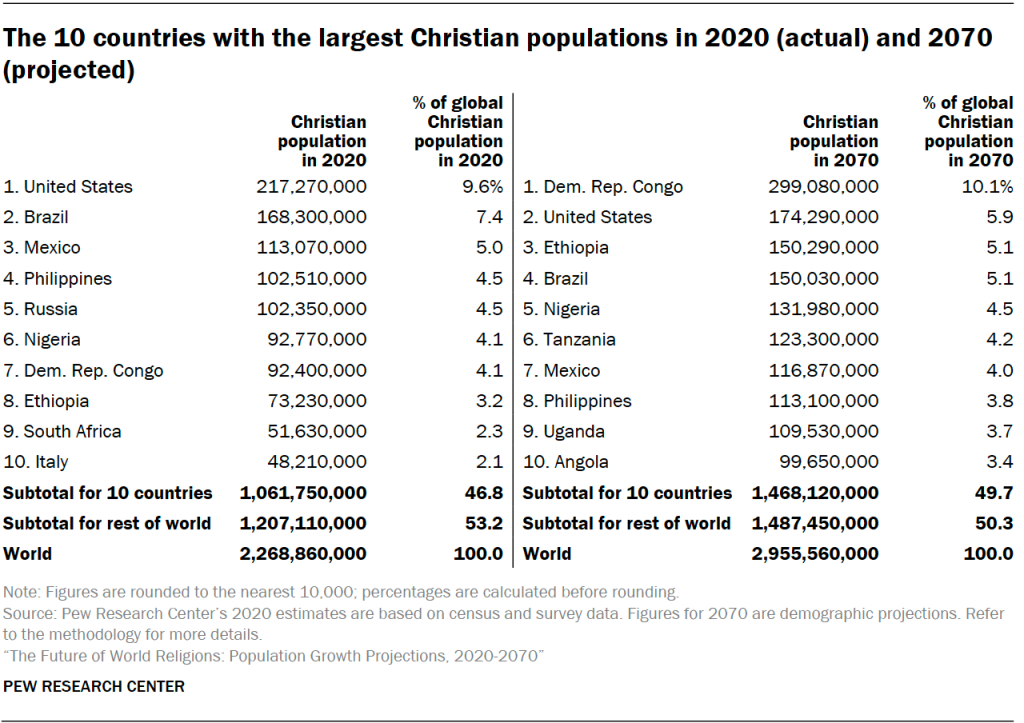
The geographic center of Christianity is also moving decisively south. Sub-Saharan Africa, where population growth remains strong and Christianity and Islam are both deeply rooted, will account for an increasingly large share of the world’s believers. By 2070, more than half of all Christians are expected to live in the region. The Democratic Republic of Congo alone could have 299 million Christians, tripling its 2020 figure of 92 million and overtaking the United States as the country with the largest Christian population.
This shift will reshape the Church’s global identity. Christianity’s demographic future will increasingly be determined not by Europe or North America, where aging populations and declining religious affiliation are taking their toll, but by African societies where younger generations and higher birth rates are sustaining growth. The continent’s importance to the Catholic Church, already evident in vocations, missionary activity and the vitality of local communities, is likely to become even more pronounced.
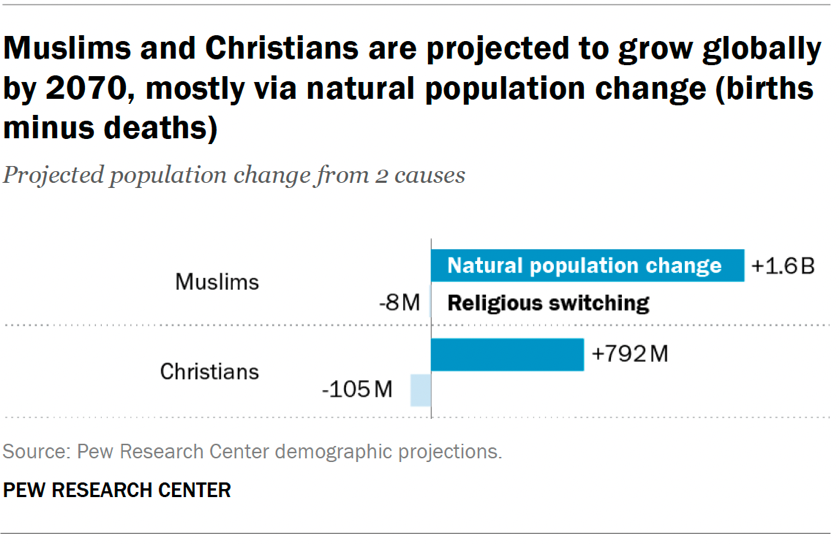
The projections, however, also point to a challenge within Christianity that cannot be explained by birth rates alone. Religious switching is expected to cost Christianity a net 105 million people worldwide between 2020 and 2070, with most leaving for the category of religiously unaffiliated. By comparison, the net loss for Islam through religious switching is projected at just 8 million. Movement between Christianity and Islam itself is expected to be almost balanced: an estimated 9.2 million Muslims could become Christians, while 9 million Christians could become Muslims. The Muslim population’s projected expansion, therefore, is not principally the result of conversions from Christianity.
The United States illustrates the contrast between demographic growth and religious erosion. It is expected to lose its Christian majority by 2070, with Christians declining from an estimated 217 million in 2020 to 174 million. Meanwhile, the unaffiliated could account for approximately 41% of the population. Canada and Germany are also projected to lose their Christian majorities. Across Europe, Christians are expected to experience more deaths than births and continued net losses through religious switching, while the unaffiliated could rise from 25% to roughly one-third of the population. The Muslim share of Europe’s population, meanwhile, could grow from 6% to 13%, partly through migration.
Yet the global picture is more complex than the headline prediction of an Islamic majority might suggest. Christians are projected to remain the largest religious group in most world regions through 2070. In Latin America and the Caribbean, they could still represent 77% of the population, down from 85% in 2020. In sub-Saharan Africa, Christian numbers are expected to grow by 129%, even as Muslims grow faster, by 166%. In the Middle East and North Africa, Muslims are projected to remain overwhelmingly dominant, at around 95% of the population.
The unaffiliated present another demographic paradox. Their share of the global population could fall from 24% to 17%, even as many countries experience growing secularization. The explanation lies largely in China, which accounted for roughly two-thirds of the world’s unaffiliated population in 2020. Its projected population decline could reduce the global number of unaffiliated people by 361 million—more than offsetting an expected increase of over 180 million elsewhere.
Pew’s projections cover 201 countries and territories, representing 99.98% of the world’s population, and incorporate fertility, mortality, migration, age profiles and religious switching. They are conditional projections, not predictions of an inevitable future: wars, political upheaval, economic changes, religious revival or accelerating secularization could alter the trajectory.
The religious influence in the 21st century will increasingly reflect where people are born, how young their communities are, whether families have children, and whether faith is passed on or abandoned. Christianity may remain numerically formidable, but its center of gravity is shifting. And the future of the world’s religions will be decided as much in family life, demographic trends and the transmission of belief between generations as in the public debates about religion that dominate the West.
Thank you for reading our content. If you would like to receive ZENIT’s daily e-mail news, you can subscribe for free through this link.

Publicaciones relacionadas:
 Vienna’s Silent Transformation: Nearly 50% of students in schools are already Muslim. Only 17% are Catholic
 Open Door to Paedophilia: UN Says Children Can Consent to Sexual Relations with Adults
 The Battle Over Abortion Rights Heats Up in 10 States Ahead of November 5 Election
 Why the Alberto Ravagnani Case Is a Perfect Communication Case Study
