

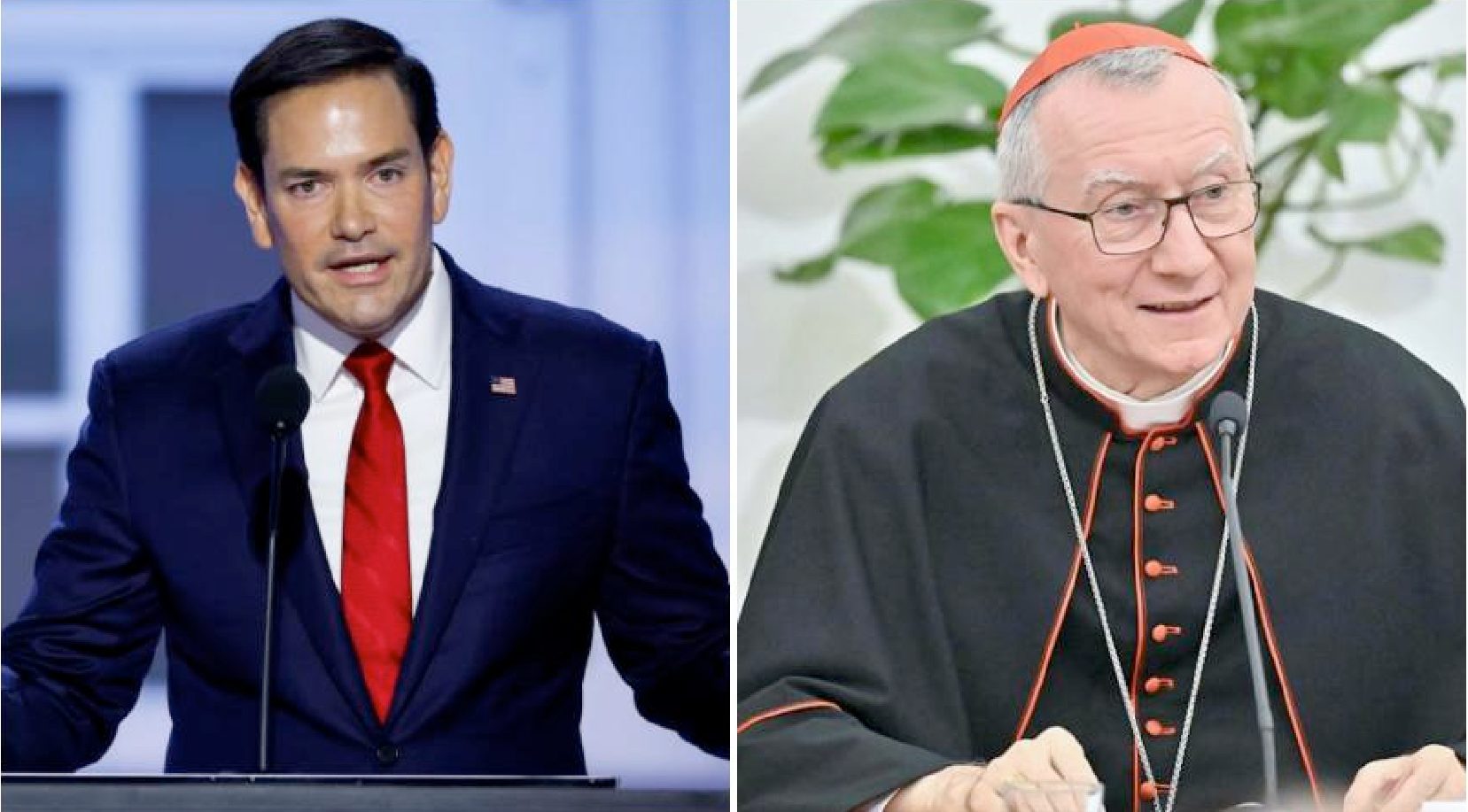
(ZENIT News / Rome, 01.07.2026).- Diplomacy, pastoral concern and raw uncertainty converged in early January as the United States, the Holy See and Venezuela found themselves drawn into the aftermath of a dramatic military intervention and its political and humanitarian consequences.
On 6 January 2026, U.S. Secretary of State Marco Rubio held a phone call with Cardinal Pietro Parolin, the Vatican’s Secretary of State. According to the U.S. State Department, the conversation focused on “urgent challenges,” with particular attention to efforts to improve the humanitarian situation in Venezuela, alongside broader commitments to peace and religious freedom worldwide. Both men reaffirmed their intention to deepen cooperation between Washington and the Holy See in addressing shared global priorities.
The timing of the call was significant. Just three days earlier, on 3 January, a U.S.-led military operation in Caracas resulted in the capture of Venezuelan President Nicolás Maduro and his wife, Cilia Flores. The operation immediately altered the political landscape of the country and sent shockwaves through the region. On 4 January, during the traditional Angelus prayer, Pope Leo XIV publicly addressed the situation, saying that he was following developments in Venezuela “with a heart full of concern.” He stressed that the good of the Venezuelan people must prevail over any other consideration and called for full respect for the nation’s sovereignty.
While the Vatican has not released its own readout of the 6 January conversation, Cardinal Parolin’s long familiarity with Venezuela adds weight to the exchange. He served as apostolic nuncio in the country from 2009 to 2013, years marked by deepening political polarization and growing social hardship. His experience places him among the most knowledgeable Vatican officials when it comes to Venezuela’s internal dynamics.
On the ground, the Venezuelan Catholic hierarchy has moved quickly to interpret events through a pastoral lens. Archbishop Jesús González de Zárate Salas of Valencia, president of the Venezuelan Bishops’ Conference, described a nation suspended between relief, fear and unanswered questions. Speaking after the attack, he noted that Venezuelans were experiencing “contradictory feelings” and that, for many, the unfolding events had generated more questions than answers.
The archbishop recalled that on Saturday, 3 January, as news of imminent military incursions spread, panic buying swept through parts of the population, with people rushing to secure basic goods. By contrast, the following day, Sunday 4 January, participation in Mass was “almost normal,” a detail he interpreted as a quiet but resilient sign of hope. For the bishops, he explained, these days have been lived in prayer and constant communication with priests, prioritizing pastoral accompaniment over political analysis.
González de Zárate outlined concrete paths that the bishops believe are essential for national reconciliation: respect for the dignity of the person, tolerance and mutual understanding, commitment to the common good, and fidelity to democratic values enshrined in the Constitution. He acknowledged that these are not easy roads, especially given the experiences of recent decades, but insisted they remain the only viable ones.
At the same time, the episcopal conference reiterated that responsibility for responding to Venezuela’s complex realities lies first and foremost with Venezuelans themselves. International assistance, the archbishop said, has been and will continue to be necessary, particularly in the areas of humanitarian aid, human rights and the defense of democratic order.
The bishops also expressed gratitude for Pope Leo XIV’s words during the Angelus of 4 January. They see in his appeal a clear framework for the future: overcoming violence, pursuing justice and peace, safeguarding national sovereignty, upholding the rule of law, and respecting civil and human rights while working together to build a better tomorrow.
Against this backdrop, the 6 January call between Rubio and Parolin appears less as a routine diplomatic exchange and more as part of a broader effort to navigate a volatile moment. With the military action of 3 January, the papal intervention of 4 January and the diplomatic contact of 6 January forming a tight sequence, the first week of the year has set the tone for what promises to be a decisive and delicate period for Venezuela and for those seeking to influence its future.
Thank you for reading our content. If you would like to receive ZENIT’s daily e-mail news, you can subscribe for free through this link.

Publicaciones relacionadas:
 Vatican Delegation Visits Vietnam: Diplomatic Relations Further Strengthened
 Person Who Lost Trial in the Vatican Reports the Pope to the UN: Why and About What?
 Andorra will approve abortion despite the fact that its head of state is a Catholic bishop
 Two years after the massacre in Israel: Leo XIV speaks out and discusses other current issues, such as his first trip as Pope
