

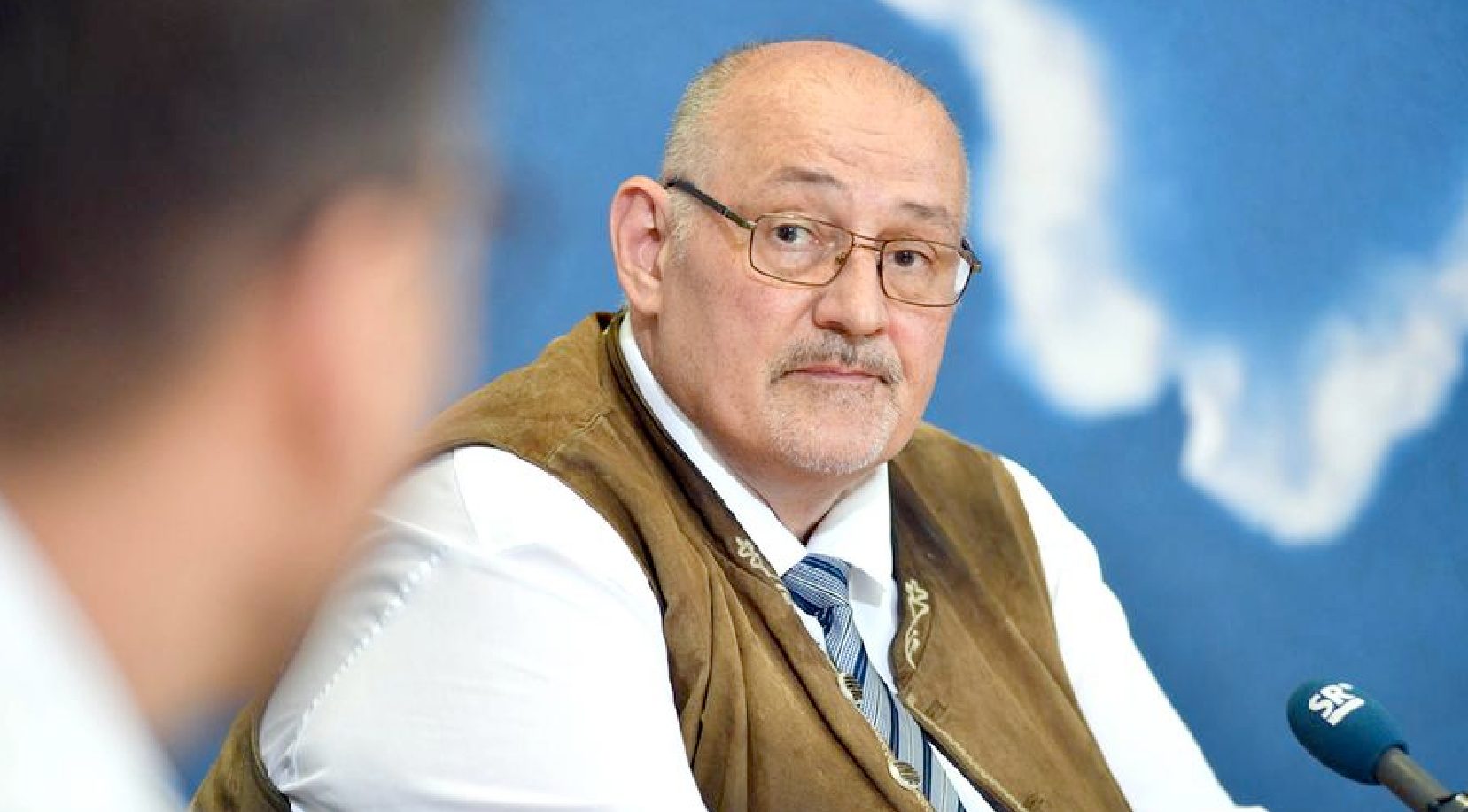
(ZENIT News / Madrid, 01.29.2026).- In an unusual and closely watched decision, the Vatican has confirmed the removal of Christoph Schaufert — a regional lawmaker from Saarland and member of Germany’s Alternative für Deutschland (AfD) party — from the parish council of St. Mary’s Catholic Church in Neunkirchen.
The ruling, finalized by the Dicastery for the Clergy and communicated on January 26 through the Diocese of Trier, brings to a close Schaufert’s appeal against a diocesan decree issued in April 2024. According to German bishops’ news agency KNA, this is believed to be the first time in Germany that Rome has upheld such a sanction against a Catholic lay official on the basis of political affiliation and public representation.
At stake was not merely a local parish appointment, but a broader question: how far can active political engagement go before it collides with Catholic teaching?
Schaufert, who serves in the Saarland state parliament and previously acted as deputy leader of the AfD parliamentary group, had sat on his parish council for several years. His removal last spring also included a sweeping prohibition: he was barred from running for any parish or church administrative council anywhere within the Diocese of Trier.
Bishop Stephan Ackermann rejected Schaufert’s initial complaint, prompting the politician to take his case to Rome. The Vatican’s decision now definitively closes that avenue.
The diocese grounded its action in a 2024 statement by the German bishops titled “Ethnic nationalism and Christianity are incompatible.” In a letter addressed directly to Schaufert, Ackermann argued that his political profile placed him in a category distinct from ordinary party membership.
“As an elected official in multiple bodies and in the state parliament — where you also served as deputy parliamentary group leader — you are more than a simple member of the AfD,” the bishop wrote. “You represent this party to the outside world and therefore identify yourself with the positions it publicly promotes.”
That distinction proved decisive. Church authorities concluded that Schaufert’s high-visibility political role made it impossible to separate his public advocacy from his responsibilities within ecclesial structures.
Following the Vatican’s confirmation, Schaufert reportedly announced that he was leaving the Catholic Church in protest, accusing it of expelling him from parish leadership solely because of his political ties. At the same time, he has insisted that he still considers himself Catholic — a paradox that underscores the personal and spiritual tensions surrounding the case.
The AfD, widely described in Germany as right-wing populist, has long been at odds with the Catholic bishops over issues such as migration, national identity, and social cohesion. The episcopal conference has repeatedly warned that ideologies rooted in ethnic nationalism stand in direct contradiction to the Gospel’s universal vision of human dignity.
What makes this episode particularly striking is its rarity. While church leaders have often criticized political movements across the spectrum, formal removal of a sitting Catholic politician from parish governance — followed by Vatican confirmation — is virtually unprecedented in Germany. Observers note that there is no comparable public record of similar measures being taken against Catholics affiliated with left-leaning parties.
Technically, Schaufert was not excommunicated. Rather, he was deemed unsuitable for leadership roles within parish structures, which in Germany carry significant responsibility for finances, pastoral planning, and community life. These councils are not symbolic bodies; they exercise real influence at the local level.
Thank you for reading our content. If you would like to receive ZENIT’s daily e-mail news, you can subscribe for free through this link.

Publicaciones relacionadas:
 German Franciscans Elect as Provincial Superior a Friar Openly Declared Homosexual
 Census Shows that Only Four Out of Every 10 Australians are Christians. Catholics Are a Majority but Those with No Religion Increase
 Nigeria: church ‘always full’ two years after massacre despite lack of justice
 Leo XIV, China and attention to communities suffering for their faith
