

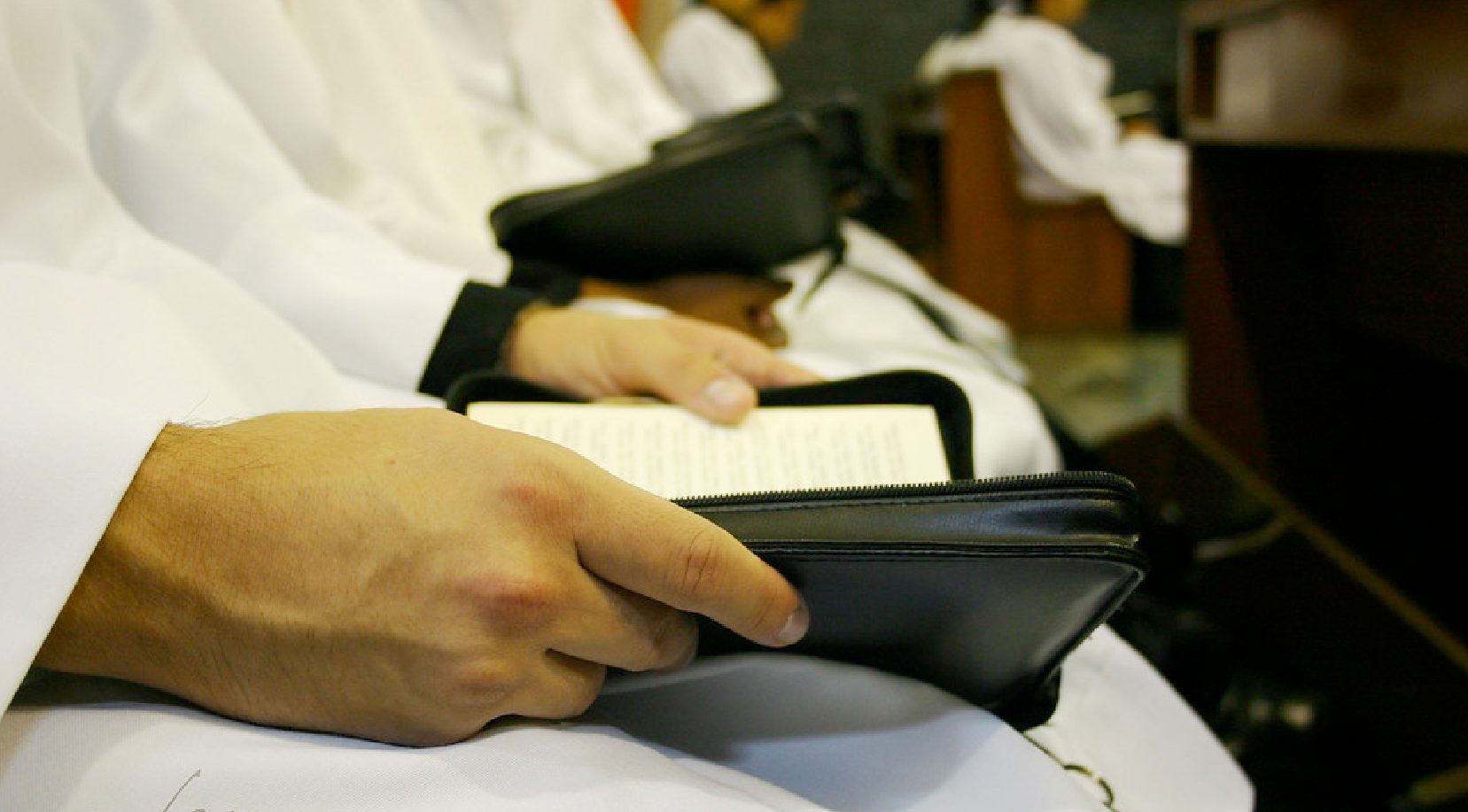
(ZENIT News / Washington, 02.01.2026).- On January 28, Word on Fire quietly announced a gesture with potentially long-lasting consequences for the Catholic Church in the United States: every seminarian in the country will receive a complete four-volume set of the newly revised Liturgy of the Hours—free of charge.
It is not a symbolic giveaway. It is a concrete investment in prayer.
Thanks to a major anonymous donation, roughly 4,000 full sets of the Liturgy of the Hours, Second Edition, will be distributed to Catholic seminarians across the U.S., at no cost to either the men in formation or their seminaries. Word on Fire confirmed that the initiative was made possible largely through the extraordinary generosity of a single benefactor who asked to remain unnamed.
“This donor understood that prayer forms priests,” said Brandon Vogt, Word on Fire’s director of publishing, in remarks to EWTN News. “He saw that by placing these books in seminarians’ hands, he would be helping shape an entire generation of future priests and bishops—giving them texts they will pray from multiple times every day for the rest of their lives.”
That perspective touches on something many outside Catholic life may not fully grasp: the Liturgy of the Hours is not a devotional option for clergy. It is a daily obligation.
Also known as the Divine Office, the Liturgy of the Hours structures the day around prayer, sanctifying morning, midday, evening, and night through psalms, hymns, biblical readings, and intercessions that follow the Church’s liturgical calendar. Priests and religious are required to pray it; countless lay Catholics have also adopted it as part of their spiritual routine.
In effect, it is the Church’s heartbeat—public prayer offered on behalf of the whole world.
A translation decades in the making
The edition now being placed in seminarians’ hands represents more than a publishing update. It is the result of over a decade of liturgical and linguistic work.
In November 2012, the U.S. bishops voted to begin revising the English translation of the Liturgy of the Hours, aligning it with the principles of Liturgiam Authenticam, the Vatican’s 2001 instruction calling for greater fidelity to Latin liturgical texts. The move followed the release of the Third Edition of the Roman Missal, which had already introduced a more precise English translation of the Mass.
Final approval of the new Hours came in November 2024. By May 2025, the U.S. Conference of Catholic Bishops had sent the complete manuscript to Rome for confirmation. Five months later, in October 2025, Ascension and Word on Fire were officially selected to publish the Second Edition.
For many priests, this marks the most significant change to their daily prayer in decades.
Word on Fire’s involvement is particularly notable. Founded by Bishop Robert Barron, the ministry is best known for its evangelization efforts through media, publishing, and digital outreach. This project, however, is firmly rooted in clerical formation rather than public apologetics.
Barron himself framed the donation in deeply pastoral terms.
“This gift is an expression of gratitude and hope,” he said in a statement. Recalling his years as rector of Mundelein Seminary in Illinois, Barron explained that he consistently urged seminarians to rely on the Litururgy of the Hours as a foundation of priestly life. “By placing a beautiful and durable edition in the hands of every seminarian, we hope to foster lifelong fidelity to the Church’s prayer among those preparing for Holy Orders.”
Why these books matter
To outsiders, four thick volumes may seem like little more than ceremonial artifacts. But within priestly life, they are working tools—used daily, often several times a day, in chapels, rectories, airports, hospital corridors, and quiet corners of parish offices.
Pope John Paul II once captured their spiritual weight during his 1979 visit to the United States.
“The value of the Liturgy of the Hours is immense,” he said. “Through it, all the faithful—especially clergy and religious—fulfill a primary role: the prayer of Christ continues in the world.”
He went further, insisting that this prayer must stand “among the highest priorities of our day,” because through it, ordinary time is transformed and human activity is sanctified.
Vogt echoed that vision, explaining that Word on Fire hopes to help seminarians establish this rhythm early, making it both accessible and sustainable. Formation, after all, is not only academic. It is liturgical, spiritual, and habitual.
A strategic act of generosity
There is also a quiet strategic dimension to the donation.
Seminarians typically acquire their own breviaries, which can cost hundreds of dollars for a complete set. By removing that barrier, Word on Fire ensures that every man in formation begins priesthood with the same foundational liturgical resources—and with an edition designed to accompany him for decades.
More subtly, the initiative reinforces a model of priesthood centered on prayer before performance, contemplation before administration.
At a time when seminaries face cultural pressures, declining vocations in some regions, and increasing pastoral demands, this act redirects attention to something elemental: the priest as a man formed by daily encounter with Scripture and psalmody.
In that sense, the anonymous donor’s vision extends far beyond bookshelves.
It reaches into future parishes, dioceses, and episcopal offices—where today’s seminarians will one day preach, govern, and accompany souls. By shaping their prayer now, Word on Fire hopes to influence how they lead later.
St. Thomas Aquinas, whose feast framed the announcement, famously taught that grace builds on nature. This initiative seems to take that principle seriously: provide the tools, cultivate the habit, and trust that God will do the rest.
Sometimes, renewal begins not with grand reforms, but with four quiet volumes—and the discipline to open them every day.
Thank you for reading our content. If you would like to receive ZENIT’s daily e-mail news, you can subscribe for free through this link.

Publicaciones relacionadas:
 The 4 vicinity of the priest: Pope receives fifth Spanish seminary in Vatican (Getafe)
 Amid Tight Restrictions, Nicaragua Allows Rare Clergy Ordinations in Managua
 Ordinations Across a Shifting Continent: A Fragmented Yet Revealing Portrait of Catholic Priesthood in Europe, 2025
 Vatican suspends training at major seminary in Congo amid growing division in local Church
