

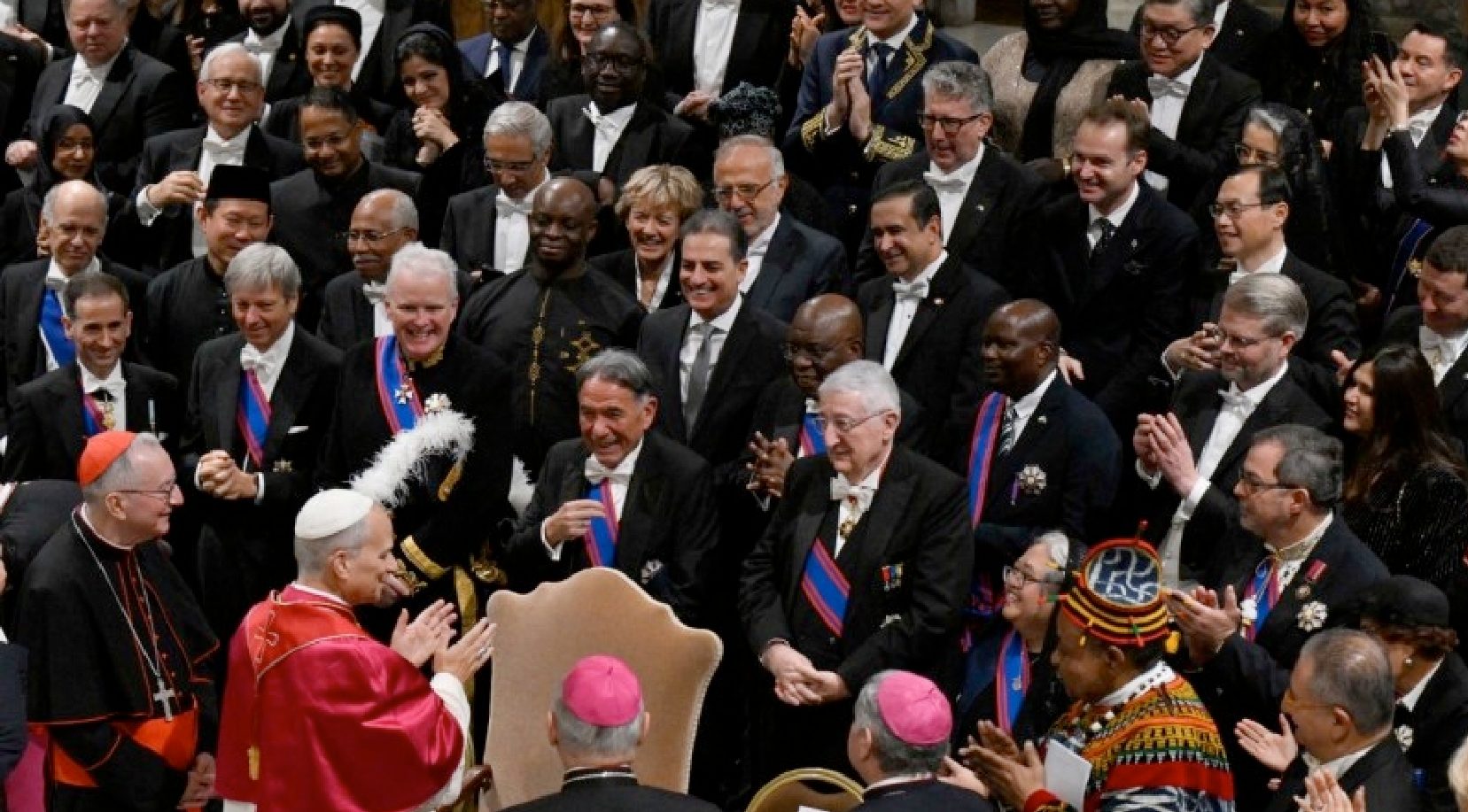
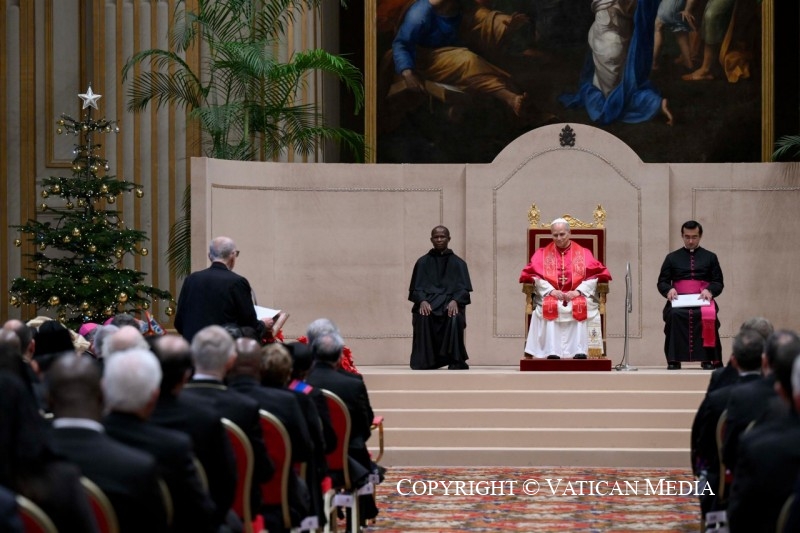
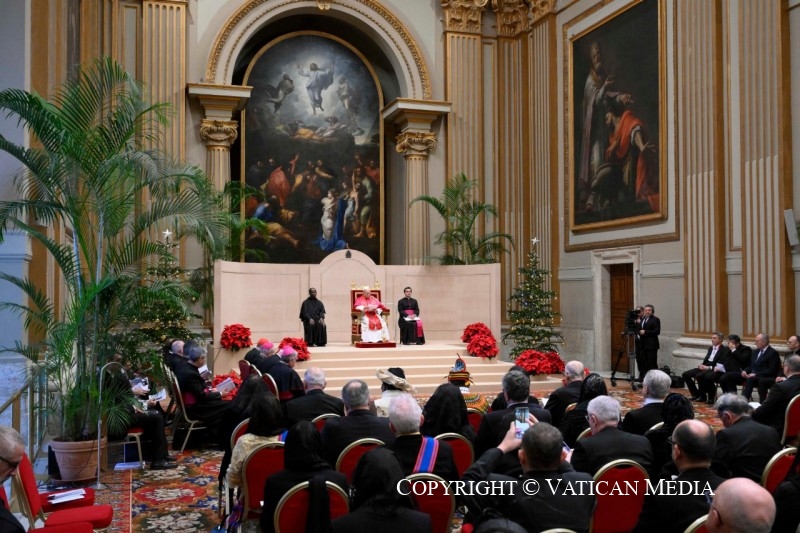
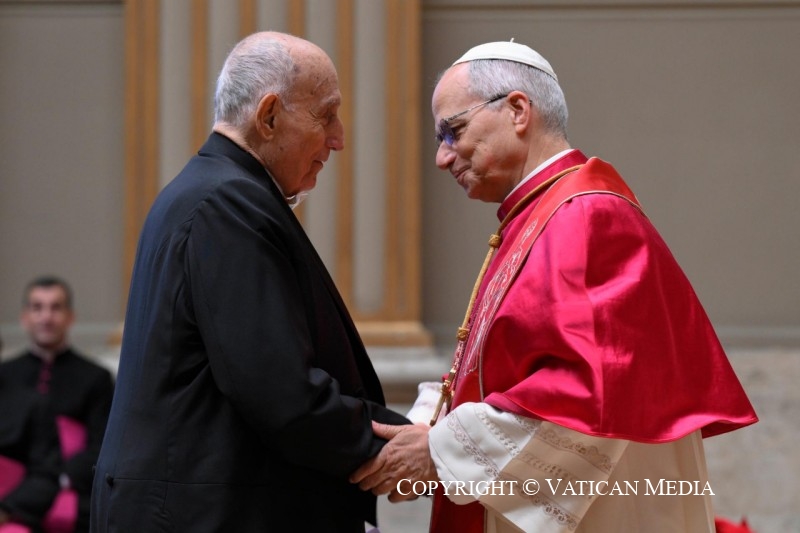
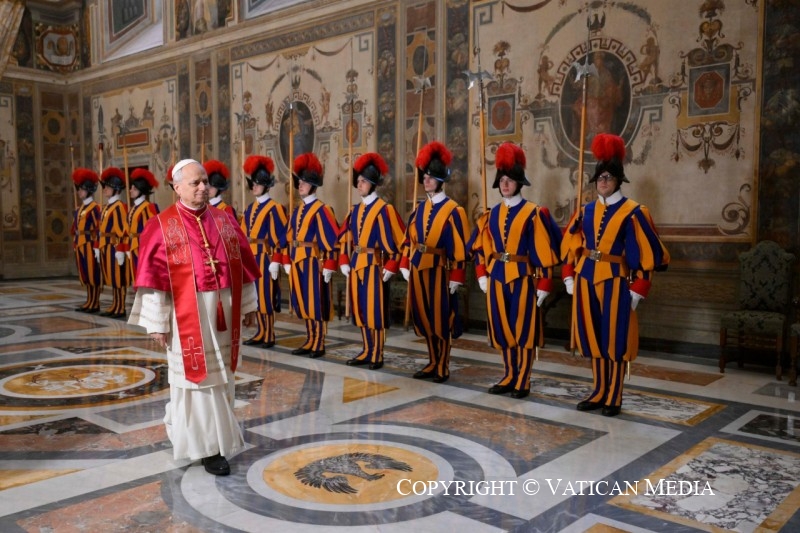
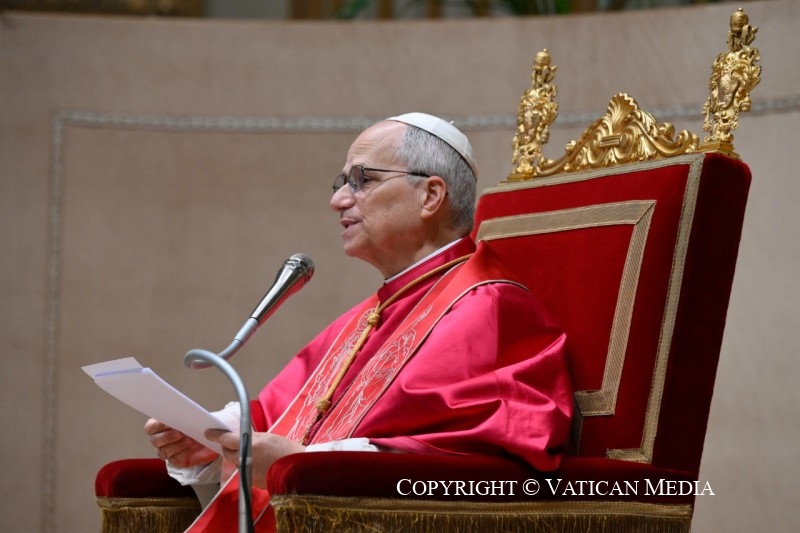
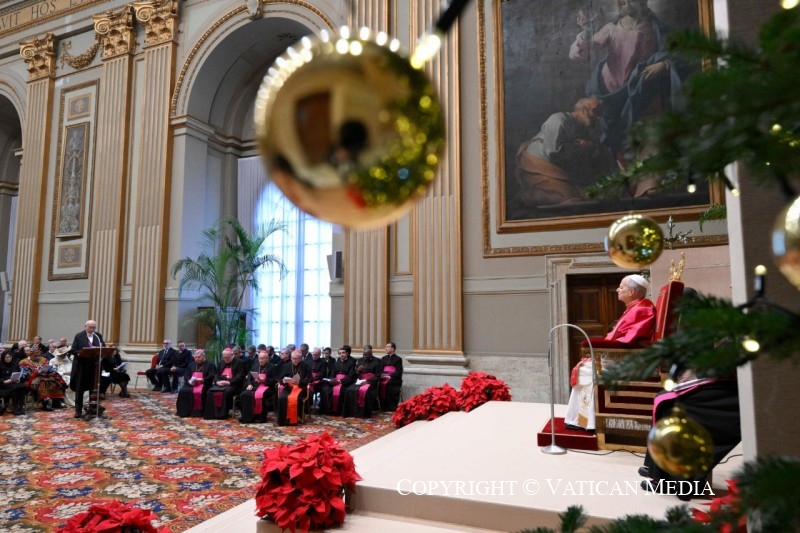
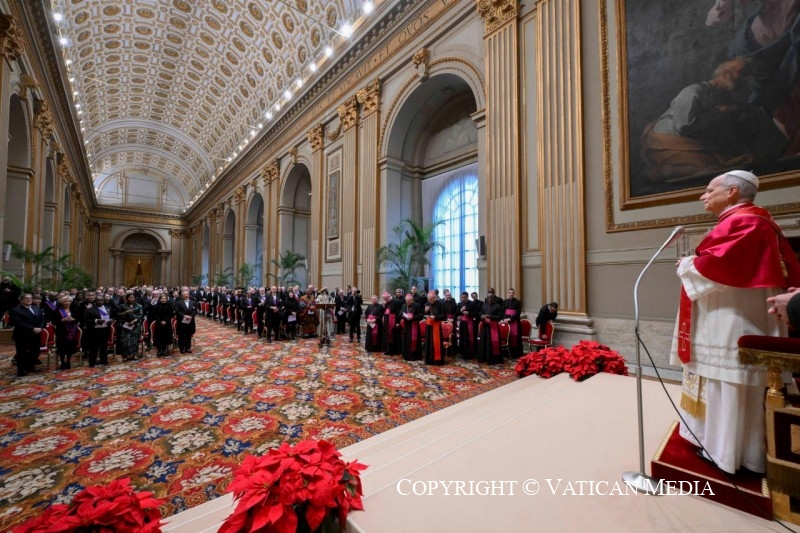
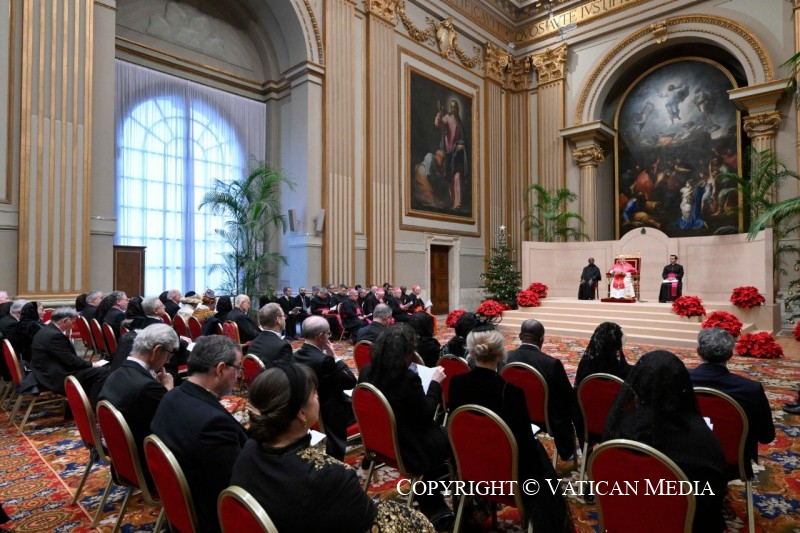
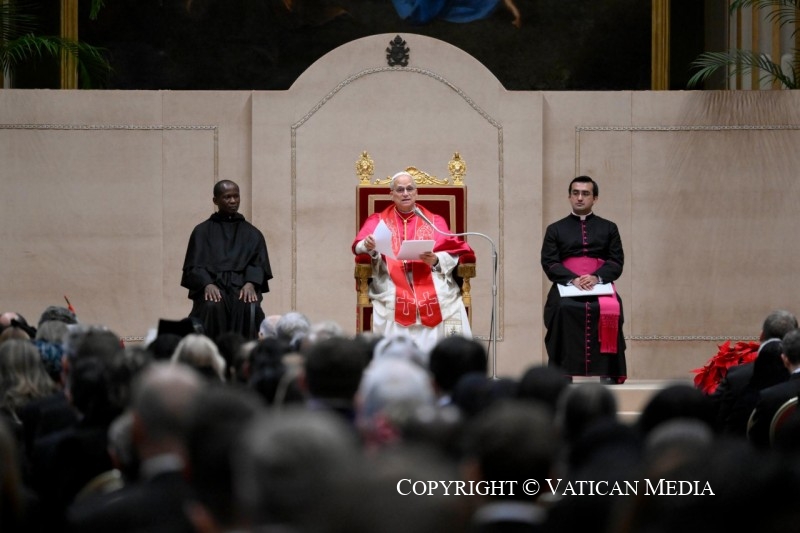
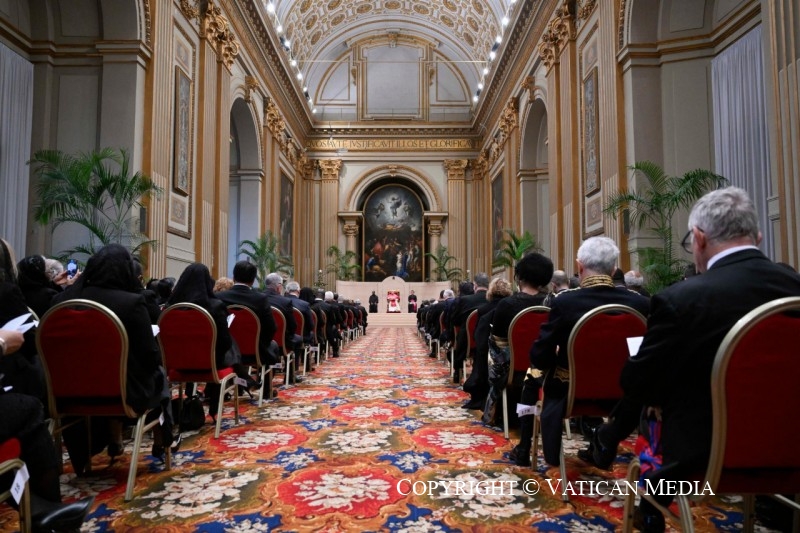
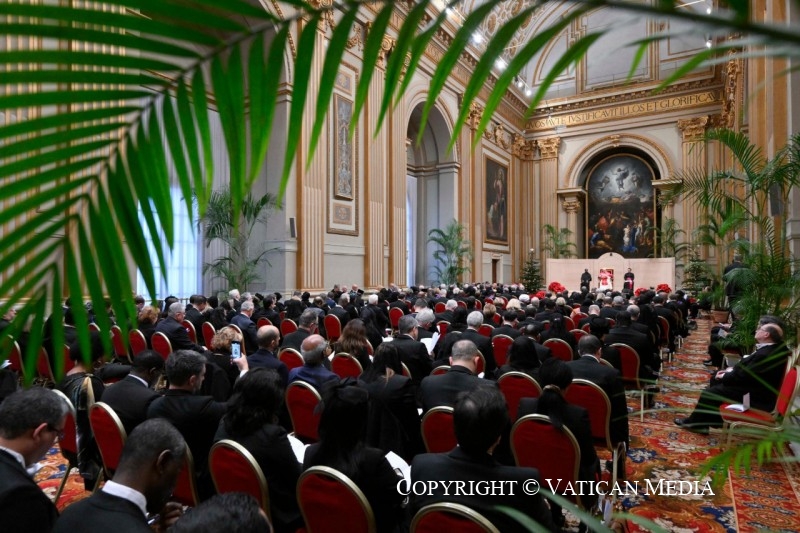
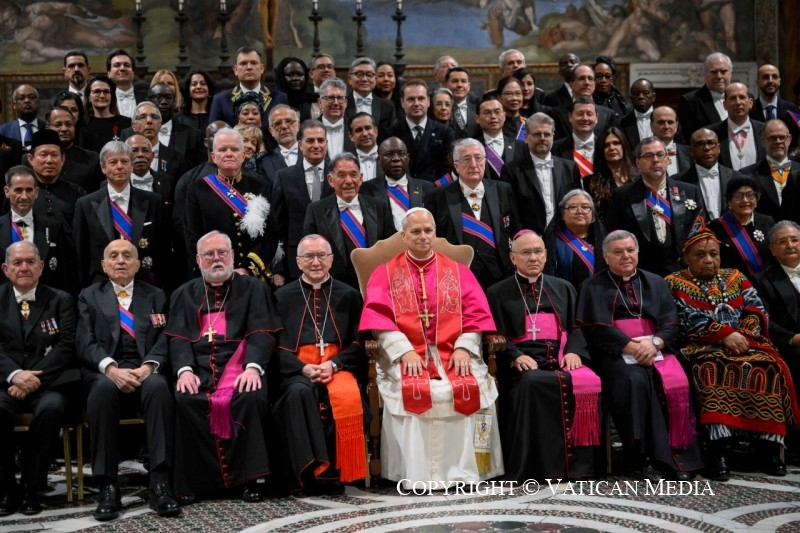
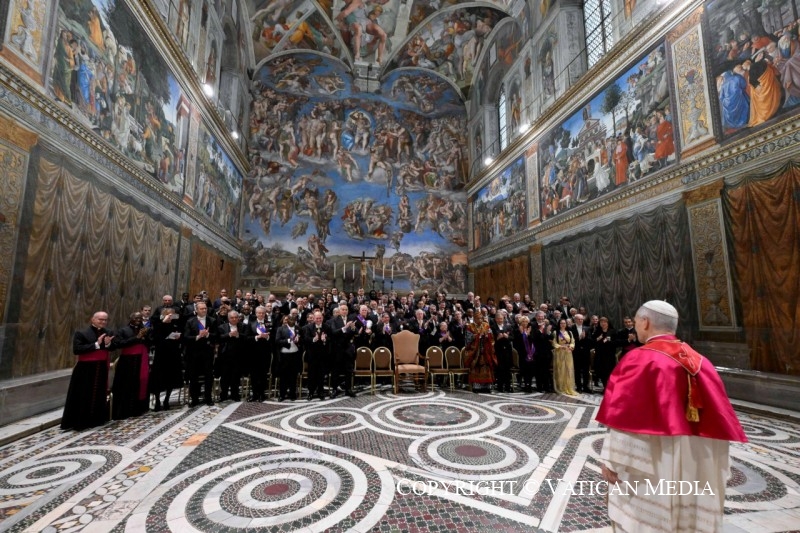
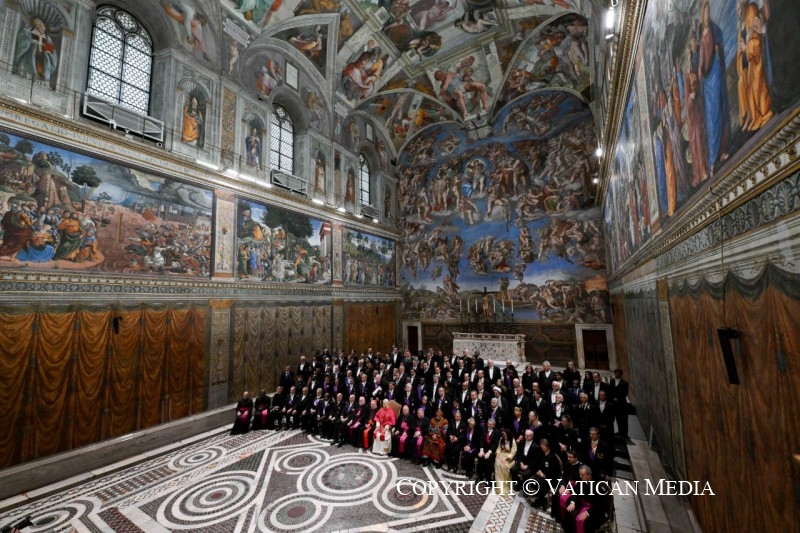
(ZENIT News / Vatican City, 01.09.2026).- On the morning of Friday, January 9, Pope Leo XIV received the ambassadors of the 184 states with which the Holy See maintains diplomatic relations. This is the traditional annual meeting between the Diplomatic Corps and the Holy Father. The audience was held in the Hall of Blessings, and the speech was delivered in English. After the speech and personal greetings, everyone moved to the Sistine Chapel for a group photo. Below is the Pope’s speech, in which he addressed current international events. ZENIT added the thematic sections in brackets.
***
Your Eminence,
Your Excellencies
Distinguished Members of the Diplomatic Corps,
Ladies and Gentlemen,
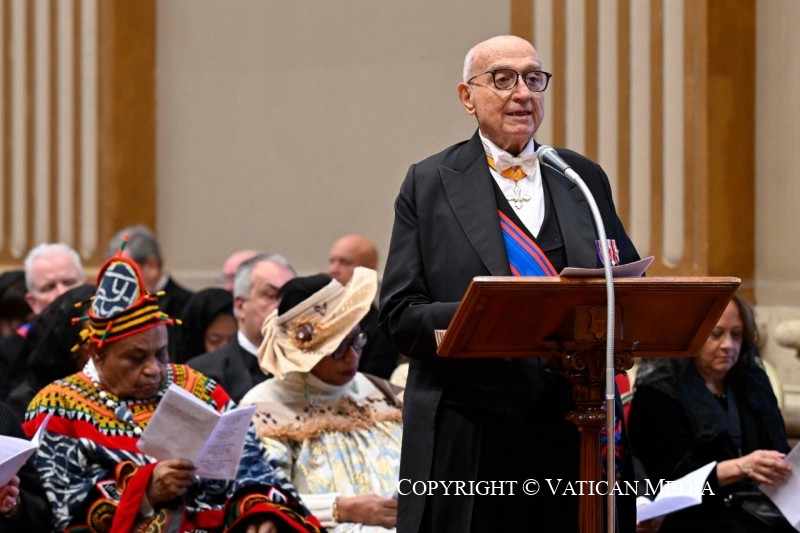
I would like to thank His Excellency Ambassador George Poulides, Dean of the Diplomatic Corps, for his kind and respectful words on your behalf. I welcome all of you to this meeting for the exchange of greetings at the beginning of the New Year.
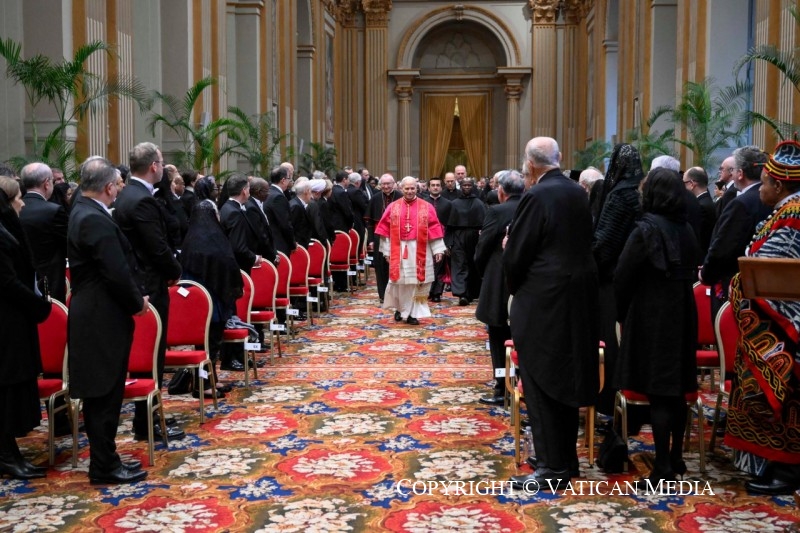
This is a traditional occasion in the life of the Diplomatic Corps accredited to the Holy See; but it is a new experience for me, since it was only several months ago that I was called to shepherd Christ’s flock. I am pleased, therefore, to welcome you this morning, and I am grateful for your generous participation, which this year is enriched by the presence of the new resident Heads of Mission of Kazakhstan, Burundi and Belarus. I thank the respective Governmental Authorities for their decision to open in Rome diplomatic Representations to the Holy See. This is a tangible sign of good and fruitful bilateral relations. Through each of you, dear Ambassadors, I wish to extend my good wishes to your countries, and to share a reflection on our times, which are so troubled by a growing number of tensions and conflicts.
This past year saw many significant events, beginning with those directly affecting the life of the Church, which experienced a profound Jubilee, and saw the return to the Father’s house of my venerable predecessor, Pope Francis. The whole world gathered around his coffin on the day of his funeral, and sensed the loss of a father who had guided the People of God with immense pastoral charity.
[Jubilee, death of Francis, and trips to Turkey and Lebanon]
A few days ago, we closed the last Holy Door, that of Saint Peter’s Basilica, which Pope Francis himself had opened on Christmas Night in 2024. During the Holy Year, millions of pilgrims flocked to Rome to make their Jubilee pilgrimage. Each person brought his or her own experiences, questions and joys, as well as pains and wounds, to pass through the Holy Doors, which are symbols of Christ himself, our heavenly physician. By coming in the flesh, he took upon himself our humanity in order to make us partakers of his divine life, as we contemplated in the recent celebration of Christmas. I am confident that, through these experiences, many people have been able to deepen or rediscover their relationship with the Lord Jesus, finding comfort and renewed hope for facing life’s challenges.
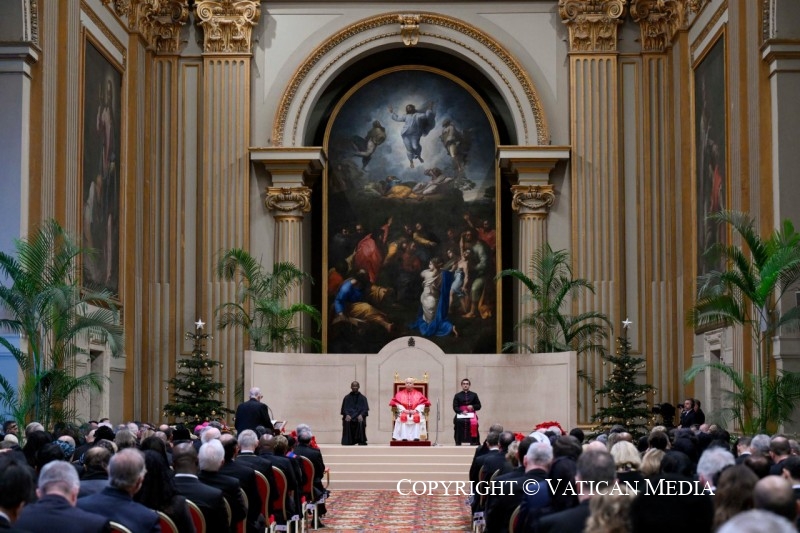
Here, I would like to express my particular gratitude to the people of Rome, who, with great patience and hospitality, have welcomed the many pilgrims and tourists who came to the city from every part of the world. I would like to express my special thanks to the Italian Government, the Capitoline Administration and the police forces, who worked with zeal and precision to ensure that Rome was able to welcome all the visitors, and that the Jubilee events, as well as those following the death of Pope Francis, could take place safely and peacefully.
The Holy See and Italy share not only geographical proximity, but above all a long history of faith and culture that binds the Church to this beautiful peninsula and its people. This is also reflected in the excellent bilateral relations, sealed this year by the entry into force of the amendments to the Agreement on Spiritual Assistance to the Armed Forces, which will allow for more effective spiritual accompaniment of the men and women who serve in the Armed Forces in Italy, and in numerous missions abroad. There was likewise the signing of the Agreement for an agrivoltaic plant in Santa Maria di Galeria, which will enable the supply of electricity to Vatican City using renewable resources, thus confirming our common commitment to caring for creation. I am also grateful for the visits that I received from the senior Government officials at the beginning of my Pontificate and for the exquisite hospitality shown to me at the Quirinale Palace by the President of the Republic, to whom I wish to extend my cordial and appreciative greetings.
During the past year, having accepted the invitation given to Pope Francis, I had the joy of visiting Türkiye and Lebanon. I am grateful to the Authorities of both countries for their welcome. In İznik, Türkiye, together with the Ecumenical Patriarch of Constantinople and representatives of other Christian denominations, I commemorated the 1700th anniversary of the first Ecumenical Council. This was an important opportunity for renewing our commitment to the journey towards the full visible unity of all Christians. In Lebanon, I met a people who, despite their difficulties, are full of faith and enthusiasm. There, I sensed the hope of young people who aspire to build a more just and cohesive society, and to strengthen the bond of cultures and religions that makes the Land of the Cedars unique in the world.
Dear Ambassadors,
[St. Augustine and “The City of God” as background reflection]
Prompted by the tragic events of the sack of Rome in 410 AD, Saint Augustine wrote De Civitate Dei, The City of God. This is one of the most powerful of his theological, philosophical and literary works. As Pope Benedict XVI observed, it is an “impressive work crucial to the development of Western political thought and the Christian theology of history.” [1] It draws, as we would say in contemporary terms, on a “narrative” that was spreading, for “the pagans, still numerous at that time, and even quite a few Christians, thought that the God of the new religion and the Apostles themselves had shown themselves incapable of protecting the city. In the days of the pagan gods, Rome was caput mundi, the great capital, and no one could have imagined that it would fall into the hands of its enemies. Now, with the God of the Christians, this great city no longer seemed secure.” [2]
Certainly, our times are very distant from those events. This is not simply a question of temporal distance, but also of a different cultural awareness and a development of categories of thought. However, we cannot overlook the fact that our own cultural sensibilities have drawn nourishment from that work, which, like all the classics, speaks to people of every generation.
Augustine interprets events and history itself according to the model of two cities. First, there is the city of God, which is eternal and characterized by God’s unconditional love (amor Dei), as well as love for one’s neighbor, especially the poor. Then there is the earthly city, which is a temporary dwelling place where human beings live until death. In our day, the latter includes all social and political institutions, from the family to the Nation State and international organizations. For Augustine, this city was epitomized by the Roman Empire. Indeed, the earthly city is centered on pride and self-love (amor sui), on the thirst for worldly power and glory that leads to destruction.However, this is not a reading of history that seeks to contrast eternity with the present, the Church with the State, nor is it a dialectic about the role of religion within civil society.
In Augustine’s view, the two cities coexist until the end of time. Each has both an external and an internal dimension, for they are to be understood not only in light of the external manner in which they are constructed throughout history, but also through the lens of the internal attitudes of each human being towards the realities of life and historical events. In this perspective, each of us is a protagonist and thus responsible for history. Moreover, Augustine emphasizes that Christians are called by God to dwell in the earthly city with their hearts and minds turned towards the heavenly city, their true homeland. At the same time, Christians living in the earthly city are not strangers to the political world, and, guided by the Scriptures, seek to apply Christian ethics to civil government.
The City of God does not propose a political program. Instead, it offers valuable reflections on fundamental issues concerning social and political life, such as the search for a more just and peaceful coexistence among peoples. Augustine also warns of the grave dangers to political life arising from false representations of history, excessive nationalism and the distortion of the ideal of the political leader.
Although the context in which we live today is different from that of the fifth century, some similarities remain highly relevant. We are now, as then, in an era of widespread migratory movements; as then, we are living at a time of a profound readjustment of geopolitical balances and cultural paradigms; as then, we are, in Pope Francis’s well-known expression, not in an era of change but in a change of era. [3]
[Multilateralism, the UN, and the importance of international law]
In our time, the weakness of multilateralism is a particular cause for concern at the international level. A diplomacy that promotes dialogue and seeks consensus among all parties is being replaced by a diplomacy based on force, by either individuals or groups of allies. War is back in vogue and a zeal for war is spreading. The principle established after the Second World War, which prohibited nations from using force to violate the borders of others, has been completely undermined. Peace is no longer sought as a gift and a desirable good in itself, or in the pursuit of “the establishment of the ordered universe willed by God, with a more perfect form of justice among men and women.” [4] Instead, peace is sought through weapons as a condition for asserting one’s own dominion. This gravely threatens the rule of law, which is the foundation of all peaceful civil coexistence.
Furthermore, as Saint Augustine notes, “there is no one who does not wish to have peace. For even those who make war desire nothing but victory; they desire, that is to say, to attain to peace with glory. For what else is victory than the conquest of those who resist us? And when this is done there is peace… for even those who intentionally interrupt the peace in which they are living have no hatred of peace, but only wish it changed into a peace that suits them better. They do not, therefore, wish to have no peace, but only the peace that they desire.” [5]
It was precisely this attitude that led humanity into the tragedy of the Second World War. From those ashes, the United Nations was born, whose eightieth anniversary was recently celebrated. The UN was established by the determination of fifty-one nations as the center of multilateral cooperation in order to prevent future global catastrophes, for safeguarding peace, defending fundamental human rights and promoting sustainable development.
I would like to draw particular attention to the importance of international humanitarian law. Compliance with this cannot depend on mere circumstances and military or strategic interests. Humanitarian law, in addition to guaranteeing a minimum of humanity during the ravages of war, is a commitment that States have made. Such law must always prevail over the ambitions of belligerents, in order to mitigate the devastating effects of war, also with a view to reconstruction. We cannot ignore that the destruction of hospitals, energy infrastructure, homes and places essential to daily life constitutes a serious violation of international humanitarian law. The Holy See firmly reiterates its condemnation of any form of involvement of civilians in military operations. It likewise hopes that the international community will remember that the protection of the principle of the inviolability of human dignity and the sanctity of life always counts for more than any mere national interest.
With this in mind, the United Nations has mediated conflicts, promoted development and helped States protect human rights and fundamental freedoms. In a world facing complex challenges such as geopolitical tensions, inequalities and climate crises, the UN should play a key role in fostering dialogue and humanitarian support, helping to build a more just future. Efforts are therefore needed to ensure that the United Nations not only reflects the situation of today’s world rather than that of the post-war period, but that it is also more focused and efficient in pursuing policies aimed at the unity of the human family instead of ideologies.
The purpose of multilateralism, then, is to provide a place where people can meet and talk, modeled on the ancient Roman Forum or the medieval square. At the same time, in order to engage in dialogue, there needs to be agreement on the words and concepts that are used.
[Rediscovering the meaning of words]
Rediscovering the meaning of words is perhaps one of the primary challenges of our time. When words lose their connection to reality, and reality itself becomes debatable and ultimately incommunicable, we become like the two people to whom Saint Augustine refers, who are forced to stay together without either of them knowing the other’s language. He observes that, “Dumb animals, even those of different species, understand each other more easily than these two individuals. For even though they are both human beings, their common nature is no help to friendliness when they are prevented by diversity of language from conveying their sentiments to one another; so that a man would more readily converse with his dog than with a foreigner!” [6]
Today, the meaning of words is ever more fluid, and the concepts they represent are increasingly ambiguous. Language is no longer the preferred means by which human beings come to know and encounter one another. Moreover, in the contortions of semantic ambiguity, language is becoming more and more a weapon with which to deceive, or to strike and offend opponents. We need words once again to express distinct and clear realities unequivocally. Only in this way can authentic dialogue resume without misunderstandings. This should happen in our homes and public spaces, in politics, in the media and on social media. It should likewise occur in the context of international relations and multilateralism, so that the latter can regain the strength needed for undertaking its role of encounter and mediation. This is indeed necessary for preventing conflicts, and for ensuring that no one is tempted to prevail over others with the mindset of force, whether verbal, physical or military.
[Weakening of language and freedom of expression]
We should also note the paradox that this weakening of language is often invoked in the name the freedom of expression itself. However, on closer inspection, the opposite is true, for freedom of speech and expression is guaranteed precisely by the certainty of language and the fact that every term is anchored in the truth. It is painful to see how, especially in the West, the space for genuine freedom of expression is rapidly shrinking. At the same time, a new Orwellian-style language is developing which, in an attempt to be increasingly inclusive, ends up excluding those who do not conform to the ideologies that are fueling it.
Unfortunately, this leads to other consequences that end up restricting fundamental human rights, starting with the freedom of conscience. In this regard, conscientious objection allows individuals to refuse legal or professional obligations that conflict with moral, ethical or religious principles deeply rooted in their personal lives. This may be the refusal of military service in the name of non-violence, or the refusal on the part of doctors and healthcare professionals to engage in practices such as abortion or euthanasia. Conscientious objection is not rebellion, but an act of fidelity to oneself. At this moment in history, freedom of conscience seems increasingly to be questioned by States, even those that claim to be based on democracy and human rights. This freedom, however, establishes a balance between the collective interest and individual dignity. It also emphasizes that a truly free society does not impose uniformity but protects the diversity of consciences, preventing authoritarian tendencies and promoting an ethical dialogue that enriches the social fabric.
[Religious freedom and persecution of Christians]
In a similar way, religious freedom risks being curtailed. As Benedict XVI recalled, this is the first of all human rights, because it expresses the most fundamental reality of the person. [7] The most recent data show that violations of religious freedom are on the rise, and that sixty-four percent of the world’s population suffers serious violations of this right.
In requesting that the religious freedom and worship of Christians be fully respected, the Holy See asks the same for all other religious communities. On the sixtieth anniversary of the promulgation of the Declaration Nostra Aetate, one of the fruits of the Second Vatican Ecumenical Council that concluded on 8 December 1965, I had the opportunity to reiterate the categorical rejection of all forms of antisemitism, which unfortunately continues to sow hatred and death. I likewise emphasized the importance of cultivating the Jewish-Christian dialogue, deepening our common biblical roots.
On that same commemorative occasion, the meeting with representatives of other religions allowed me to renew my appreciation for the progress made in recent decades along the path of interreligious dialogue. Indeed, in every sincere religious quest there is “a reflection of the one divine Mystery that embraces all creation”. [8] In this regard, I ask all the nations to guarantee full freedom of religion and worship to each of their citizens.
However, it cannot be overlooked that the persecution of Christians remains one of the most widespread human rights crises today, affecting over 380 million believers worldwide. They suffer high or extreme levels of discrimination, violence and oppression because of their faith. This phenomenon impinges on approximately one in seven Christians globally, and it worsened in 2025 due to ongoing conflicts, authoritarian regimes and religious extremism. Sadly, all of this demonstrates that religious freedom is considered in many contexts more as a “privilege” or concession than a fundamental human right.
Here, I would especially call to mind the many victims of violence, including religiously motivated violence in Bangladesh, in the Sahel region and in Nigeria, as well as those of the serious terrorist attack last June on the parish of Saint Elias in Damascus. Nor do I forget the victims of jihadist violence in Cabo Delgado, Mozambique.
At the same time, we must not forget a subtle form of religious discrimination against Christians, which is spreading even in countries where they are in the majority, such as in Europe or the Americas. There, they are sometimes restricted in their ability to proclaim the truths of the Gospel for political or ideological reasons, especially when they defend the dignity of the weakest, the unborn, refugees and migrants, or promote the family.
[Migration]
In its international relations and actions, the Holy See consistently takes a stand in defense of the inalienable dignity of every person. It cannot be overlooked, for example, that every migrant is a person and, as such, has inalienable rights that must be respected in every situation. Not all migrants move by choice, but many are forced to flee because of violence, persecution, conflict and even the effects of climate change, as in various parts of Africa and Asia. In this year, which also marks the seventy-fifth anniversary of the International Organization for Migration, I renew the Holy See’s hope that the actions taken by States against criminality and human trafficking will not become a pretext for undermining the dignity of migrants and refugees.
[Prisoners and political prisoners]
The same considerations apply to prisoners, who can never be reduced to the crimes they have committed. On this occasion, I wish to express my heartfelt gratitude to the Governments that have responded positively to my venerable Predecessor’s appeal for gestures of clemency during the Jubilee Year. It is my hope that the spirit of the Jubilee will permanently and structurally inspire the administration of justice, so that penalties are proportionate to the crimes committed, dignified conditions are guaranteed for prisoners, and above all, efforts are made to abolish the death penalty, a measure that destroys all hope of forgiveness and renewal. [9] Nor can we forget the suffering of so many prisoners held for political reasons in many countries.
[Human dignity, family, marriage, and life]
Furthermore, from a Christian perspective, human beings are created in the image and likeness of God, who, “by calling them into existence out of love, has at the same time called them to love.” [10] This vocation is revealed in a privileged and unique way within the family. It is in this context that we learn to love and foster the capacity to serve life, thus contributing to the development of society and the Church’s mission.
Despite its centrality, the institution of the family faces two crucial challenges today. On the one hand, there is a worrying tendency in the international system to neglect and underestimate its fundamental social role, leading to its progressive institutional marginalization. On the other hand, we cannot ignore the growing and painful reality of fragile, broken and suffering families, afflicted by internal difficulties and disturbing phenomena, including domestic violence.
The vocation to love and to life, which manifests itself in an important way in the exclusive and indissoluble union between a woman and a man, implies a fundamental ethical imperative for enabling families to welcome and fully care for unborn life. This is increasingly a priority, especially in those countries that are experiencing a dramatic decline in birth rates. Life, in fact, is a priceless gift that develops within a committed relationship based on mutual self-giving and service.
In light of this profound vision of life as a gift to be cherished, and of the family as its responsible guardian, we categorically reject any practice that denies or exploits the origin of life and its development. Among these is abortion, which cuts short a growing life and refuses to welcome the gift of life. In this regard, the Holy See expresses deep concern about projects aimed at financing cross-border mobility for the purpose of accessing the so-called “right to safe abortion.” It also considers it deplorable that public resources are allocated to suppress life, rather than being invested to support mothers and families. The primary objective must remain the protection of every unborn child and the effective and concrete support of every woman so that she is able to welcome life.
Likewise, there is the practice of surrogacy. By transforming gestation into a negotiable service, this violates the dignity both of the child, who is reduced to a “product,” and of the mother, exploiting her body and the generative process, and distorting the original relational calling of the family.
Similar considerations can be extended to the sick and to those who are elderly or isolated, who at times struggle to find a reason to continue living. Civil society and States also have a responsibility to respond concretely to situations of vulnerability, offering solutions to human suffering, such as palliative care, and promoting policies of authentic solidarity, rather than encouraging deceptive forms of compassion such as euthanasia.
[Young people and addiction]
A comparable reflection can be made concerning the many young people who are forced to confront numerous hardships, including drug addiction. In order to prevent millions of young people around the world from falling victim to substance abuse, concerted efforts are required to eradicate this scourge upon humanity and the drug trafficking that fuels it. Together with these efforts, there must be adequate policies for recovery from addiction, as well as greater investment in human development, education and the creation of employment opportunities.
In light of these challenges, we firmly reiterate that the protection of the right to life constitutes the indispensable foundation of every other human right. A society is healthy and truly progresses only when it safeguards the sanctity of human life and works actively to promote it.
[Human Rights]
The aforementioned considerations lead me to believe that, in the current context, we are seeing an actual “short circuit” of human rights. The right to freedom of expression, freedom of conscience, religious freedom and even the right to life are being restricted in the name of other so-called new rights, with the result that the very framework of human rights is losing its vitality and creating space for force and oppression. This occurs when each right becomes self-referential, and especially when it becomes disconnected from reality, nature and truth.
Distinguished Ambassadors,
While Saint Augustine highlights the coexistence of the heavenly and earthly cities until the end of time, our era seems somewhat inclined to deny the city of God its “right of citizenship.” It seems that only the earthly city exists, enclosed exclusively within its borders. Seeking only immanent goods undermines that “tranquility of order,” [11] which, for Augustine, constitutes the very essence of peace, which concerns society and nations as much as the human soul itself, and is essential for any civil coexistence. In the absence of a transcendent and objective foundation, only self-love prevails, to the point of indifference to God, who governs the earthly city. [12] Yet, as Augustine notes, “great is the folly of pride in those individuals who think that the supreme good can be found in this life, and that they can become happy by their own resources.” [13]
Pride obscures both reality itself and our empathy towards others. It is no coincidence that pride is always at the root of every conflict. Consequently, as I recalled in my Message for the World Day of Peace, “we lose our sense of realism and surrender to a partial and distorted view of the world, disfigured by darkness and fear,” [14] thus paving the way for the mentality of confrontation, which is the precursor to every war.
[Ukraine, the Holy Land, and Venezuela]
We see this in many contexts, starting with the ongoing war in Ukraine and the suffering inflicted on the civilian population. Faced with this tragic situation, the Holy See strongly reiterates the pressing need for an immediate ceasefire, and for dialogue motivated by a sincere search for ways leading to peace. I make an urgent appeal to the international community not to waver in its commitment to pursuing just and lasting solutions that will protect the most vulnerable and restore hope to the afflicted peoples. I likewise emphasize the Holy See’s full willingness to support any initiative that promotes peace and harmony.
At the same time, we see this in the Holy Land, where, despite the truce announced in October, the civilian population continues to endure a serious humanitarian crisis, adding further suffering to that already experienced. The Holy See is especially attentive to any diplomatic initiative that seeks to guarantee to the Palestinians in the Gaza Strip a future of lasting peace and justice in their own land, as well as to the entire Palestinian people and the entire Israeli people. In particular, the two-State solution remains the institutional perspective for meeting the legitimate aspirations for both peoples; yet sadly, there has been an increase in violence in the West Bank against the Palestinian civilian population, which has the right to live in peace in its own land.
The escalating tensions in the Caribbean Sea and along the American Pacific coast are also a cause for serious concern. I wish to repeat my urgent appeal that peaceful political solutions to the current situation should be sought, keeping in mind the common good of the peoples and not the defense of partisan interests.
This pertains in particular to Venezuela, in light of recent developments. In this regard, I renew my appeal to respect the will of the Venezuelan people, and to safeguard the human and civil rights of all, ensuring a future of stability and concord. To this end, inspiration may be drawn from the example of two of its children whom I had the joy of canonizing last October – José Gregorio Hernández and Sister Carmen Rendiles. May their witness inspire the building of a society founded on justice, truth, freedom and fraternity, and thus enable the nation to rise from the grave crisis that has afflicted it for so many years.
Other crises are scattered across the global landscape. First, I refer to the desperate situation in Haiti, marked by many forms of violence, from human trafficking to forced exile and kidnappings. In this regard, it is my hope that, with the necessary and concrete support of the international community, the country will be able to take the necessary steps as soon as possible to restore democratic order, end violence and achieve reconciliation and peace.
[Haiti, Great Lakes, Sudan, East Asia, Myanmar, and nuclear weapons]
Nor can we forget the situation that has affected the Great Lakes region of Africa for decades, plagued by violence that has claimed many victims. I encourage the parties involved to seek a definitive, just and lasting solution that will put an end to a conflict that has lasted far too long. Similarly, I think of the situation in Sudan, which has been transformed into a vast battlefield, as well as the continuing political instability in South Sudan, the youngest country in the family of nations, which came into being following the referendum fifteen years ago.
We cannot fail to mention the intensifying signs of tension in East Asia, and to express hope that all parties involved will adopt a peaceful and dialogue-based approach to the contentious issues that are a source of potential conflict.
My thoughts turn in particular to the grave humanitarian and security crisis afflicting Myanmar, which was further aggravated by the devastating earthquake last March. With renewed intensity, I make an appeal that paths of peace and inclusive dialogue be courageously chosen, so as to guarantee everyone fair and timely access to humanitarian aid. To be authentic, democratic processes must be accompanied by the political will to pursue the common good, to strengthen social cohesion and to promote the integral development of every person.
At the heart of many of the situations I have mentioned, we can see something that Augustine himself pointed out, namely the persistent idea that peace is only possible through the use of force and deterrence. While war is content with destruction, peace requires continuous and patient efforts of construction as well as constant vigilance. Such efforts are required of everyone, starting with the countries that possess nuclear arsenals. I think in particular of the important need to follow-up on the New START Treaty, which expires in February. Indeed, there is a danger of returning to the race of producing ever more sophisticated new weapons, also by means of artificial intelligence. The latter is a tool that requires appropriate and ethical management, together with regulatory frameworks focused on the protection of freedom and human responsibility.
Dear Ambassadors,
Notwithstanding the tragic situation before our eyes, peace remains a difficult yet realistic good. As Augustine reminds us, peace is “the aim of our good,” [15] because it is the very aim of the city of God, to which we aspire, even unconsciously, and of which we can enjoy a foretaste even in the earthly city. During our pilgrimage on this earth, peacemaking requires humility and courage. The humility to live truthfully and the courage to forgive. In the Christian life, we see these virtues reflected at Christmas, when Truth, the eternal Word of God, becomes humble flesh, and at Easter, when the condemned Righteous One forgives his persecutors and grants them his life as the Risen One.
[Signs of hope]
Moreover, if we look more closely, there is no shortage of signs of courageous hope in our time, and we must constantly support them. I think, for example, of the Dayton Accords, which thirty years ago put an end to the bloodstained war in Bosnia and Herzegovina. Despite difficulties and tensions, they opened up the possibility of a more prosperous and harmonious future. I think too of the Joint Declaration of Peace between Armenia and Azerbaijan, signed last August. We hope this will pave the way for a just and lasting peace in the South Caucasus, and resolve the outstanding issues to the satisfaction of both parties. I likewise call to mind the efforts made in recent years by the Vietnamese Authorities to improve relations with the Holy See and the conditions in which the Church functions in the country. These are all seeds of peace that need to be cultivated.
This coming October will mark the eighth century of the death of Saint Francis of Assisi, a man of peace and dialogue, universally recognized even by those who do not belong to the Catholic Church. His life shines brightly, for it was inspired by the courage to live in truth, and the knowledge that a peaceful world is built starting with humble hearts turned towards the heavenly city. A humble and peace-loving heart is what I wish for each of us and for all who dwell in our countries at the beginning of this New Year.
Thank you.
____________________________________________
[1] Benedict XVI, Catechesis (20 February 2008). [2] Ibid. [3] Cf. Francis, Address to the Fifth Convention of the Italian Church, Florence (10 November 2015). [4] Saint Paul VI, Encyclical Letter Populorum Progressio (26 March 1967), 76: AAS 59 (1967), 294-295. [5] Saint Augustine, De Civ. Dei, XIX, 12.1. [6] Saint Augustine, De Civ. Dei, XIX, 7. [7] Benedict XVI, Address to the Members of the Diplomatic Corps, 9 January 2012. [8] Catechesis (29 October 2025). [9] Cf. Francis, Bull of Indiction of the Ordinary Jubilee of the Year 2025 Spes non Confundit (9 May 2024), 10: AAS 116 (2024), 654-655. [10] Saint John Paul II, Apostolic Exhortation Familiaris Consortio (22 November 1981), 11: AAS 74 (1982), 91. [11] Cf. Saint Augustine, De Civ. Dei, XIX, 13. [12] Ibid., XIV, 28. [13] Ibid., XIX, 4.4. [14] Message for the LIX World Day of Peace (8 December 2025). [15] Saint Augustine, De Civ. Dei, XIX, 11.Thank you for reading our content. If you would like to receive ZENIT’s daily e-mail news, you can subscribe for free through this link.

Publicaciones relacionadas:
 Pope Leo XIV removes controversial Italian bishop as head of John Paul II Institute for the family
 Pope Leo’s visit to Argentina unofficially confirmed after audience with President Milei
 After call from Israeli prime minister, Pope speaks by phone with Palestinian president
 Official: British monarchs announce state visit to Pope Leo XIV
