

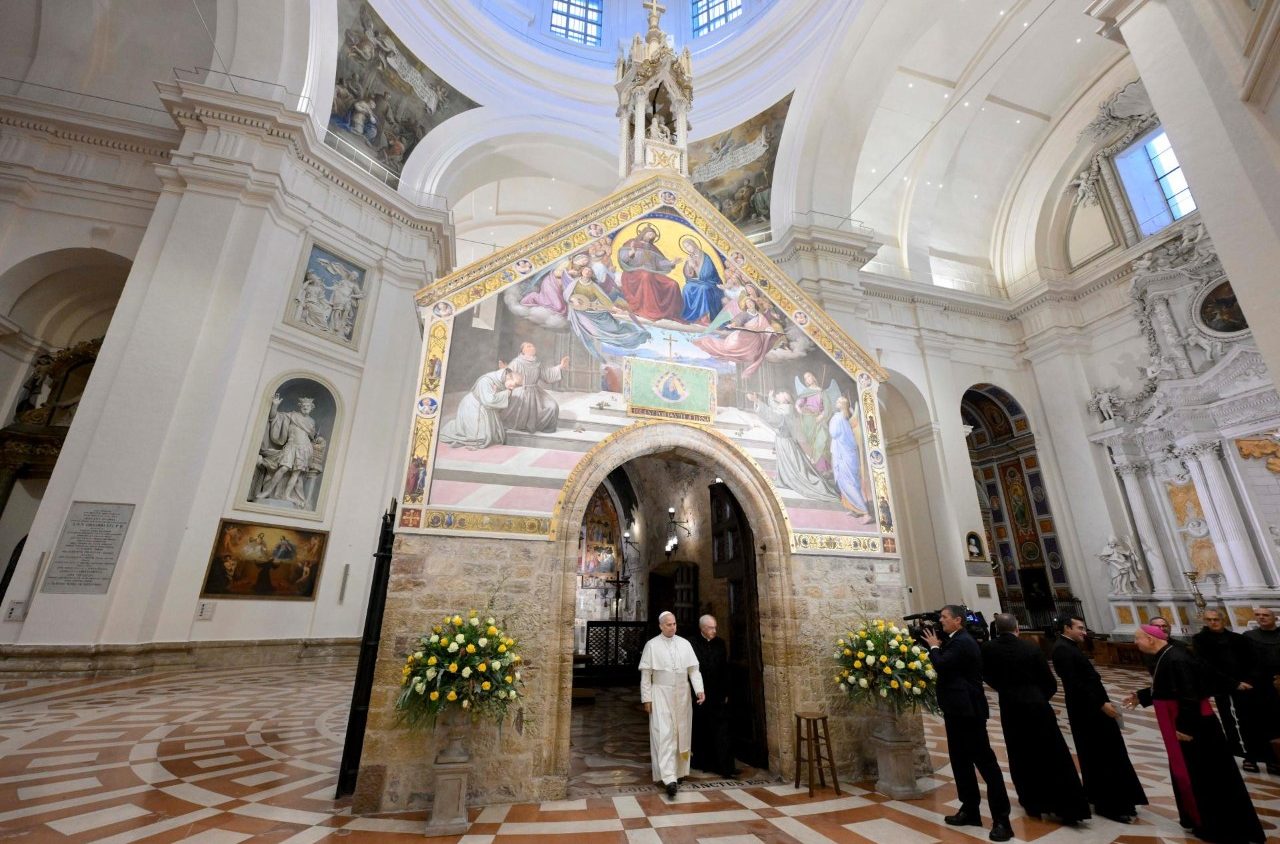
(ZENIT News / Vatican City, 10.23.2026).- Pope Leo XIV will not travel to Assisi on October 27 for an interreligious gathering marking the 40th anniversary of St. John Paul II’s historic World Day of Prayer for Peace. The decision, announced by the Vatican on Friday, October 23, follows medical advice to avoid a helicopter journey so soon after the pontiff’s thoracic surgery. Although his absence will be felt at an event closely associated with the Catholic Church’s efforts to foster dialogue among religions, the Holy Father intends to send a message of support to its organizers and participants.
The announcement came with reassuring news about the Pope’s health. A follow-up chest X-ray confirmed that his postoperative recovery was progressing exceptionally well, according to the medical bulletin issued by Dr. Luigi Carbone and Professor Stefano Margaritora. The physicians nevertheless considered the interval since his October 13 operation too short to recommend the planned flight, opting for caution rather than unnecessary physical demands.
The Vatican’s decision does not suggest a setback in his recovery: reflects the prudence required after major surgery, even when clinical results are encouraging. The Pope had been expected to attend the gathering entitled “Disarmed and Disarming Peace,” which will bring together Christian leaders, representatives of other religious traditions and invited guests in the Umbrian town.
There was further encouraging news earlier in the week. Histological and molecular analyses of the tissue removed during surgery confirmed that Leo XIV had a localized pulmonary adenocarcinoma in his right lung. The tumor was completely removed, and a subsequent oncological assessment determined that no additional treatment was necessary. The findings offer substantial reassurance, although the Pope’s recovery remains a process that requires appropriate medical care.
A milestone in the Church’s pursuit of peace
The Assisi gathering commemorates an initiative launched by St. John Paul II in 1986, when religious leaders came together to pray for peace in a world marked by ideological divisions, regional conflicts and the threat of nuclear confrontation. That meeting became an important milestone in the development of interreligious dialogue, demonstrating that people of different faiths could appeal to their respective spiritual traditions in support of a common good without erasing their doctrinal differences.
The distinction remains important. Interreligious dialogue does not require the Catholic Church to abandon its convictions or treat all religious claims as interchangeable: it provides a framework in which people can work together against violence, defend human dignity and pursue peaceful coexistence while remaining faithful to their own beliefs.
For Leo XIV, the so-called “spirit of Assisi” retains particular relevance amid contemporary conflicts. The Vatican said the Pope considers dialogue, together with the search for words and gestures of peace, a precious resource in an age of war and division. His message to the gathering will allow him to reaffirm that conviction even though he cannot be present in person.
Leo XIV’s absence from Assisi will prevent him from participating directly in one of the most symbolically significant events on his calendar. Yet his decision to follow medical advice sends a message about the priorities of his recovery. A successful operation and encouraging test results do not eliminate the need to respect the body’s limits.
Thank you for reading our content. If you would like to receive ZENIT’s daily e-mail news, you can subscribe for free through this link.

Publicaciones relacionadas:
 Spanish prisoners will receive Bibles as gifts on the occasion of the Pope’s visit to Spain
 Barcelona: Sagrada Familia Presents Plans for the Inaugural Ceremony of the Tower of Jesus Christ by Leo XIV. The Atheist President of Spain Will Attend the Mass.
 Freemasonry Behind the Campaign Against Pope Leo XIV’s Visit to Spain
 Pope Leo XIV explains the Trinity through the Holy Spirit and the experience of Nicodemus
