

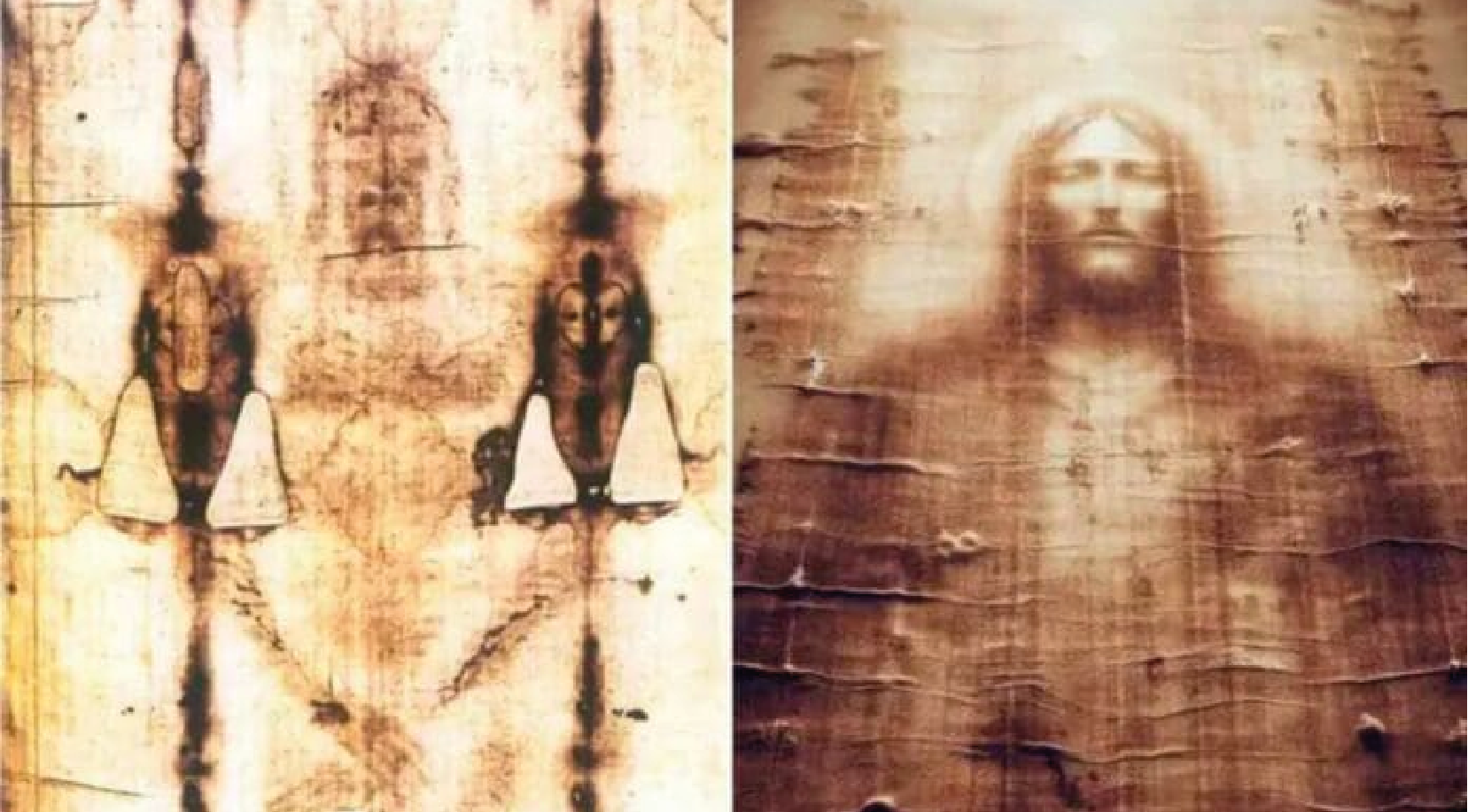
(ZENIT News / Rome, 02.11.2026).- Few artifacts have generated as much sustained scientific and cultural friction as the Shroud of Turin. More than a century after Secondo Pia’s 1898 photograph revealed the striking negative image that ignited modern fascination, the linen cloth continues to divide laboratories, historians and theologians alike. The latest skirmish has unfolded not in a cathedral but in the pages of Archaeometry, the Oxford-linked journal that has become a key arena in the Shroud’s contemporary scientific battles.
In the summer of 2025, Brazilian researcher Cicero Moraes published a digital modeling study proposing that the Shroud’s image could have been produced by pressing linen against a low-relief sculpture. His argument focused on morphological distortion: according to Moraes, the contours visible on the cloth correspond more plausibly to contact with a bas-relief than to the projection of a three-dimensional human body onto fabric. From this, he inferred that the image may be the product of medieval artistic fabrication.
The hypothesis quickly attracted attention, not least because of where it appeared. Archaeometry had previously hosted, in 2019, a major statistical reanalysis of the Shroud’s 1988 radiocarbon dating—originally published in Nature—which assigned the cloth to the period 1260–1390. That 2019 study, also in Archaeometry, argued that the raw data exhibited significant heterogeneity and statistical weaknesses, calling into question the reliability of the 95 percent confidence interval and urging a new carbon-14 test under a more rigorous, interdisciplinary protocol.
It is therefore symbolically significant that Moraes’ article, and now its detailed rebuttal, share the same scholarly platform.
Three long-standing Shroud specialists—Tristan Casabianca, Emanuela Marinelli and Alessandro Piana—have published a point-by-point critique in Archaeometry, challenging both the methodology and the historical reasoning of Moraes’ reconstruction. Their intervention, anticipated by earlier public criticism from Cardinal Roberto Repole of Turin and the International Center of Studies on the Shroud (CISS), argues that the digital model rests on selective data, anatomical inaccuracies and conceptual shortcuts.
Among the technical objections raised: Moraes modeled only the frontal image, neglected the dorsal imprint, and inverted right-left orientation in the hands and feet. He adopted an arbitrary body height of 180 centimeters, outside the range commonly proposed in Shroud scholarship (approximately 173–177 centimeters). His comparisons rely on qualitative descriptors of similarity without providing quantifiable metrics. The simulation was conducted on cotton rather than linen, despite the well-documented structural differences between the two fibers. And, crucially, he relied on a 1931 photographic source image when higher-resolution images are available.
More fundamentally, the critics argue that the model sidesteps two of the Shroud’s most studied characteristics: the extraordinary superficiality of the image and the forensic evidence associated with bloodstains. The chromatic alteration on the Shroud affects only the outermost fibrils of the linen threads, to a depth measured at roughly one-fifth of a thousandth of a millimeter. Any proposed mechanism for image formation must account for this microscopically thin layer. Likewise, numerous analyses—beginning with the Shroud of Turin Research Project (STURP) in 1978—have identified chemical and spectroscopic markers consistent with blood components. These findings complicate any explanation based solely on artistic technique.
In their assessment, Casabianca, Marinelli and Piana also note that variations of the bas-relief hypothesis were already explored and dismissed in academic discussions in the early 1980s. Even earlier, in 1902, French scientist Paul Vignon examined the issue of how a human body’s three-dimensional form might translate into distortions when wrapped in cloth. The question of morphological projection, they suggest, is not new territory.
The historical argumentation in Moraes’ article also comes under scrutiny. To situate the Shroud within a medieval artistic context, Moraes references funerary effigies and other works spanning the 11th to 14th centuries. Yet none depict a naked Christ, front and back, in a post-crucifixion state. The Shroud image—if considered as an artwork—would be iconographically anomalous. Even William S. A. Dale, a historian cited in support of the medieval thesis, believed that the image could not plausibly have originated in 14th-century France, but rather in a Byzantine milieu separated by at least two centuries and roughly 2,000 kilometers from Champagne, where the Shroud first appears in documented history in the mid-1300s.
Moraes has responded in the same journal, defending his approach as strictly methodological. He maintains that his objective was limited to evaluating morphological deformation in the projection of a body onto cloth, emphasizing data transparency and experimental replicability. He contends that critics have misunderstood the scope of his study and that his choices are consistent with prior scholarship skeptical of the Shroud’s authenticity.
However, his reply has intensified rather than resolved the dispute. Casabianca and colleagues argue that Moraes selectively engages prior research—setting aside peer-reviewed studies supportive of authenticity while invoking those aligned with a medieval origin. They also contest what they describe as partial or decontextualized quotations.
One example concerns STURP chemists Ray Rogers’ collaborators John Heller and Alan Adler (1981). Moraes cites their acknowledgment that certain organic substances, if once present, might have degraded over time. The implication is that pigments could have been applied and later vanished. Yet, as the critics point out, Heller and Adler were investigating hypotheses involving bodily fluids or aromatic oils, not medieval paint. Their negative findings for pigments remain a central feature of STURP’s conclusions.
A similar dispute arises over the 2019 Archaeometry reanalysis of the carbon-14 data. Moraes quotes the authors’ statement that their statistical results do not exclude the medieval hypothesis for the analyzed sample. But the full context makes clear that the study referred to a three-centimeter sample, whose data showed internal variability of approximately 150 years from one side to the other. Extrapolated linearly across the cloth, the authors noted, such variability would produce an implausible “future” date at the opposite edge. Their conclusion was not that the Shroud is medieval, but that the 1988 measurements lack the precision required to claim definitive proof and that a new test is warranted.
Beyond the technicalities lies a broader methodological question: can a single-variable digital simulation—however sophisticated—resolve the origin of an object that has been subjected to chemical, textile, historical and iconographic scrutiny for more than a century?
The current exchange in Archaeometry illustrates both the promise and the peril of modern tools. Three-dimensional modeling can illuminate aspects of image formation, but when isolated from the Shroud’s full empirical profile—its fiber chemistry, bloodstain patterns, textile structure and documented history—such models risk oversimplification.
The Shroud has repeatedly resisted reduction to a single explanatory framework. Whether one approaches it as relic, icon or artifact, its singularity has forced successive generations of researchers to confront the limits of their disciplines.
Thank you for reading our content. If you would like to receive ZENIT’s daily e-mail news, you can subscribe for free through this link.

Publicaciones relacionadas:
 In which countries do Catholics go to Mass the most and in which the least in 2023? Study reveals data
 [Analysis] A Very Coordinated Campaign Against John Paul II Using Abuses as Pretext
 The World Health Organization Admits Chinese Laboratory Origin of COVID “Cannot Be Ruled Out”
 Religion and Elections in the USA: Pew Research Reveals How Each Candidate Is Supported
