

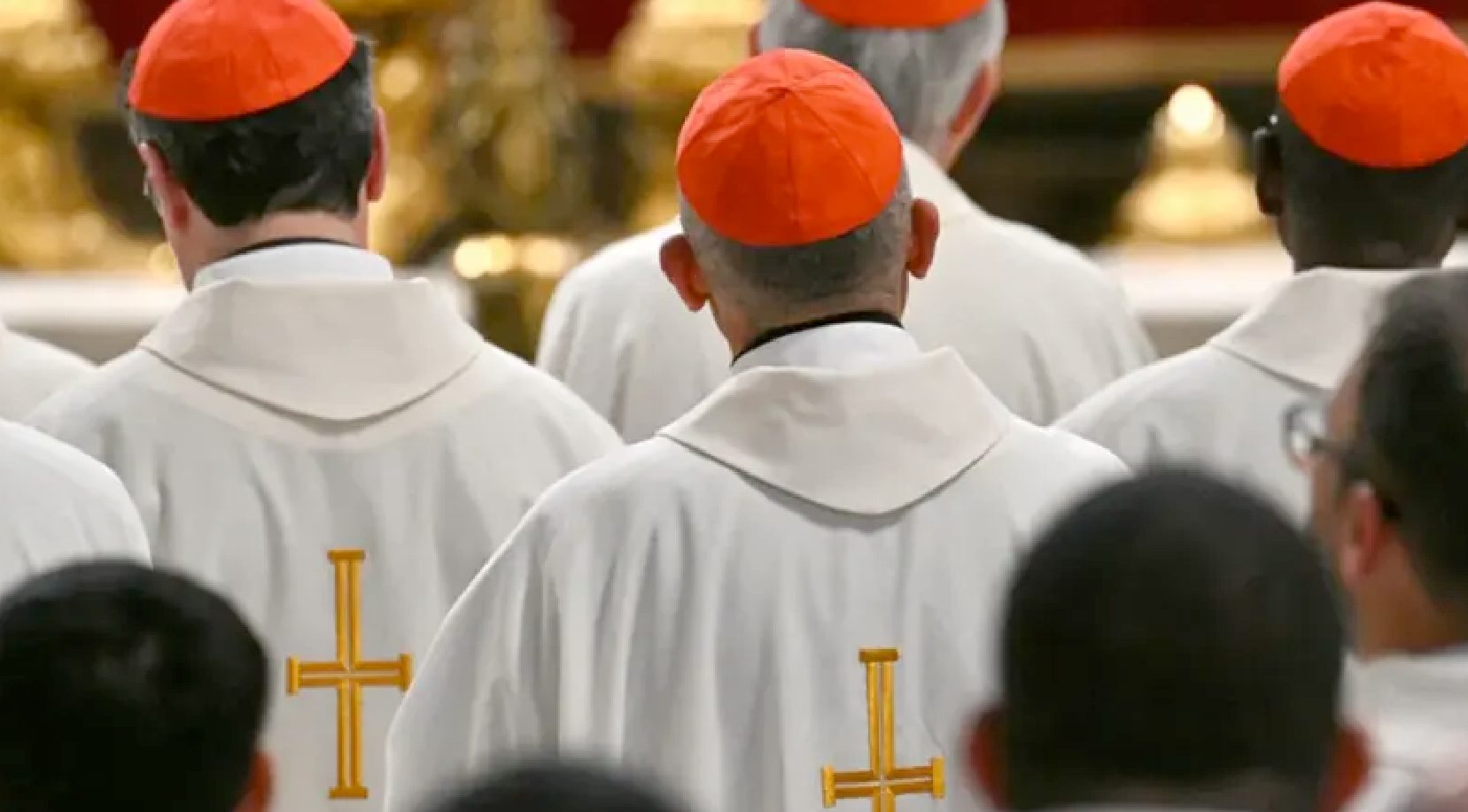
(ZENIT News / Rome, 10.10.2025).- After years of tension between the Vatican and the German Bishops’ Conference, a fragile truce born out of months of dialogue is once again under strain. The cause: Germany’s decision to publish pastoral guidelines for the blessing of same-sex couples — a move Rome insists was never approved.
The controversy, which erupted anew after the German bishops’ assembly in Fulda in September 2025, exposes not only a clash of interpretations but also deeper questions about authority, obedience, and the meaning of pastoral care in the post-Francis era.
At the heart of the dispute is a 40-page booklet titled Blessing Ourselves – Strengthening Love, published by the German Bishops’ Conference (DBK) in April 2025. It offers a framework for blessing ceremonies for same-sex couples, the divorced and remarried, and other “irregular unions.” The document presents itself as a pastoral aid, not a liturgical ritual, but its structure — including prayers, acclamations, and scriptural readings — leaves little doubt about its ceremonial character.
Bishop Georg Bätzing, head of the DBK, has repeatedly defended the initiative. At the September assembly, he told journalists the document had been produced “in transparent consultation with the Dicastery for the Doctrine of the Faith” (DDF), portraying it as a contextual application of the Vatican’s 2023 declaration Fiducia supplicans. “For anyone asking now,” he said, “there is no reason to withdraw it.”
But that narrative has been publicly contradicted — not by critics, but by the very Vatican office Bätzing invoked. Cardinal Víctor Manuel Fernández, the Argentine prefect of the DDF, stated flatly that Rome had not approved the German text. “We wrote to the bishops some time ago,” he said in early October, “reminding them that Fiducia supplicans excludes any form of ritualization, as the Pope himself has said.”
According to an investigation by the Catholic journal Communio, the German bishops sent the draft to Rome “in the name of the president of the conference,” explicitly noting that no formal approval was being sought. Fernández responded with sharp criticism of passages implying “collaboration” or an “official procedure” for such blessings — expressions that, according to the Vatican, distort the spirit of Fiducia supplicans, which allows spontaneous, non-liturgical blessings of individuals but not ceremonies that could suggest the Church endorses same-sex unions.
The DBK later claimed to have revised the document “in consultation” with Rome, though the changes appear to have been largely cosmetic. Communio notes that phrases like “official regulation” were softened to “general guideline,” while the section outlining a liturgical order — greeting, readings, intercessions — was removed, though other references to acclamation, Scripture, and prayers of thanksgiving remained. A source close to the dicastery told the magazine that “none of the versions was approved” by the Vatican.
The issue has gained additional weight under the new pontificate of Leo XIV, who has moved swiftly to reassert doctrinal clarity after years of what many saw as pastoral ambiguity. In his first major interview, Leo XIV openly criticized attempts in northern Europe to institutionalize same-sex blessings, warning that they misinterpreted both the text and the intent of Fiducia supplicans. “We can bless all people,” the Pope said, “but we cannot invent new rituals that contradict the Church’s understanding of marriage.”
The German bishops’ leadership insists they have stayed within legitimate pastoral bounds. Yet the episode has revived long-standing Vatican concerns about the Synodal Path — Germany’s reform movement that has already pushed for female ordination, lay preaching, and changes to sexual ethics. For many in Rome, the latest controversy confirms that what began as a national “conversation” has turned into a de facto redefinition of Catholic doctrine.
Behind the public statements, the mood between the two sides has shifted from confrontation to quiet mistrust. The Vatican’s patience is waning, but so is its desire to escalate. Fernández, a theologian known for his conciliatory style, has tried to frame the dispute as “a misunderstanding of boundaries rather than an act of defiance.” Yet among German clergy, many see it differently — as a test of whether Rome will allow local adaptation or impose uniform obedience.
For now, the German guidelines remain technically “non-binding,” leaving individual bishops free to adopt or ignore them. In practice, however, dioceses such as Limburg, led by Bätzing himself, have already introduced the blessings, effectively normalizing a practice the Vatican still calls “inadmissible.”
Thank you for reading our content. If you would like to receive ZENIT’s daily e-mail news, you can subscribe for free through this link.

Publicaciones relacionadas:
 Cardinal Ouellet Says “The Interpretation and Diffusion of Accusations as Sexual Aggressions Is Defamatory”
 Gays in Seminaries? In Regard to Homosexuals and the Priesthood, the Norms Have Not Changed at All
 Vatican Dissolves Miles Christi Religious Institute Amid Ongoing Scandals
 England, Belgium, and Germany: the three “most inclusive” countries for LGBT Catholics, according to a study
