

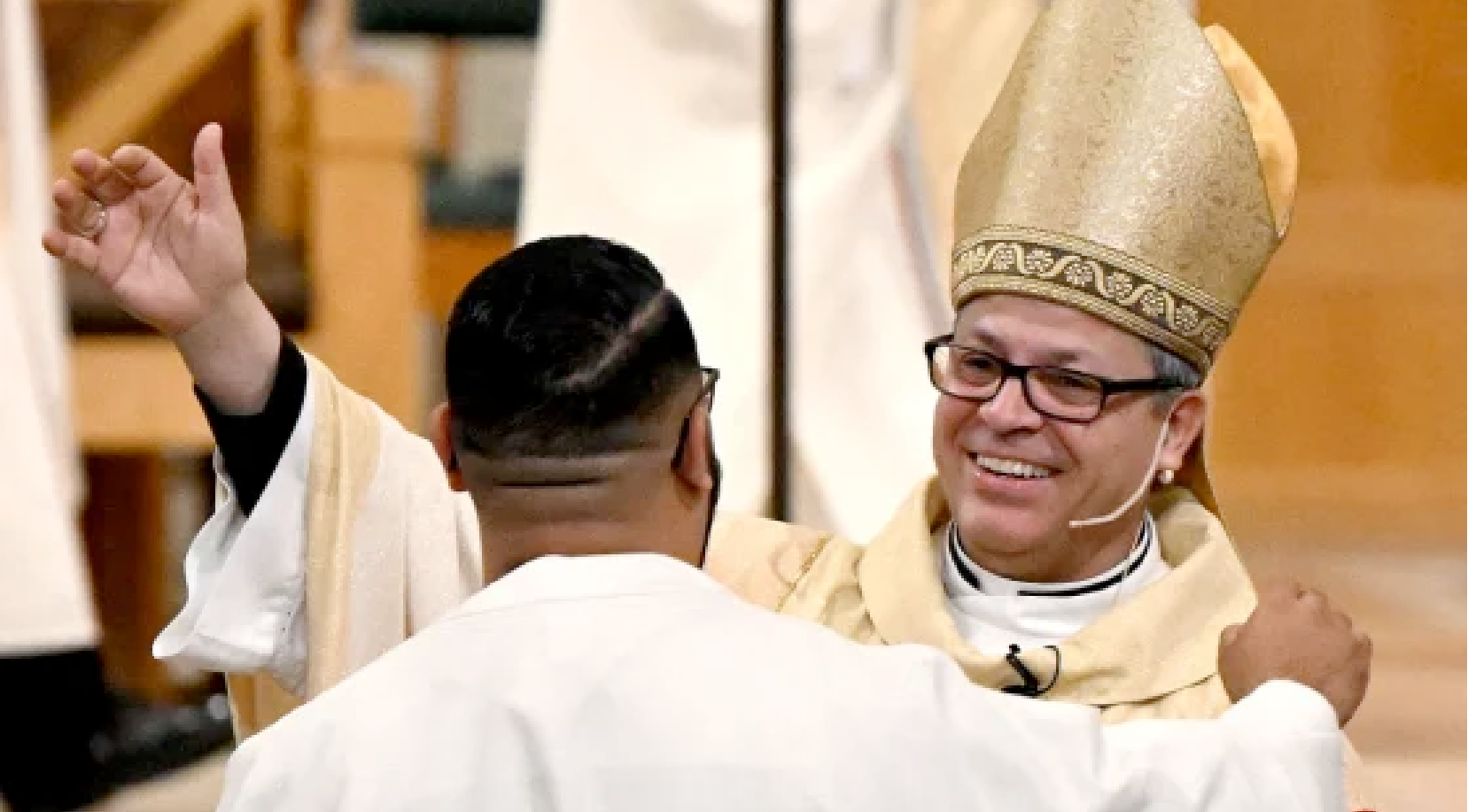
(ZENIT News / San Bernardino, 07.10.2025).- Bishop Alberto Rojas of the Diocese of San Bernardino announced on July 8 a formal dispensation releasing Catholics from the obligation to attend Sunday Mass if doing so could jeopardize their safety due to fears of immigration raids.
The decree, issued just weeks after federal agents detained individuals on the grounds of two local Catholic parishes, marks a rare intervention into canon law’s longstanding requirement for Sunday worship. It is the first known instance of a U.S. Catholic diocese granting such an exemption explicitly tied to immigration enforcement.
The dispensation, while temporary, addresses what Bishop Rojas described as «real and growing concerns» among parishioners, particularly undocumented immigrants, who now hesitate to attend Mass out of fear they could be targeted by authorities.
On June 20, agents from Immigration and Customs Enforcement (ICE) reportedly detained men in the parking lot of St. Adelaide Church in Highland, and arrested another individual while he was doing gardening work at Our Lady of Lourdes Church in Montclair. According to a diocesan spokesperson, the arrests—confirmed as the first of their kind on Catholic property—have sent ripples of anxiety through local congregations.
San Bernardino’s diocese, which encompasses nearly one million Catholics across Southern California’s Inland Empire, is one of the largest in the country. Its parishioners include a significant number of immigrants, many of whom now view church property—long considered a place of sanctuary—with renewed apprehension.
While other Christian communities have challenged such raids in court, arguing that they violate constitutional protections of religious freedom, Catholic leadership has generally pursued a quieter path. That silence, however, appears to be giving way to more direct responses, at least at the diocesan level.
Bishop Rojas, in his pastoral letter accompanying the decree, encouraged those staying away from in-person Masses to maintain their spiritual life through prayer, Scripture reading, devotional practices, and virtual participation in liturgies. The move is reminiscent of similar dispensations issued during the COVID-19 pandemic, though this time the perceived threat stems not from a virus, but from government action.
“This is not about defying law enforcement,” Rojas clarified in a previous statement. “We recognize the role of immigration officers in protecting the public from violent crime. But the arrests carried out on parish property were neither targeted nor justified. They were indiscriminate and have left our people shaken.”
Though the Department of Homeland Security once observed a decades-old policy of treating places of worship as sensitive locations—off-limits to enforcement actions without extraordinary circumstances—that unofficial guideline was effectively suspended during the Trump administration. While litigation has since limited some of those changes, legal protections remain patchy and often depend on court rulings tied to specific plaintiffs.
The Diocese of San Bernardino’s formal dispensation is being closely watched by other dioceses grappling with similar fears. In May, the Diocese of Nashville issued a pastoral reminder that Catholics are not obliged to attend Mass if doing so compromises their safety, but it stopped short of issuing a formal decree. San Bernardino is now setting a new precedent.
What remains to be seen is how long this dispensation will last. Bishop Rojas was careful to state that the exemption will remain in effect «until such time as the circumstances prompting it are sufficiently resolved.» In the meantime, he called for continued solidarity with the vulnerable, and a recommitment to the Gospel’s call to hospitality.
“Christ taught us to welcome the stranger,” Rojas wrote. “In these uncertain times, we must also protect the dignity of those who come to the Church seeking refuge—not only from the burdens of life, but from fear itself.”
In the pews, that message is both reassuring and unsettling. For now, the Diocese of San Bernardino is walking a delicate line between sacramental obligation and pastoral protection—one that could become more familiar as immigration enforcement and religious freedom continue to collide.
Thank you for reading our content. If you would like to receive ZENIT’s daily e-mail news, you can subscribe for free through this link.

Publicaciones relacionadas:
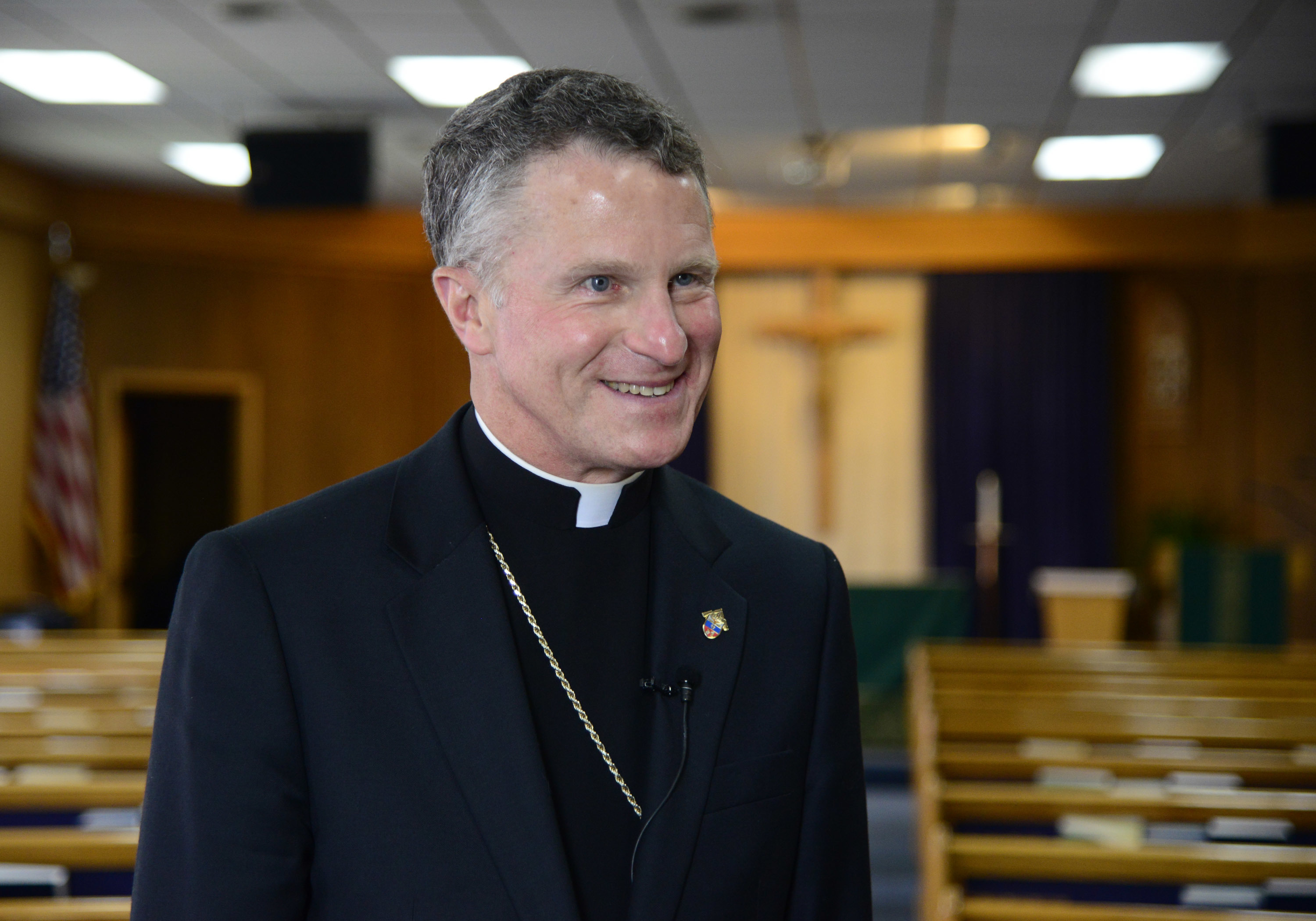 Leader of all U.S. bishops to migrants: “Count on our commitment to accompany you in these difficult times”
 Bishop of El Paso to immigration agents: No one is obligated to follow an immoral law
 Unexpected: Vatican court rules trial against Cardinal Becciu partially invalid and orders a retrial
 The unusual, candid, and widely praised letter from a European bishop urging confession
