

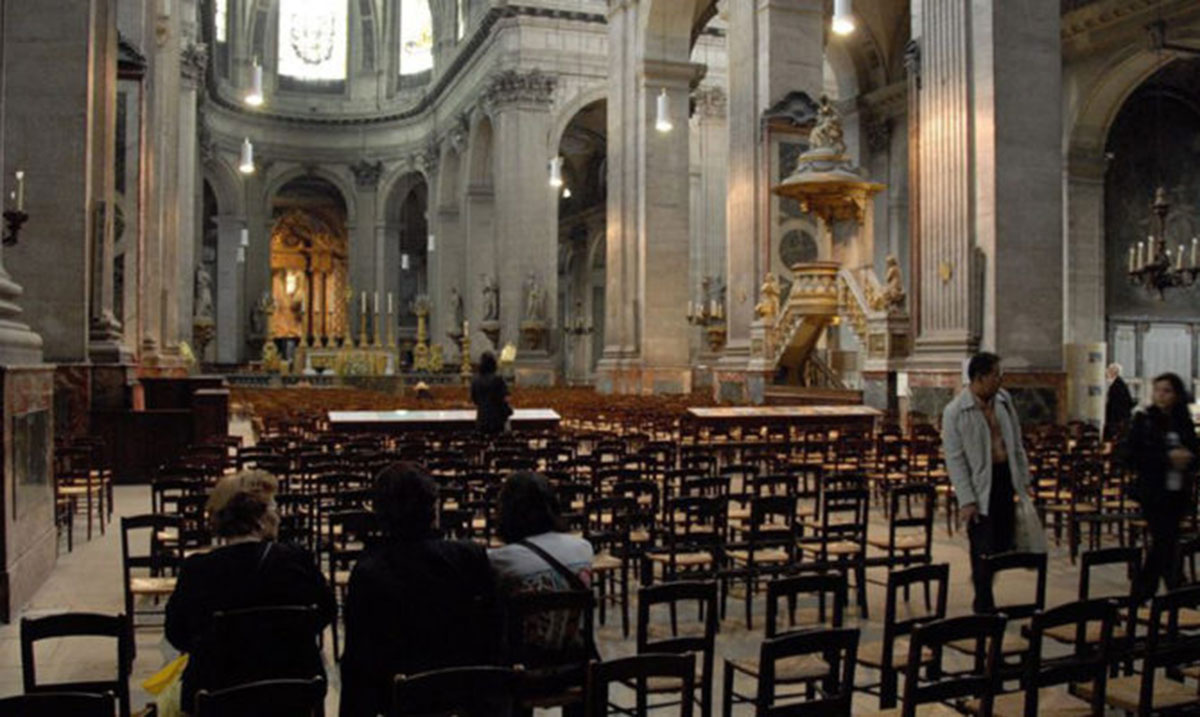
(ZENIT News / Bern, 10.03.2025).- For the first time in years, the Catholic Church in central Europe has seen a slowdown in the number of faithful walking away. Recent figures from Switzerland, Germany, Austria, and even Belgium point to a striking decline in formal departures during 2024—a reversal that raises the question: is this the start of a new trend, or merely a statistical lull in a long-term crisis?
In Switzerland, 36,782 people formally left the Church last year, a dramatic 46 percent drop compared with the record-breaking exodus of 2023. Germany registered 321,659 departures, still a staggering figure but 20 percent fewer than the year before. Austria saw a similar fall, with 71,531 exits—down 16 percent year on year. Even in Belgium, where a 2023 documentary on clerical abuse provoked an unprecedented wave of defections, the number of people cutting ties fell by two-thirds in 2024.
The relief is palpable in a region often grouped under the shorthand “DACH” (Germany, Austria, and Switzerland), which has long been at the heart of Catholic Europe and is still home to tens of millions of nominal Catholics. But what these new statistics mean is far from clear.
On the optimistic side, analysts note that 2024 marks the second consecutive year of falling exit rates in Germany and Austria, suggesting a trajectory rather than a fluke. A small but noticeable uptick in Mass attendance, adult baptisms, and re-entries into the Church was also reported in both countries, while Belgium recorded a four percent rise in Mass participation alongside a continuing surge in adult baptisms. After years of bleak headlines, these glimmers of vitality are not insignificant.
Switzerland’s case is more complicated. Its 2023 peak—nearly 67,500 departures—was fueled by a wave of anger following revelations of widespread sexual abuse, coupled with a Vatican-ordered investigation into members of the Swiss bishops’ conference. The nearly halved figure for 2024 may therefore reflect the easing of that immediate scandal rather than any deeper change of mood. Still, the drop is so sharp that observers wonder whether it signals the beginning of a broader shift.
Not everyone is convinced. The Swiss Pastoral Sociology Institute, which published the September report, has cautioned against over-interpreting the downturn. When compared with longer-term data, they argue, the trend remains one of gradual erosion. The 2024 total, while far lower than the previous year, still exceeds the number of exits recorded in 2022. “The long view shows a slow increase in the propensity to leave,” the institute concluded, warning that younger generations are less attached to the Church and less likely to replace the losses caused by demographic decline.
This tension between encouraging short-term signals and grim long-term patterns defines the current debate. Some Church leaders interpret the data as the first hints of stabilization, perhaps even of a cautious renewal in regions scarred by scandal and secularization. Others see it as a temporary pause in an ongoing downward spiral, one that will resume unless there is radical reform or an unexpected revival of faith.
The truth likely lies somewhere in between. The DACH countries—and the wider German-speaking sphere, stretching into Liechtenstein, Luxembourg, and parts of Belgium—remain a barometer for Catholicism in Europe. If exits continue to fall and participation edges upward, the Church may be witnessing the beginning of a slow recovery. If, on the other hand, the respite of 2024 proves fleeting, historians may look back on these numbers as nothing more than a statistical dip in a decades-long decline.
For now, Catholics in the region have at least one reason to breathe a little easier: the hemorrhage of departures has slowed. Whether that signals a healing wound or simply a pause before the bleeding resumes is a question only the next few years will answer.
Thank you for reading our content. If you would like to receive ZENIT’s daily e-mail news, you can subscribe for free through this link.

Publicaciones relacionadas:
 [Photo Gallery] Poignant: Eight Children Make Their First Communion in War-Torn Gaza
 A saintly samurai: progress and hopes for the canonization of the «Samurai of Christ
 Basilica of the Sagrada Familia in Barcelona reaches 4.7 million visitors by 2023
 Ireland: survey reveals not encouraging attitudes of the population towards the Catholic Church and the clergy
