

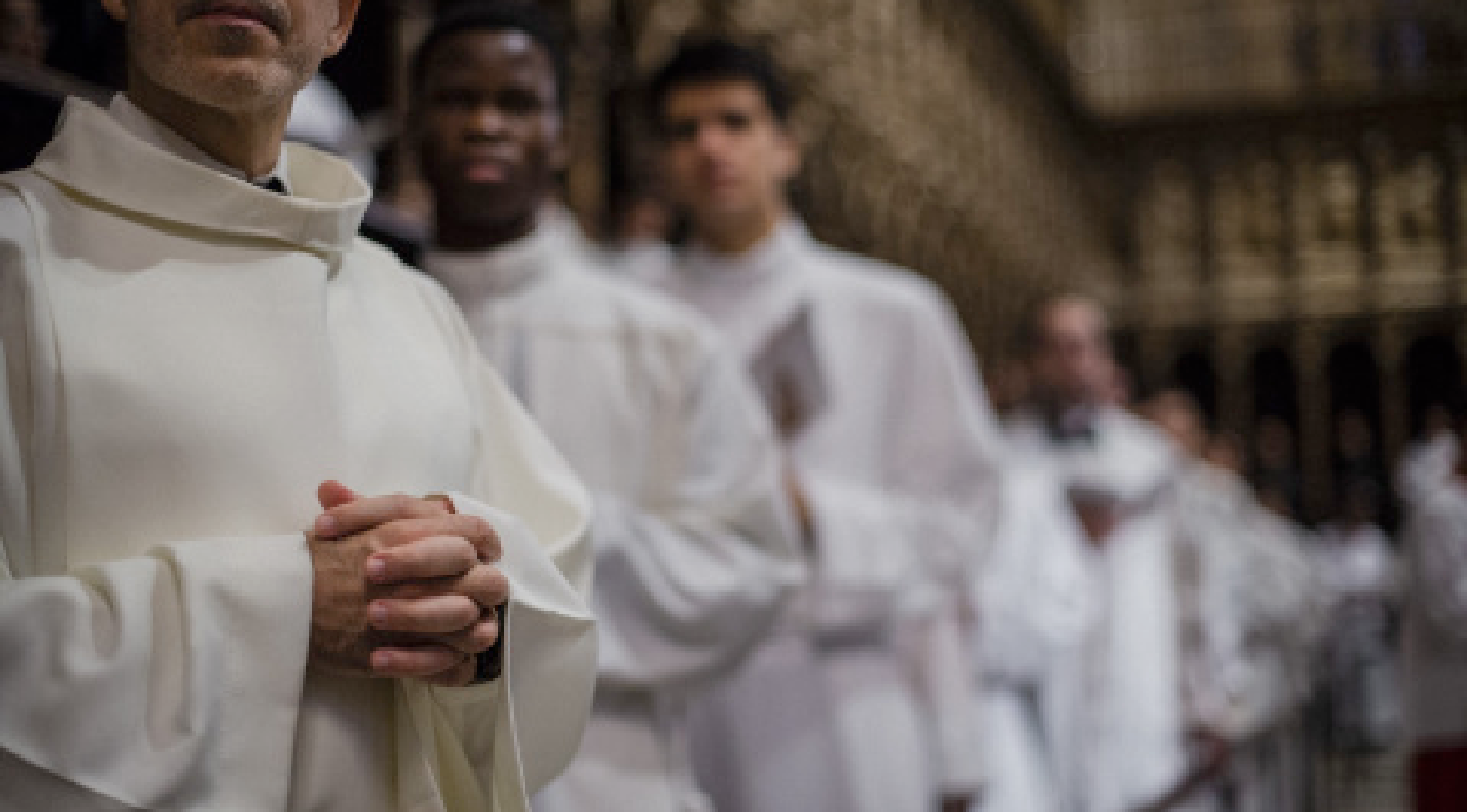
(ZENIT News / Rome, 15.10.2025).- On October 14, 2025, the Catholic University of America presented the results of the second wave of the National Study of Catholic Priests in the United States, the most comprehensive analysis of clergy in more than half a century. This Report, based on surveys of 1,164 priests, reveals a complex picture: while priests report high levels of personal well-being, they face significant challenges in terms of trust in leadership, burnout, and pastoral priorities. Below are some of the key findings by area.
Personal and Community Well-being
The study highlights that priests in the United States continue to show high levels of personal well-being, averaging 8.2 on the Harvard Well-Being Scale, which measures aspects such as mental health, purpose, and social relationships. However, their perception of the well-being of their communities (Dioceses or Religious Orders) is considerably lower, with average scores of 5.7 for diocesan priests and 6.2 for Religious. This reflects a disconnect between individual and collective well-being.
Morale and Burnout
Although 61% of priests do not report symptoms of burnout, 39% experience at least one, and 5% show high levels of emotional exhaustion. Diocesan priests are more prone to burnout than priests religious, with 7% reporting high levels compared to 2% of priests religious. Furthermore, younger priests, especially those ordained after 2000, face greater challenges, such as an overload of responsibilities and a feeling of being detached from their primary duties. Nearly half of them feel they are required to perform tasks that go beyond their priestly calling.
Loneliness also emerges as a significant problem. Forty percent of priests ordained after 2000 reported feeling lonely, compared with 27% of those ordained between 1980 and 1999 and 15% of those ordained before 1980. This feeling of loneliness may be related to increasing ministerial demands and a lack of community support.
Trust in Episcopal Leadership
Trust in Bishops remains a sensitive issue. Although there has been a slight improvement since 2022, only 52% of diocesan priests trust their Bishop, and only 27% trust U.S. Bishops overall. A key factor in generating trust is the perception that the Bishop cares about them: 72% of priests who believe their Bishop cares about them express trust in his leadership, compared to 19% of those who do not. However, trust does not depend solely on pastoral care. Priests also value competence, transparency, and theological and political alignment with their Bishops. The study shows that most priests perceive their Bishops as moderately aligned with their own perspectives, without a marked inclination toward conservative or progressive positions.
Pastoral Priorities
Priests identified youth ministry, family formation, and evangelization as their top priorities, with 94% support. However, there is a gap between these priorities and their implementation in parishes. For example, although youth ministry is considered essential, only 71% of parishes have dedicated programs to it. Other issues such as poverty, immigration, and climate change were also highlighted, although with less consensus.
In contrast, access to the traditional Latin Mass was considered a priority by only 26% of priests, while 59% believed it should not be a priority. This reflects a trend toward more inclusive pastoral approaches that are oriented toward the current needs of communities.
Synodality and Participation
The Synod on Synodality process (2021-2024) received mixed responses. While 37% of priests considered it a waste of time, many already practice forms of synodal leadership in their parishes, such as active consultation with lay people and collaborative decision-making. Eighty-five percent of priests with parish assignments reported having parish councils that play an important role in decision-making, and 64% actively seek the voices of those less involved in parish life.
Ongoing Formation
Interest in ongoing formation is high among priests. 61% expressed interest in spiritual development, while 55% requested more meetings and convocations. Other topics such as theological education, mental well-being, and leadership were also highlighted. Only 10% of priests indicated they felt no need for additional formation, underscoring the desire for constant growth in their vocation.
Conclusion
The 2025 National Study of Catholic Priests reveals a clergy committed to their mission, yet facing significant challenges. Although priests report high levels of personal well-being, trust in ecclesiastical leadership remains low, and younger priests face higher levels of burnout and isolation. Furthermore, there is a disconnect between pastoral priorities and their practical implementation in parishes. This Report underscores the need for Church leaders to creatively address the needs of the clergy, fostering an environment of support, ongoing formation, and collaboration. Priests, like lay people, are on a journey of spiritual growth and need the support of the entire community to fulfil their vocation.

Publicaciones relacionadas:
 Majority of Catholic Colleges for Women Enrol Men that Identify Themselves as Women
 Creationism or Evolution? Survey Shows Divided Opinions in the USA
 Is the Bible clear when it comes to homosexuality? Study shows what believers think
 Cross and Crescent in Crisis: Is There a Persecution of Christians in Nigeria?
