

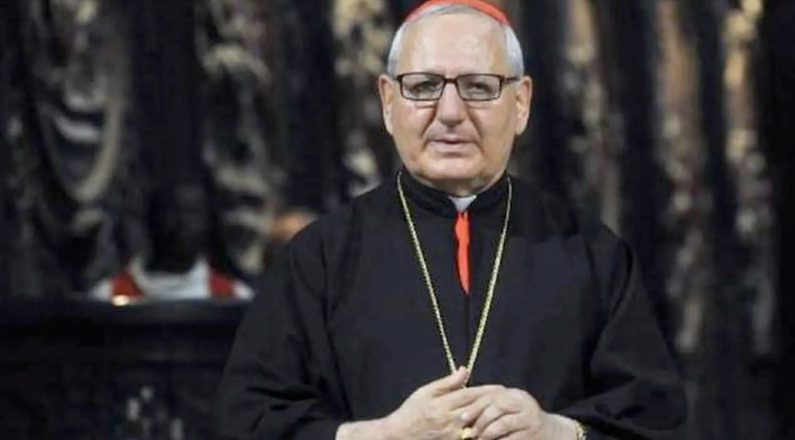
(ZENIT News / Baghdad, 01.05.2026).- A single word, spoken from the pulpit on Christmas, has placed one of the Middle East’s most prominent Christian leaders under mounting pressure. Cardinal Louis Raphaël Sako, Patriarch of the Chaldean Catholic Church, is facing an escalating campaign of intimidation in Iraq and neighboring Iran after remarks from his Christmas homily were lifted out of their pastoral context and reframed as a political provocation.
At the heart of the controversy lies the Arabic term commonly rendered as “normalization.” In his homily, Cardinal Sako employed the word as part of a spiritual appeal for healing after years of conflict: a call for social stability, restored trust among citizens, and reconciliation between families, communities and the Iraqi nation as a whole. According to the Chaldean Patriarchate, the intent was unmistakably religious, rooted in the Christmas message of peace and renewal, and entirely detached from regional geopolitics.
Yet in Iraq’s highly charged environment, language is never neutral. The word “normalization” has become politically radioactive, often used as shorthand for normalizing relations with Israel, an issue that can ignite immediate outrage. Critics seized on that association, recasting a pastoral exhortation as an alleged endorsement of forbidden political positions. Within hours, online narratives transformed a Christmas message into accusations of political betrayal.
The Patriarchate responded swiftly, stressing that the homily had no political content and explicitly rejecting claims that Cardinal Sako was advocating normalization with Israel. Officials reiterated that the message focused on peace, national cohesion and the dignity of Iraq, themes that have long marked the patriarch’s public ministry. The clarification, however, did little to stem the backlash.
What began as a semantic distortion quickly hardened into a campaign. Demands circulated on social media and in activist circles calling for investigations and prosecution. Some voices went further, issuing threats that crossed from rhetoric into intimidation. According to reports carried by Chaldean Press, certain Islamist groups escalated their demands to the point of calling not only for the patriarch’s arrest but even for his execution.
Among Chaldean Catholics themselves, the reaction has been markedly different. Consultations reported by Chaldean media indicate that the overwhelming majority of the faithful detected no political signal in the Christmas homily. For many, the uproar appears less a misunderstanding than a deliberate weaponization of language against a Christian leader who has consistently spoken for coexistence in a fractured society.
Cardinal Sako’s own reported response underscores both the gravity of the moment and the depth of his commitment to his country. “If they want to put me on trial and execute me for the sake of Iraq, so be it,” he is quoted as saying. The remark, stark and unsettling, reflects the precarious position of Christian leaders in a region where theological language can be repurposed as political evidence, and where calls for peace may carry personal risk.
The episode highlights a broader reality for Christians in Iraq and the wider region. Religious discourse operates under intense scrutiny, and words associated with reconciliation can be reinterpreted through the lens of unresolved conflicts. For the Chaldean Patriarch, a Christmas appeal for social healing has become a test of endurance, revealing how fragile the space remains for non-political voices seeking to speak about unity in a polarized landscape.
Thank you for reading our content. If you would like to receive ZENIT’s daily e-mail news, you can subscribe for free through this link.

Publicaciones relacionadas:
 Pope Francis removes Belgian bishop convicted of abuse from the clerical state
 Bishop: Church’s true influence is sharing God’s mercy, not chasing ‘likes’
 Bishop Barron announces founding of new congregation dedicated to digital evangelization
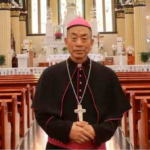 China recognizes first bishop appointed by Pope Leo XIV for a Chinese diocese
