(ZENIT News / Washington, 01.09.2026).- Reluctance, it turns out, can be a form of belief. Asked whether they would purchase a house knowing a murder had taken place there, nearly two-thirds of Americans hesitate. According to the most recent Baylor Religion Surveys, 64 percent of respondents said they would be uncomfortable doing so. What is striking is not only the figure itself, but its consistency across belief systems: 64 percent among those interested in religion and 62 percent among those who say they are not.
For researchers, this unease points to a broader cultural shift they describe as “secular supernaturalism,” a phenomenon emerging as institutional religious participation declines while individualized spiritual curiosity persists. The supernatural, in this framework, does not necessarily involve God, angels, or heaven. Instead, it may include ghosts, energies, rituals found online, or practices increasingly categorized by scholars under the umbrella of “magic.”
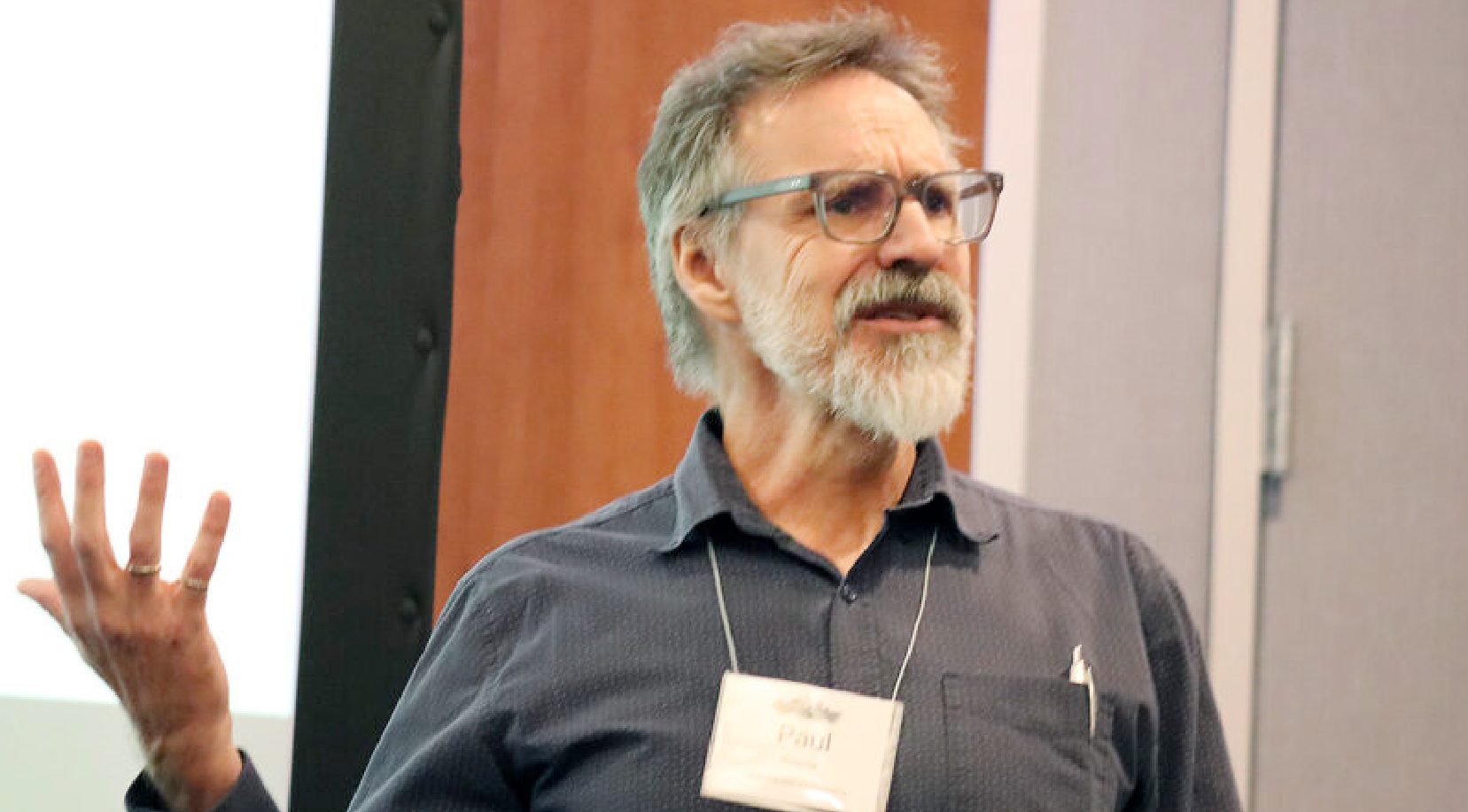
Paul Froese, a sociology professor at Baylor University and director of the Baylor Religion Surveys, addressed this evolving landscape during a presentation on October 31, 2025—Halloween—at the joint annual meeting of the Society for the Scientific Study of Religion and the Religious Research Association in Minneapolis. His talk, titled “Who Believes in Magic? The Relationship Between Magical Beliefs, Traditional Religion, and Science,” challenged the long-standing assumption that secularization equates to disenchantment.
The data supporting his argument come from a national survey of 1,812 American adults conducted in early 2025. The findings reveal sharp contrasts between religious and non-religious respondents on traditional doctrines. Among those expressing interest in religion, 80 percent believe in angels and in heaven. By contrast, only 55 percent of the non-religious believe in angels, and 53 percent in heaven. Belief in hell shows an even wider gap: 69 percent among the religiously interested compared with 43 percent among those without religious interest.
Yet those differences nearly vanish when the questions move outside classic theological categories. Belief in ghosts is held by 53 percent of religious respondents and 50 percent of the non-religious. The idea that the living can communicate with the dead is accepted by 48 percent of those interested in religion and 46 percent of those who are not. In other words, detachment from organized religion does not necessarily diminish belief in unseen realities.
That overlap is precisely what resonates with Jen Buzzelli, a 57-year-old film and television executive from Brooklyn, New York. Raised Catholic but now describing herself as non-religious and agnostic, Buzzelli says the survey mirrors her own inner landscape. She speaks of a shared zone of belief across ideological lines and admits to keeping “a slightly open heart” toward what cannot be explained.
Buzzelli believes in evil, divine healing, and the possibility of communicating with the dead. At the same time, she rejects belief in heaven, hell, angels, demons, or Satan—categories explicitly examined in the Baylor research. Her spiritual imagination was shaped in part by the 1988 bestseller Many Lives, Many Masters, written by a psychiatrist and centered on past-life therapy. She read it while grieving the sudden death of her father nearly twenty years ago.
The book, she recalls, offered hope—not by describing heaven or hell, but by suggesting that consciousness might continue in forms science has yet to grasp. She also remembers lights flickering or bursting shortly after her father’s death, moments that reinforced her sense that reality extends beyond the visible. For her, the appeal lies in the idea of an undiscovered realm rather than a defined afterlife.
A similar search animates Lila Wilson, also 57, a data analyst living in Texas. Baptized Catholic but raised in an agnostic household, she occasionally attends Episcopal services when visiting her mother. Her exposure to Christianity came less from Scripture—she has never read the Bible—than from reading The Chronicles of Narnia as a child.
Wilson describes her understanding of anything beyond earthly life as vague and fluid. Fixed doctrines, she says, feel artificial. Her exploration intensified after the death of her mother-in-law, prompting questions about where a person goes after death. In response, she consulted psychic mediums and immersed herself in books and documentaries about near-death experiences.
She now wonders whether interest in ghosts or near-death narratives might serve, for some people, the same existential purpose once fulfilled by church attendance. Wilson speaks of believing in an energy not yet understood by science, a belief others might label paranormal. For her, it functions as a personal creed.
Despite their differences, both Buzzelli and Wilson share one very concrete hesitation: neither would feel comfortable buying a home where someone had been murdered. That instinctive response, Froese suggests, illustrates how deeply embedded supernatural intuitions remain, even in ostensibly secular lives.
In a November interview, Froese reflected on cultural archetypes such as Spock from the original Star Trek series of the 1960s, characters that once symbolized a purely rational, non-supernatural secularism. That image, he argues, never fully matched reality. Superstitions, he notes, are widespread, and most people sense that something beyond material explanation is at work.
Rather than a binary divide, Froese describes belief as a continuum. Individuals may lean toward a secular ideal or a religious one, but few occupy either extreme. As church membership declines and trust in religious institutions erodes, he sees space opening for alternative forms of belief that are more individualized and transactional, often amplified by the internet.
What was once dismissed as paranormal may gradually become normalized. The Baylor findings, he argues, suggest a future in which belief in magic-like phenomena increases even as adherence to traditional religious doctrines continues to wane. The supernatural, it seems, is not disappearing—it is changing its address.
Thank you for reading our content. If you would like to receive ZENIT’s daily e-mail news, you can subscribe for free through this link.