

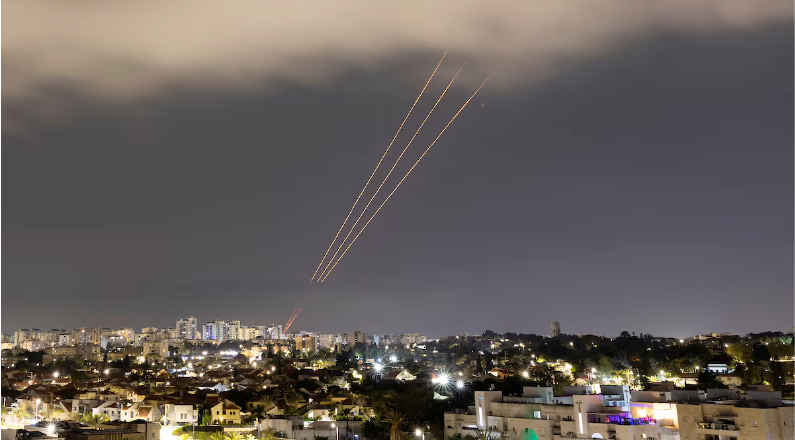
(ZENIT News / Jerusalem, 01.18.2026).- The latest developments in Gaza, the West Bank and Jerusalem suggest that the current lull in large-scale fighting has not translated into stability on the ground. Instead, different forms of violence and pressure—military, civilian and administrative—are converging, producing a fragmented but deeply consequential reality for Palestinians, including Christian communities long rooted in the Holy Land.
In Gaza, deaths continue to punctuate what is officially described as a fragile truce. Israeli drone strikes in Khan Younis have killed three Palestinians, while two children have reportedly died from exposure to cold during winter conditions that have compounded the humanitarian crisis. According to UNICEF, the toll on children since the ceasefire began in early October is particularly stark: at least 100 minors—roughly one child per day—have been killed, with hundreds more wounded. UNICEF spokesperson James Elder stressed that these figures reflect only cases that could be fully verified, suggesting the real number may be higher.
While the reduction in airstrikes and gunfire has allowed limited humanitarian gains, Elder emphasized that the ceasefire has not yet become genuine safety for civilians. Severe restrictions on the entry of essential supplies persist, affecting medical equipment, fuel, cooking gas and components needed to keep water and sanitation systems running. UNICEF and its partners have managed to expand vaccinations, open more than 70 additional nutrition centers and remove about 1,000 tons of solid waste per month. Nearly one million thermal blankets and hundreds of thousands of winter clothing kits have also been distributed. Yet these measures, the agency warns, remain modest when set against months of warfare that have left Gaza’s children traumatized and largely without psychological support.
Parallel to Gaza’s humanitarian emergency, the West Bank is experiencing a sharp escalation of settler-related violence. Data released by the Israel Defense Forces and reported by the Israeli daily Haaretz indicate that so-called “nationalist crimes” committed by Israeli settlers against Palestinians have surged since 7 October 2023. In total, 1,720 such attacks have been recorded since that date. The trend accelerated further in 2025, with 845 incidents—around 25 percent more than in 2024—resulting in approximately 200 injuries and four deaths. By comparison, 2024 saw 675 cases, 149 injuries and six fatalities.
What makes these figures particularly significant is not only their scale, but the institutional alarm they have triggered. Senior Israeli military commanders are reportedly questioning whether the police and internal security services are capable of containing the violence. According to Haaretz, the army has warned that if the attacks continue at the current pace, it may be forced to deploy substantial numbers of regular and reserve troops to the West Bank—an extraordinary step that would mark a serious escalation and further strain relations between Israeli authorities and Palestinian communities.
Diplomatic efforts continue in parallel, though with uncertain prospects. Negotiations over the second phase of the Gaza peace plan are under way, with a Hamas delegation in Egypt discussing the implementation of the ceasefire and the formation of a committee of independent Palestinian technocrats to oversee governance. Oversight of this process is expected to fall to a newly announced Peace Council, chaired by former U.S. President Donald Trump and including leaders from Italy, the United Kingdom, Germany, Qatar, the United Arab Emirates and Egypt. Supporters argue that this structure could provide international guarantees; critics note that previous diplomatic frameworks have struggled to deliver durable change on the ground.
Beyond the headlines of war and diplomacy, another front has opened in Jerusalem, affecting education and the Christian presence in the city. Around 10,000 students attending Christian schools have been unable to resume classes after the Christmas holidays due to a strike by the directors of 12 private institutions. The protest was triggered by Israel’s decision not to renew work permits for 171 teachers from the occupied Palestinian territories, primarily the West Bank.
In a statement issued on 10 January, the General Secretariat of Christian Educational Institutions in Jerusalem described the measures as arbitrary and harmful to both educational and civic life. Brother Daoud Kassabry, director of the La Salle Brothers’ College, explained that the problem began months earlier, when some permits were renewed only until 11 January and excluded Saturdays, which are school days. The situation, he argued, has created chronic uncertainty for schools already under financial strain due to the war.
Israeli authorities contend that the Palestinian curriculum contains incitement and deny its legitimacy, increasing pressure on private schools to adopt the Israeli curriculum as a condition for receiving subsidies. The Palestinian Ministry of Education has condemned these policies as a targeted attack on the Palestinian education system in Jerusalem, accusing Israel of undermining Palestinian identity, restricting freedom of movement and violating international law. Although some permits were renewed after the schools’ protest, they were extended for only five days instead of the usual seven, reinforcing the sense of instability.
The issue is further complicated by a draft law under consideration in the Knesset that would ban the employment of teachers who studied in Palestinian territories. Since more than 60 percent of Jerusalem’s teachers hold such qualifications, Christian institutions warn that the proposal represents an existential threat to their ability to function.
Taken together, these developments illustrate a reality in which violence is not limited to bombs and bullets. In Gaza, children continue to die despite a ceasefire. In the West Bank, settler attacks are rising to levels that alarm Israel’s own security establishment. In Jerusalem, administrative decisions over permits and curricula are reshaping daily life and placing historic Christian schools under unprecedented pressure. The result is a landscape where humanitarian relief, security concerns and identity struggles intersect—leaving civilians, and especially children, to bear the heaviest burden.
Thank you for reading our content. If you would like to receive ZENIT’s daily e-mail news, you can subscribe for free through this link.

Publicaciones relacionadas:
 The last historic Christian village in the Holy Land, threatened with annexation by the Jewish state of Israel
 Israeli government minister calls for construction of synagogue on Temple Mount (where Muslim mosque now stands)
 California’s Democratic government removes statue of Saint Junípero Sierra after lying about consulting the Archbishop of San Francisco
 Israeli Jewish army causes death of Catholic priest in Lebanon and displaces thousands of Catholics from southern Lebanon
