

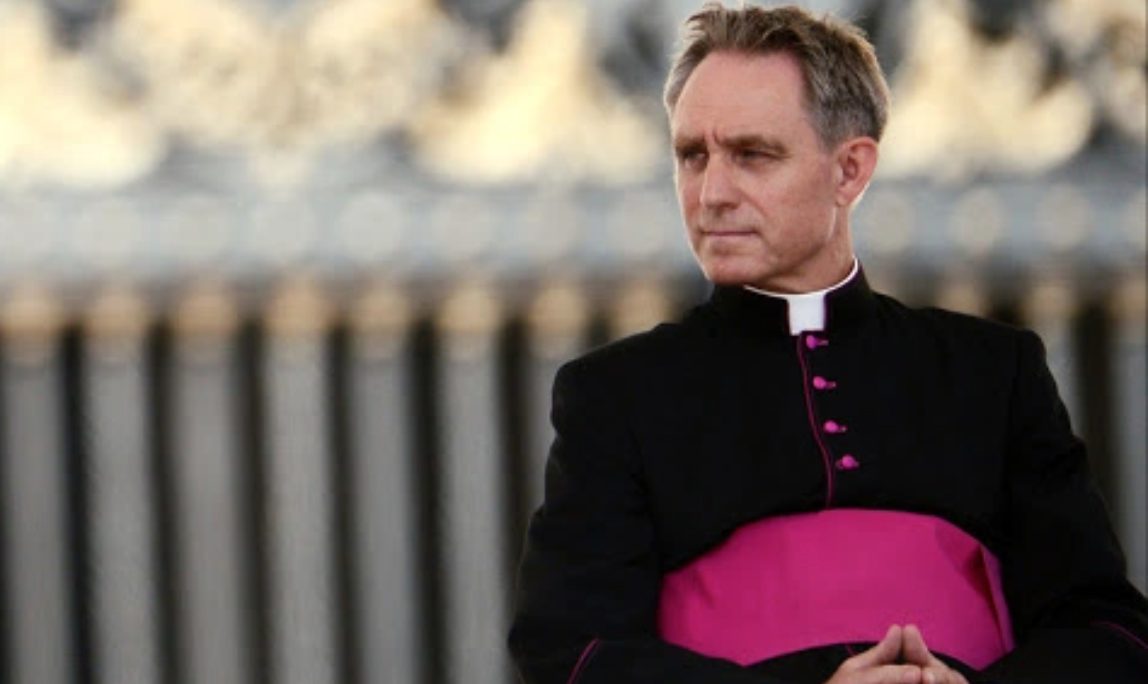
(ZENIT News / Rome, 01.26.2026).- Less than a year after the election of Pope Leo XIV, one of the Vatican’s most seasoned insiders is offering an unusually candid assessment of the new pontificate—and of the broader crossroads facing the Church, particularly in Germany.
Archbishop Georg Gänswein, former personal secretary to Pope Benedict XVI and now Apostolic Nuncio to Lithuania, Latvia, and Estonia, says the atmosphere in Rome is quietly but perceptibly changing. In an interview granted to EWTN News in Vilnius, where he has been based since 2024, Gänswein described a Vatican that is slowly regaining its balance.
After meeting Pope Leo XIV twice in 2025, most recently in mid-December, the German prelate said he sensed a renewed calm taking hold. For him, the word that best captures the moment is “normality.”
“normality is slowly returning,” he explained, pointing to what he sees as a healthier ecclesial climate following last year’s transition of pontificates. The shift, he believes, is not merely administrative or stylistic. It reflects a deeper spiritual realignment. Gänswein interprets this change as evidence that faith—and the Holy Spirit—remain actively at work in the Church.
A diplomat with long institutional memory
Gänswein brings a unique perspective to these developments. Before his diplomatic appointment in the Baltics, he spent 17 years at the side of Joseph Ratzinger, first as prefect of the Congregation for the Doctrine of the Faith and later as Pope Benedict XVI. He also served for over a decade as Prefect of the Papal Household, giving him a front-row seat to the inner workings of the Vatican across multiple pontificates.
Today, as nuncio in a region marked by both secularization and renewed interest in Christianity, he sees Pope Leo XIV setting clear priorities—many of them traditional, but recently neglected.
What strikes him most is the Pope’s way of preaching
According to Gänswein, Leo XIV proclaims the faith with clarity, confidence, and joy, drawing deeply from the Augustinian tradition. Reading the Pope’s homilies and catecheses, he says, one encounters a pastor who does not merely teach doctrine but lives it. This consistency, in Gänswein’s view, has contributed significantly to the more positive mood now felt in Vatican circles.
A critical eye on Germany’s Synodal Path
The archbishop’s optimism about Rome contrasts sharply with his concerns about developments in his homeland. Germany’s Synodal Path—a multi-year reform process involving bishops and lay representatives—will hold its sixth and final assembly beginning January 29. For Gänswein, the trajectory of this initiative remains deeply troubling.
He warns that many of its proposals drift away from core Catholic teaching rather than leading believers back to it.
While acknowledging that reform is sometimes necessary, he draws a firm distinction between renewal rooted in faith and change driven by cultural or political pressures. What he sees emerging from the Synodal Path, he says, is not a spiritual deepening but a dilution of Catholic identity.
In his assessment, a red line has already been crossed in areas touching moral theology, ethics, the sacramental structure of the Church, and the authority of bishops. Any reform, he insists, must remain firmly anchored in the Church’s received doctrine.
Gänswein has publicly aligned himself with the concerns raised by the Catholic initiative Neuer Anfang (“New Beginning”), whose representatives recently met Pope Leo XIV in Rome alongside Franziska Harter, editor-in-chief of Die Tagespost. Their shared fear is that the Synodal Path risks widening divisions within both Church and society.
“I can only hope and pray that this misguided course comes to an end,” he said.
The unresolved meaning of “synodality”
Beyond Germany, Gänswein also pointed to a broader ambiguity affecting the global Church: the concept of synodality itself.
He revealed that during a recent consistory convened by Pope Leo XIV, several cardinals urged the Pope to clarify what the term actually means. After years of discussion and competing expectations, Gänswein argues, the Church still lacks a precise definition.
If synodality simply refers to dialogue within the Church, he sees that as legitimate and even necessary. But he fears the word is increasingly being used as a cover for agendas unrelated to authentic synodal practice—objectives that, in his view, have little to do with listening to the Holy Spirit.
Young people and a hunger for clarity
Despite his sharp critique, Gänswein does not paint a bleak picture of the Church’s future. On the contrary, he says he regularly encounters young people—seminarians among them—who are searching earnestly for meaning, guidance, and spiritual solidity.
They are not looking for slogans or ambiguity, he says, but for a clear and demanding message. They want the Gospel proclaimed without dilution.
The Church did not invent that message, Gänswein reminds, but she is entrusted with proclaiming it—whether convenient or not. When she does, he believes, she remains on the right path.
For these young believers, faith is not an extra burden imposed on life; it is a source of orientation and strength. They live it with what he describes as “joy of heart,” aware of both their purpose in the world and their ultimate destination.
A cautious hope under Pope Leo XIV
Taken together, Gänswein’s reflections offer a portrait of a Church in transition. In Rome, he sees renewed focus and spiritual coherence under Pope Leo XIV. In Germany, he fears fragmentation driven by reforms untethered from tradition. And across continents, he witnesses a younger generation drawn not to experimentation, but to authenticity.
His verdict on the early months of Leo XIV’s pontificate is measured but hopeful: priorities are being reset, preaching has regained its sharpness, and a sense of ecclesial normality is gradually returning.
For a man who spent decades at the heart of the Vatican, that, in itself, is no small development.
Thank you for reading our content. If you would like to receive ZENIT’s daily e-mail news, you can subscribe for free through this link.

Publicaciones relacionadas:
 Vatican Sentences Cardinal Becciu: Prison, Fine and Not in Perpetuity Without Charges
 Second in Hierarchy of the Vatican Secretariat of State Appears in Court in London
 Why Did the First Smoke of the Conclave Take So Long? The Answers
 What Is the Difference Between the Holy See, Vatican City, and the Roman Curia? Cardinal Ghirlanda Explains
