

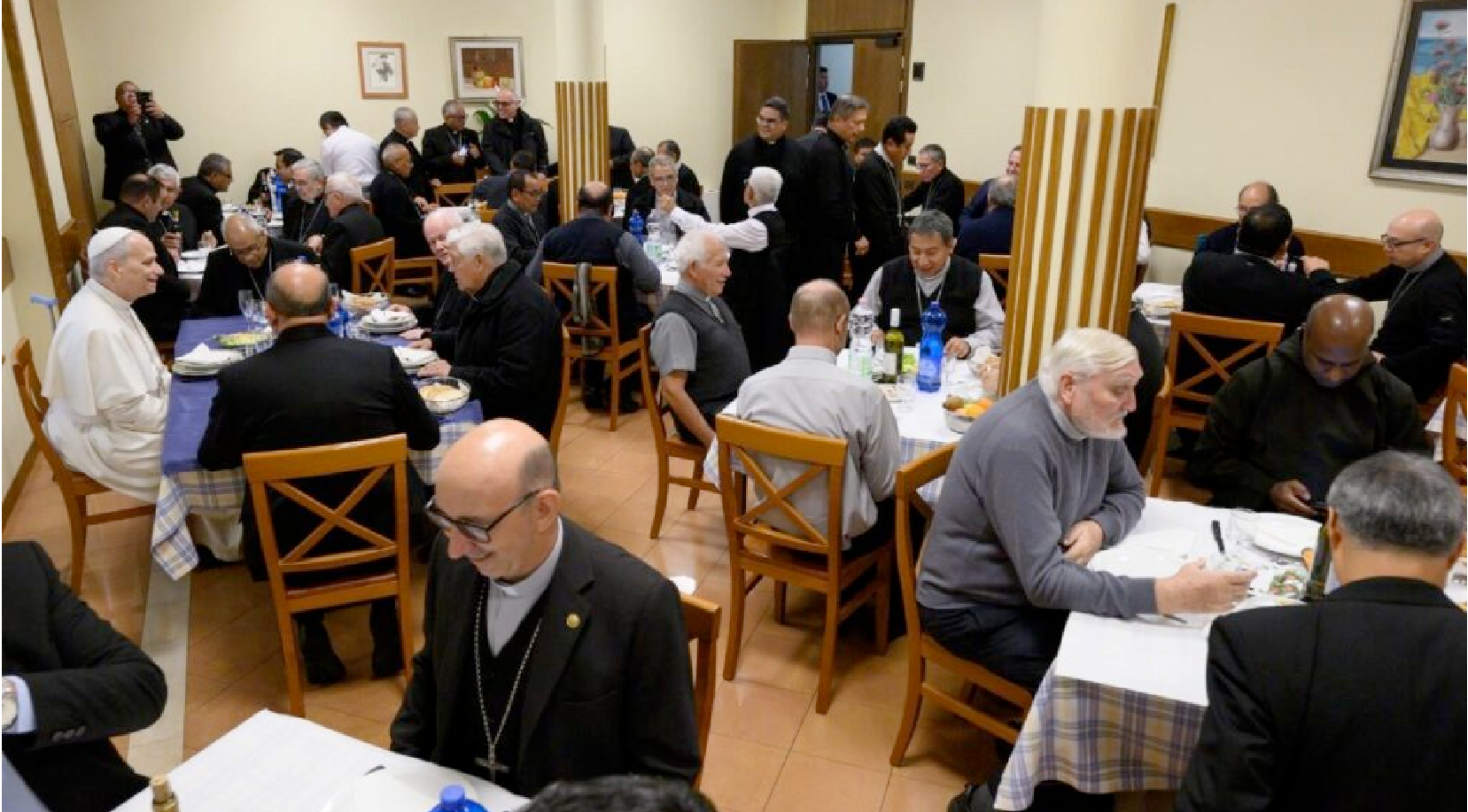
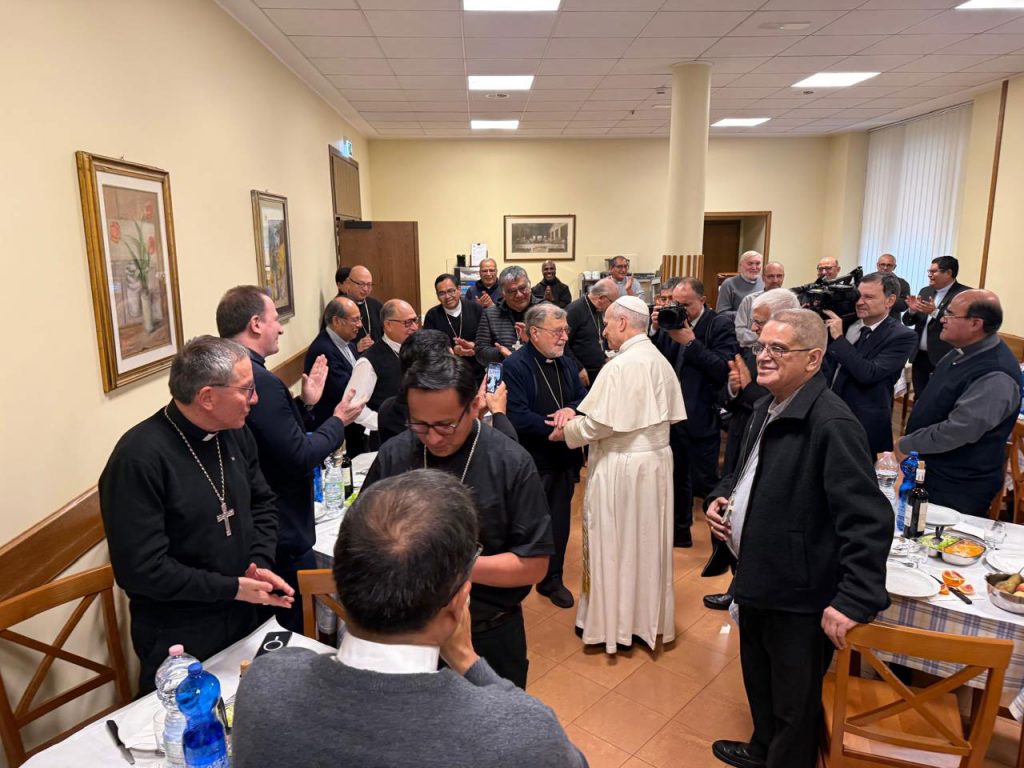
(ZENIT News / Rome, 01.29.2026).- It was meant to be an ordinary fraternal lunch. Instead, it became a moment charged with memory, symbolism, and pastoral warmth.
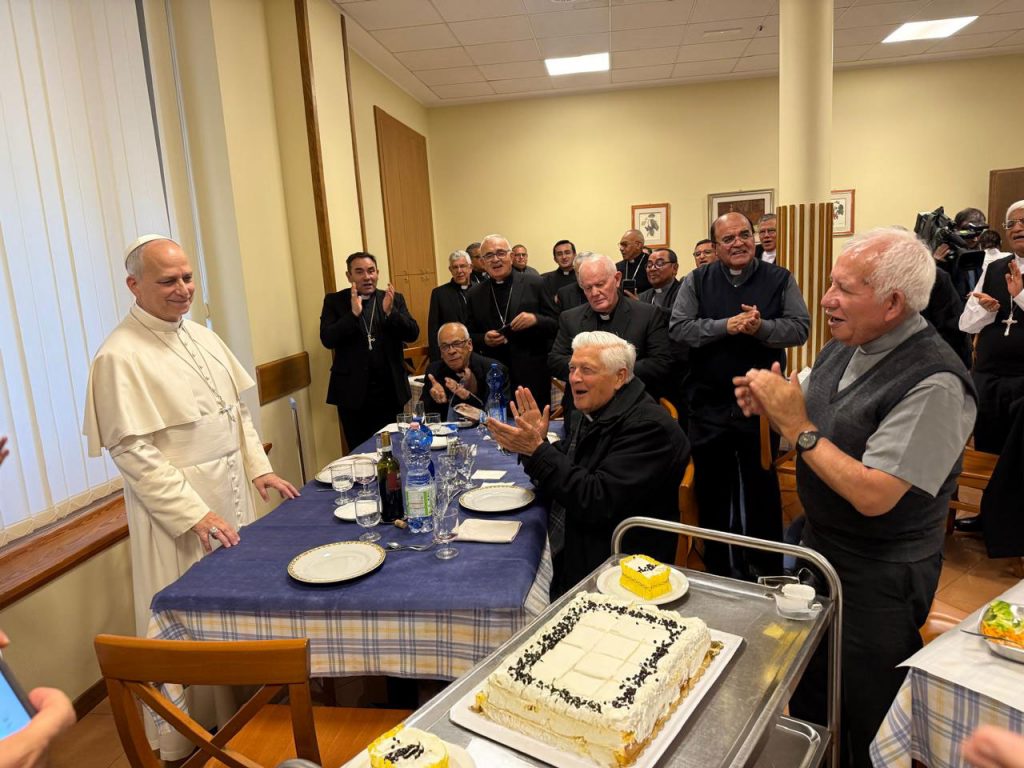
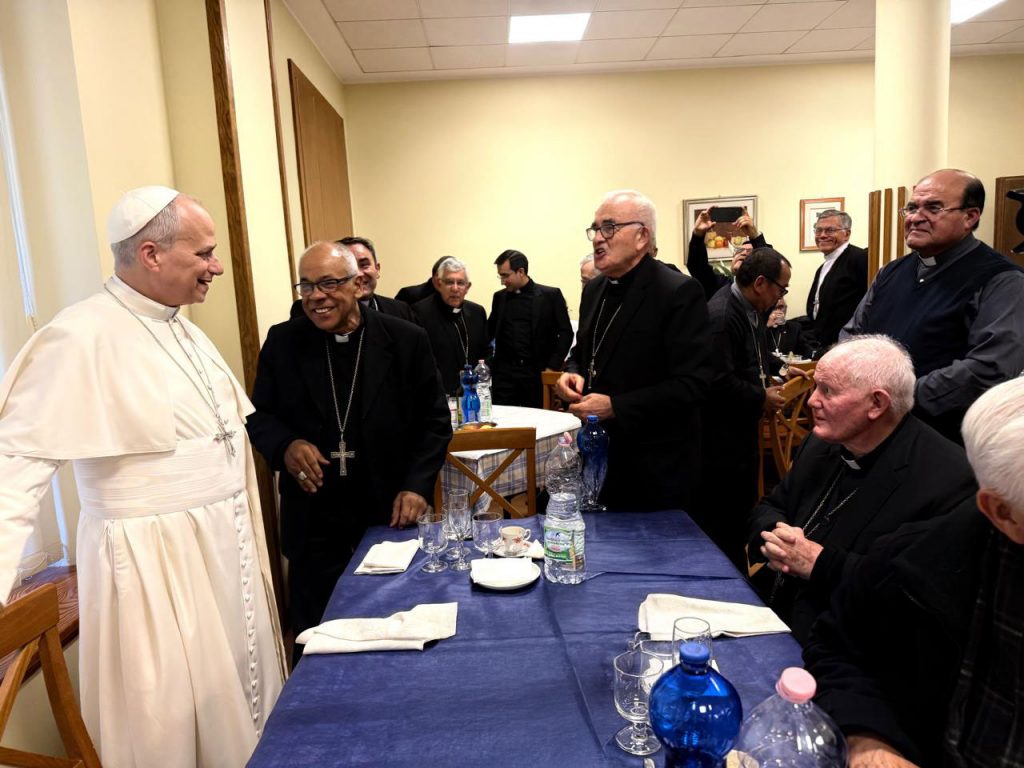
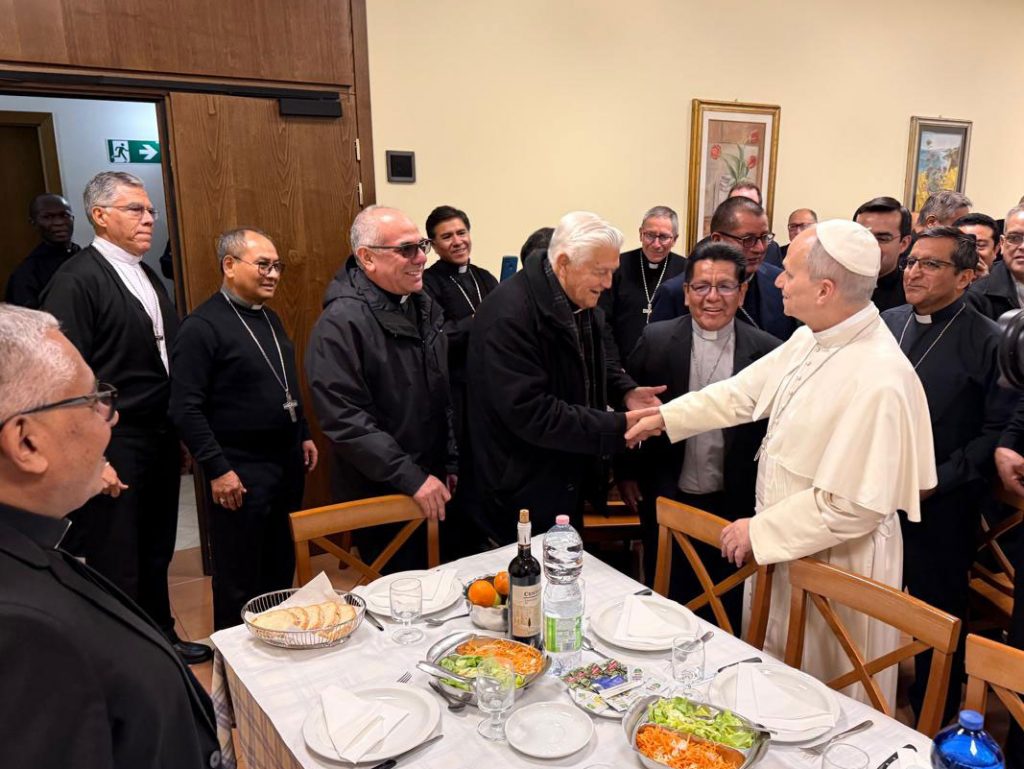
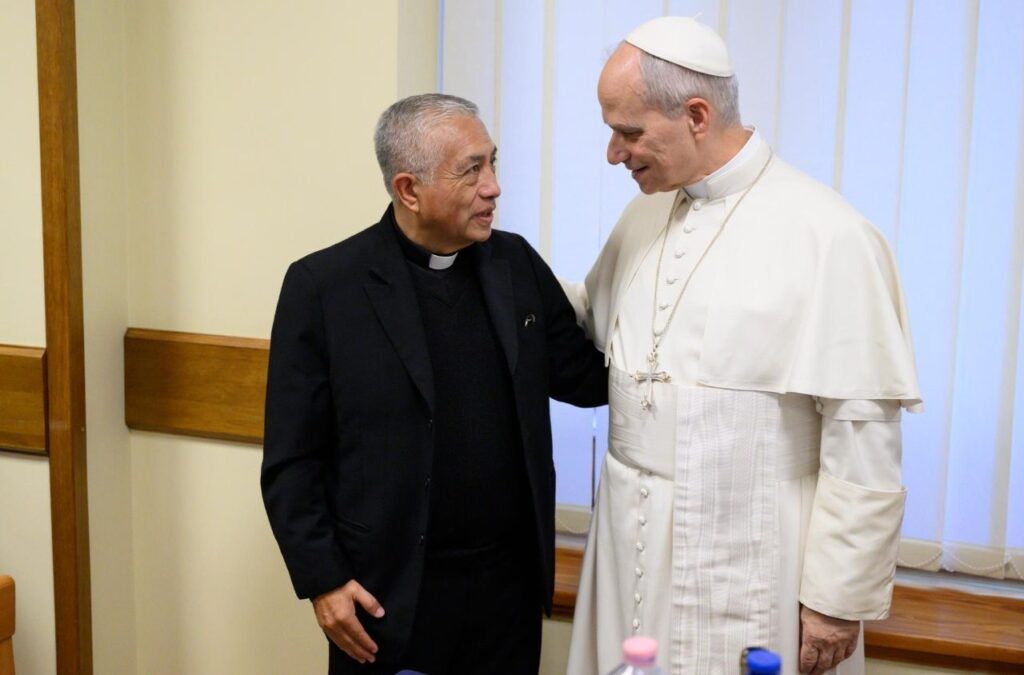
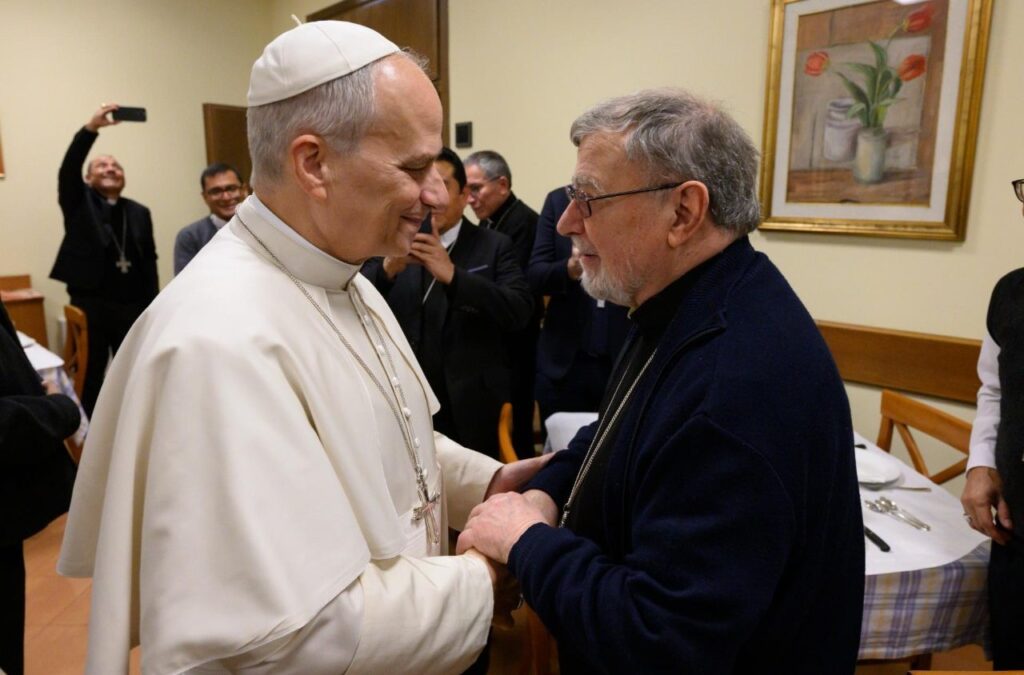
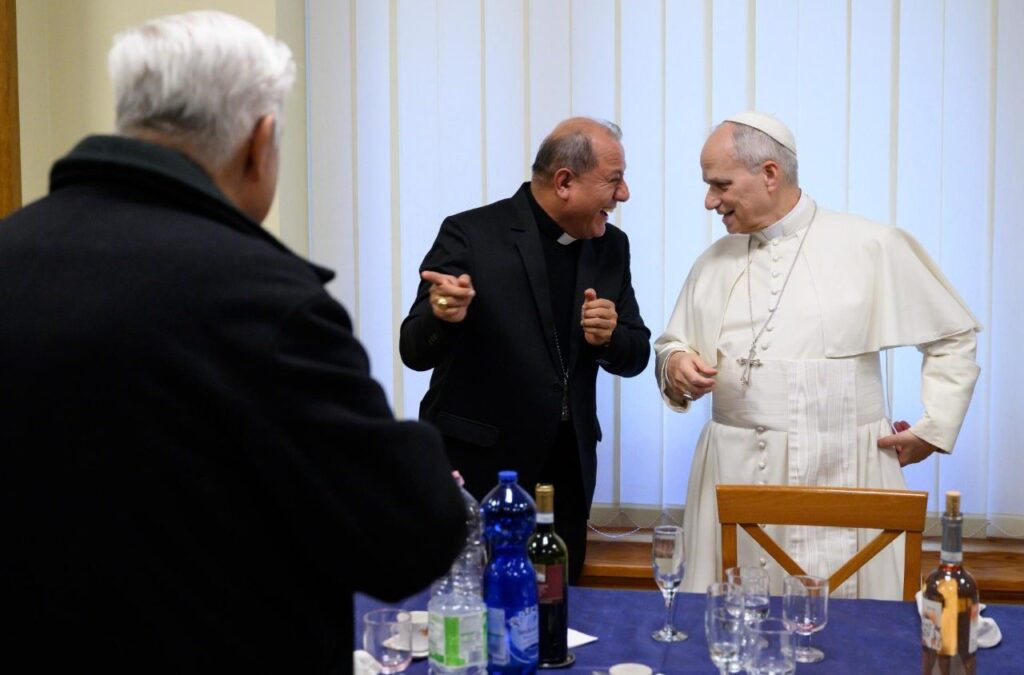
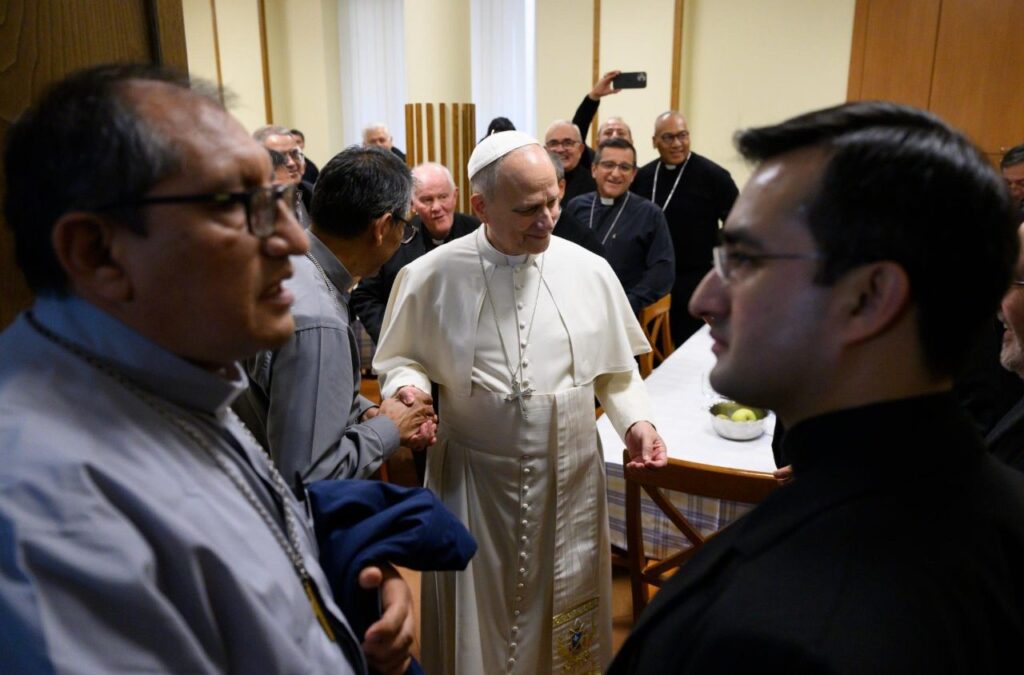
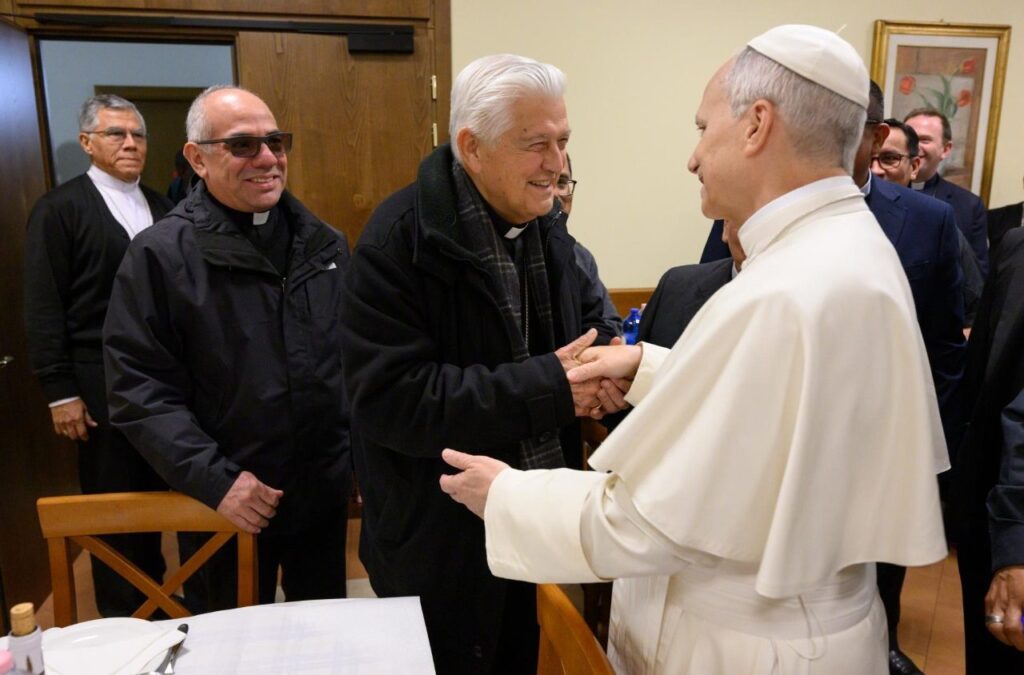
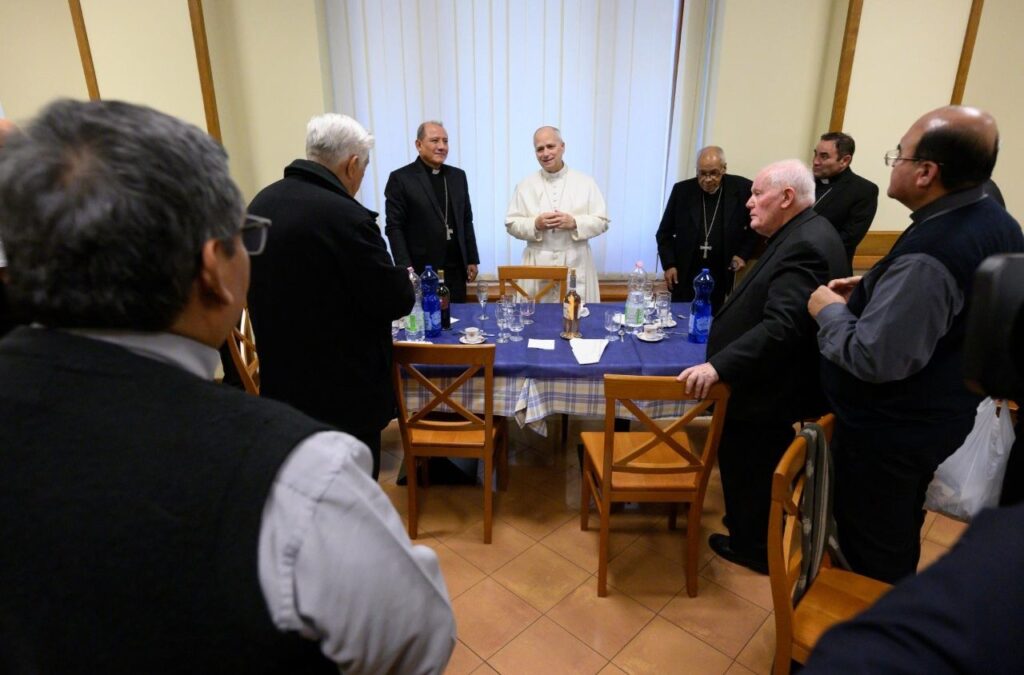
On Thursday, January 29, Pope Leo XIV made an unexpected appearance among the Peruvian bishops gathered in Rome for their ad limina visit, transforming a routine meal into what Peru’s Episcopal Conference later described as “a gesture of closeness and communion” — and, for many present, a deeply personal encounter.
The timing was striking. The visit came just one day before the bishops’ formal audience with the Pope and in the middle of their ad limina apostolorum pilgrimage, scheduled from January 26 to 31. All the bishops of Peru’s 46 ecclesiastical jurisdictions are taking part, representing a Church that stretches from the Pacific coast to the Andes and deep into the Amazon basin.
For Leo XIV, however, this was far more than a ceremonial stop.
Before becoming Pope, Robert Francis Prevost spent more than two decades as a missionary in Peru and later served as bishop of Chiclayo. His surprise visit carried the unmistakable tone of a pastor returning to his people — and of a shepherd reconnecting with a Church that shaped much of his priestly and episcopal life.
According to the Peruvian Episcopal Conference, the Pope joined the bishops during their “fraternal lunch,” offering encouragement and prayer. The encounter, shared on the conference’s X account, was described as both “pleasant and unexpected,” reinforcing what the bishops called the Church’s pastoral mission in Peru.
Prayers for peace and leadership
Speaking on behalf of the episcopate, Bishop Carlos García Camader of Lurín, president of the Peruvian Bishops’ Conference, framed the Rome pilgrimage in explicitly spiritual terms.
“We are here to pray for peace and for Peru’s future,” he said, expressing hope that the visit would strengthen the bishops and renew their commitment to serve faithfully.
His remarks went beyond ecclesial matters, touching on the country’s broader social challenges.
“We pray that our future leaders will be good men and women who serve the nation, seek the common good, and above all strive to unite and build up — not subtract or divide,” García Camader added.
The words resonate in a country that has endured years of political turbulence, social unrest, and economic inequality — realities that continue to test the Church’s role as mediator, moral voice, and companion of the poor.
Gifts rooted in Peruvian faith
The bishops also brought tangible signs of Peru’s Catholic heritage to Rome. They presented Pope Leo XIV with a mosaic of the Blessed Virgin Mary and an image of Saint Rose of Lima, Latin America’s first canonized saint and a powerful symbol of Peruvian spirituality.
Both images are scheduled to be blessed and installed in the Vatican Gardens on Saturday, January 31 — a quiet but lasting reminder of Peru’s place in the universal Church.
A tradition renewed
Ad limina visits, mandated by canon law roughly every five years, are moments when bishops report on the life of their dioceses and pray at the tombs of Saints Peter and Paul. Peru’s previous such pilgrimages took place in May 2017 with Pope Francis and in May 2009 under Pope Benedict XVI.
This year’s visit carries added emotional weight, given Leo XIV’s personal history with the country. For many observers, his spontaneous appearance signals a pontificate marked not only by institutional continuity but by relational closeness — a style shaped in mission territories rather than Vatican corridors.
Thank you for reading our content. If you would like to receive ZENIT’s daily e-mail news, you can subscribe for free through this link.

Publicaciones relacionadas:
 To find the Savior, one must not gaze upward, but look below: the Pope’s homily at Christmas Eve Mass
 A «Box Office» Pope: Vatican Reveals Number of People That Attended Events with Leo XIV in 2025
 How Jesus Christ transforms man’s relationship with God, according to Pope Leo XIV
 Pope Leo XIV accepts resignation of bishop whom Pope Francis appointed cardinal, but who “did not want” to receive the appointment
