

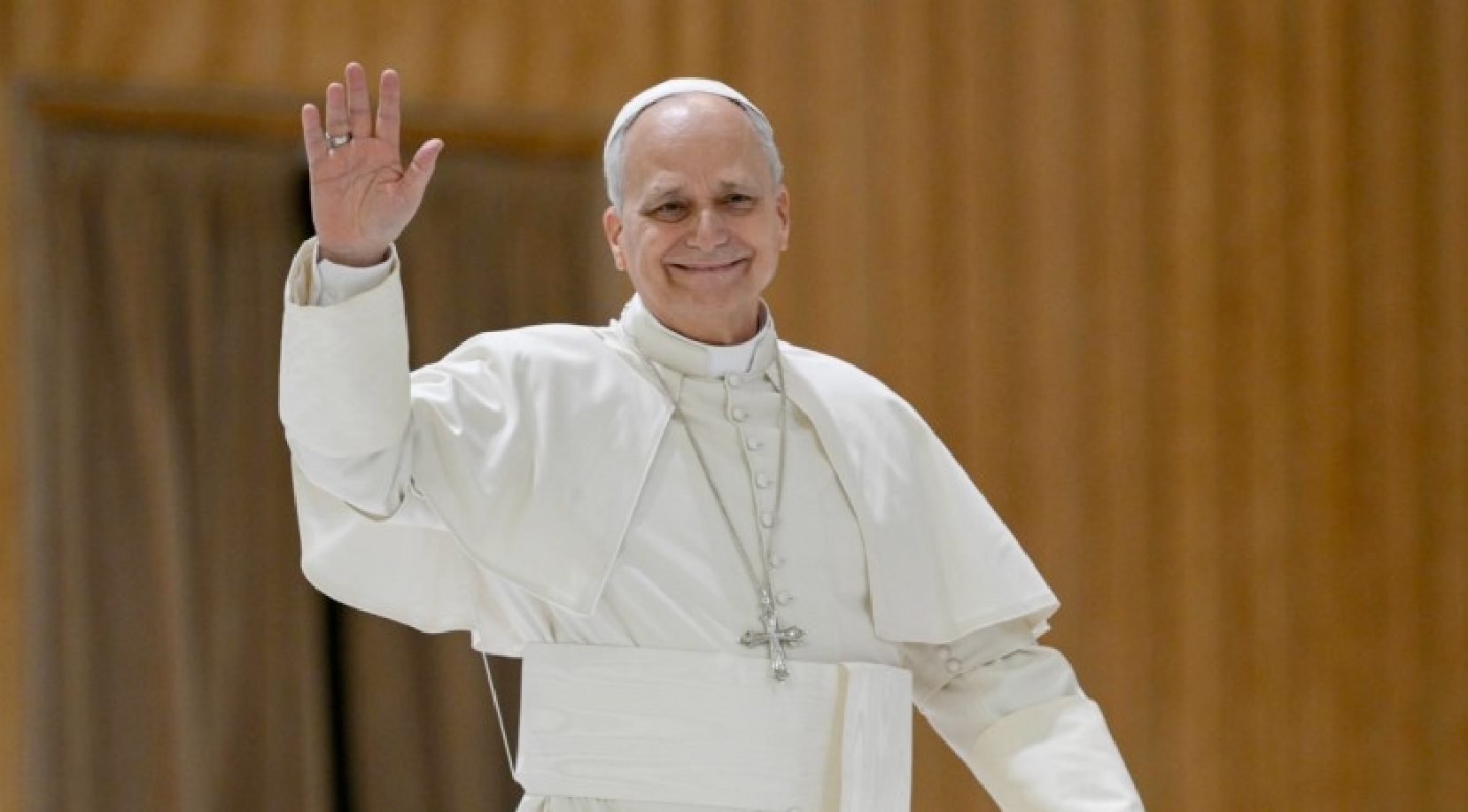
(ZENIT News / Rome, 02.23.2026).- A discreet diplomatic signal from Algiers may soon translate into one of the most symbolically charged journeys of the young pontificate of Pope Leo XIV. According to the Algerian digital daily Casbah Tribune, citing diplomatic sources, the Pope is expected to undertake an official visit to Algeria on April 13, 14 and 15. An announcement from the Holy See is anticipated in the coming days.
If confirmed, the trip would include stops in Algiers and Annaba, linking the political heart of the country with the spiritual geography of one of Christianity’s most influential figures: Saint Augustine.
A program rich in symbolism
Local media indicate that the provisional program envisions an official address and visits to two emblematic sanctuaries: the Basilica of Our Lady of Africa in Algiers and the Basilica of Saint Augustine in Annaba. These are not incidental choices. The first, perched above the Bay of Algiers, has long embodied the Catholic Church’s modest yet enduring presence in a predominantly Muslim nation. The second stands near the site of ancient Hippo Regius, where Augustine served as bishop until his death in 430.
The idea of a papal visit surfaced publicly on February 9 at the El Mouradia Palace, seat of the Algerian presidency, during a meeting between President Abdelmadjid Tebboune and the newly appointed Apostolic Nuncio, Archbishop Javier Herrera Corona, who was presenting his credentials. The nuncio described the encounter as “very cordial,” emphasizing the solidity of bilateral relations spanning more than fifty years and the shared desire to deepen ties of friendship and mutual respect.
Diplomatic continuity and Mediterranean strategy
The Holy See and Algeria established diplomatic relations in 1972, and over the past half-century the relationship has been characterized by quiet stability. Algeria, while constitutionally Islamic and socially Muslim by overwhelming majority, has maintained structured dialogue with the Vatican, particularly around questions of cultural cooperation, education and interreligious coexistence.
A papal visit would thus not represent an abrupt diplomatic breakthrough, but rather the maturation of a longstanding channel of communication. Yet timing matters. Algeria has in recent years regained strategic prominence in the Mediterranean, particularly in the context of energy geopolitics and shifting European alliances. A papal presence, especially so soon after Easter — which in 2026 falls on April 5 — would inevitably carry a message that extends beyond ecclesial boundaries.
The Augustinian thread of this pontificate
For Leo XIV, however, Algeria is not merely a diplomatic destination; it is a spiritual point of origin. On December 2, speaking to journalists during the return flight from Lebanon, the Pope openly expressed his desire to travel to Algeria to visit sites connected to Saint Augustine and to continue “the path of dialogue and bridge-building between the Christian and Islamic worlds.” He referred to Augustine as “a son of the country and respected nationally.”
That emphasis is entirely coherent with the theological DNA of his pontificate. Leo XIV is the first Augustinian pope of the modern era. In his inaugural homily in St. Peter’s Square, he cited Augustine twice, underscoring communion and charity as the structural pillars of the Church. Augustine’s thought — especially his reflections on the restless human heart, grace, and the primacy of love — has shaped Western Christianity for sixteen centuries. But he is also, historically and culturally, a North African bishop formed in the intellectual crossroads of the late Roman Mediterranean.
Born in 354 in Tagaste, in present-day Algeria, Augustine remains a figure who transcends confessional boundaries. In Algeria, he is often regarded not only as a Christian theologian but as part of the national historical patrimony. This dual belonging — ecclesial and national — gives his legacy particular diplomatic resonance.
Annaba as interreligious sign
A papal visit to Annaba, ancient Hippo, would therefore speak on several levels at once. It would honor a Doctor of the Church. It would recognize Algeria’s historical depth. And it would offer a concrete image of coexistence: a Catholic basilica rising in a Muslim-majority society, not as a relic of colonial memory but as a custodian of a shared intellectual heritage.
In recent months, Augustine has re-emerged in Italian-Algerian cultural and diplomatic initiatives as a symbol of a common Mediterranean identity — a bridge between two shores, between Latin and Arab worlds, between Christian and Islamic civilizations. In that context, Leo XIV’s presence in Annaba would not be a nostalgic pilgrimage but a carefully calibrated gesture of interreligious diplomacy.
Calendar clues from Rome
There is also a practical indication reinforcing the plausibility of the trip. The official calendar of Wednesday general audiences published by the Prefecture of the Papal Household does not list an audience for April 15. While the absence of a scheduled general audience does not constitute formal confirmation, such gaps in the calendar have historically preceded apostolic journeys.
Should the visit take place from April 13 to 15, it would unfold precisely during that window.
Beyond protocol
Ultimately, what would make this journey historic is not only that Leo XIV would become one of the few Roman Pontiffs to visit Algeria. It is that he would do so as an Augustinian returning, in a sense, to the soil of his spiritual father — and at a moment when Christian-Muslim dialogue faces both fatigue and urgency.
In an era marked by polarization and geopolitical fragmentation, the Pope’s itinerary — Algiers and Annaba, state palace and ancient episcopal see — would articulate a message without slogans: memory can be a resource for peace. Augustine, who once wrote that “we are times,” might today be invoked as a reminder that civilizations are not destined to clash, but capable of conversing.
If the Holy See confirms the journey in the coming days, mid-April could witness not only a diplomatic visit, but a symbolic return to one of Christianity’s deepest Mediterranean roots — a return framed less as nostalgia than as an invitation to rediscover, across religious lines, a common intellectual and spiritual inheritance.
Thank you for reading our content. If you would like to receive ZENIT’s daily e-mail news, you can subscribe for free through this link.

Publicaciones relacionadas:
 Pope Leo XIV accepts resignation of bishop whom Pope Francis appointed cardinal, but who “did not want” to receive the appointment
 The Beatitudes: A Meditation by Pope Leo XIV
 Pope Leo XIV is the most highly regarded global leader according to the world’s oldest public opinion poll
 Reflections of Pope Leo XIV on the art of Christian education
