

(ZENIT News / San Diego, 03.10.2026).- Within the span of a few days, the leadership of the Chaldean Catholic Church has been shaken by two dramatic developments: the resignation of its long-time patriarch in Baghdad and the criminal prosecution of a bishop in the United States accused of financial misconduct.
Together, the events have exposed internal tensions within one of the world’s oldest Christian traditions while raising difficult questions about governance, transparency and unity in a Church that traces its roots to the earliest centuries of Christianity in Mesopotamia.
The end of a patriarchate in Baghdad
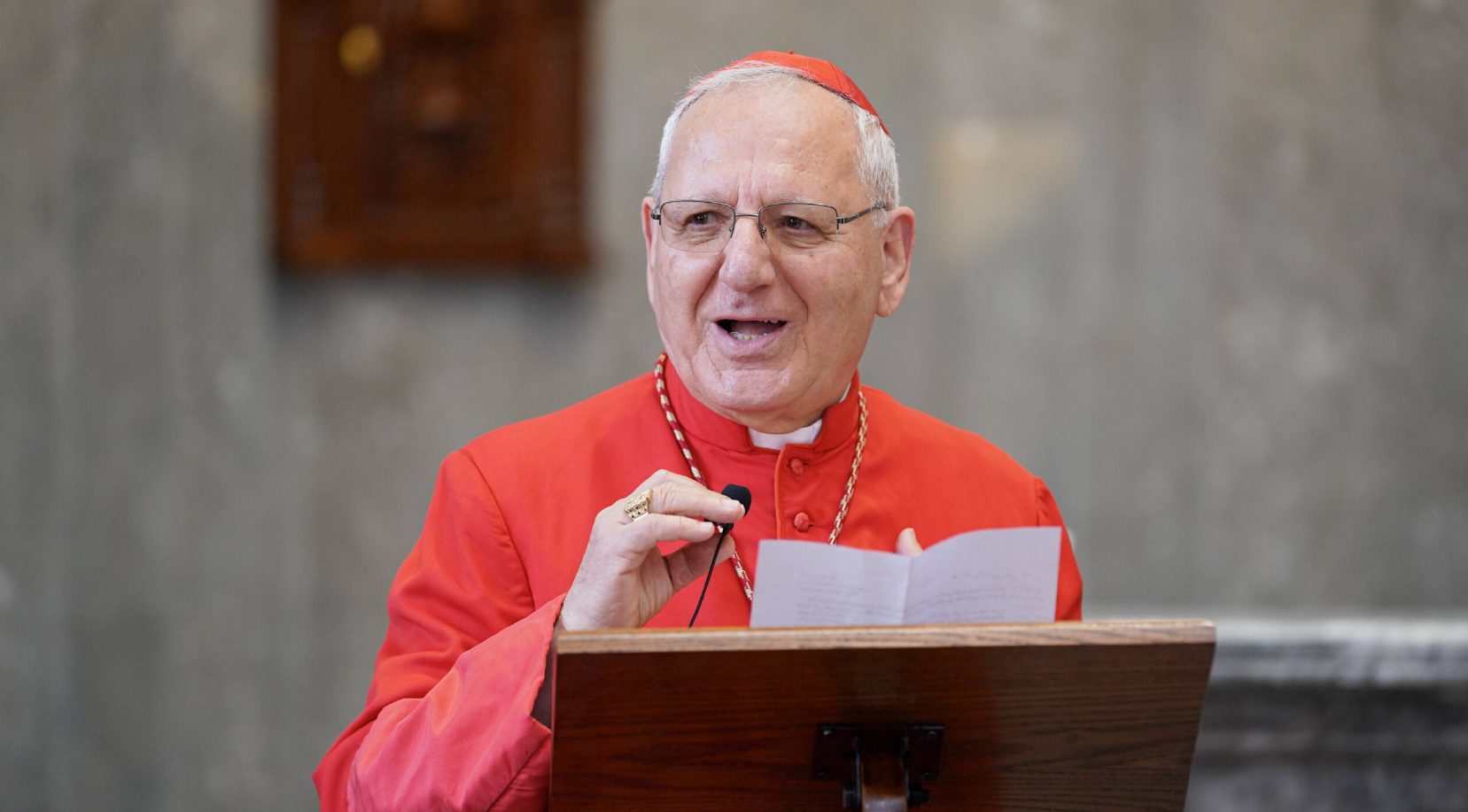
On March 10, Pope Leo XIV accepted the resignation of Louis Raphael Sako as Patriarch of Baghdad of the Chaldeans, bringing to a close more than a decade of leadership that began in 2013.
In a public letter explaining his decision, the 76-year-old cardinal insisted the move was entirely voluntary. He said he had already considered stepping down two years earlier after turning 75—the age at which bishops traditionally present their resignation—but was encouraged by Pope Francis at the time to remain in office.
Now, Sako said, he felt it was time to withdraw from administrative responsibilities and dedicate himself to “prayer, writing and simple service.”
Reflecting on his years as patriarch, he described a period marked by extraordinary pressures. Iraq’s Christians have endured war, mass displacement, political instability and demographic decline, especially since the rise of extremist groups in the region during the past decade.
“I have led the Chaldean Church in extremely difficult circumstances and amid great challenges,” Sako wrote. “I preserved the unity of its institutions and spared no effort in defending it.”
Before becoming patriarch, Sako had already spent decades in ministry, serving first as a priest in Mosul and later as bishop of Kirkuk. His patriarchate in Baghdad lasted 13 years, which he characterized as a time of pastoral care and accompaniment for a community struggling to survive in its historic homeland.
Looking toward the future, the cardinal expressed hope that his successor would combine theological formation with “courage, wisdom, openness and dialogue”—and even, he added with a touch of personal humor, “a sense of humor.”
In a strikingly personal note, Sako also disclosed details of his modest financial situation. After 52 years of priestly service, he said his savings amount to roughly 40 million Iraqi dinars, $5,000 and €5,000, accumulated from salaries and the sale of his family home in Mosul. He noted that he owns neither a house nor a car, describing his true wealth instead as his pastoral service and the 45 books and numerous articles he has written.
A legal scandal in California
While Sako was announcing his departure in Baghdad, a crisis was unfolding thousands of kilometers away in California involving Emanuel Hana Shaleta, until recently the bishop responsible for Chaldean Catholics in much of the western United States.
Shaleta led the Eparchy of St. Peter the Apostle, headquartered in San Diego and serving Chaldean communities across the western half of the country. The eparchy is part of the global structure of the Chaldean Church, which, although autonomous in its internal governance, remains in full communion with Rome.
On March 5, Shaleta was arrested at San Diego International Airport while attempting to leave the United States. Prosecutors allege he had misappropriated large sums of church funds and laundered the money through various transactions.
According to investigators, the bishop is accused of taking at least $250,000—some reports say $270,000—from parish revenues connected to rental payments for church facilities. Authorities claim the scheme involved collecting payments in cash and later attempting to replace missing funds with checks drawn from a charitable account under his control.
Shaleta appeared in court on March 9, where he pleaded not guilty to a series of charges that include eight counts of embezzlement, eight counts of money laundering and an additional felony count tied to aggravated white-collar crime.
The judge set bail at $125,000. Prosecutors argued the bishop posed a flight risk because he had been detained at the airport with a ticket for Europe and more than $9,000 in cash. His defense attorney rejected the claim, noting that Shaleta’s passport had been confiscated.
If released on bail, the court indicated the bishop would be required to wear a GPS monitoring device until trial.
Allegations beyond finances
Financial accusations are only part of the controversy surrounding the bishop. Reports based on financial documents and private investigations have also alleged personal misconduct, including a long-standing relationship with a woman with whom Shaleta reportedly shared a bank account and mutual access to residences.
Investigators further claimed the bishop made repeated visits to a nightclub in Tijuana associated with the sex industry and alleged human-trafficking networks. Employees of the establishment reportedly confirmed the visits publicly.
Shaleta has strongly denied wrongdoing, arguing that he is the victim of a media campaign and opposition within his diocese.
Supporters of the bishop were visible during his court appearance. Local media reported that the courtroom was filled with supporters from the Chaldean community, some forced to wait in the hallway because of limited seating.
A Vatican response and internal tensions
The Vatican had already been examining the situation months before the arrest. Complaints from members of the eparchy and other Chaldean bishops led to an investigation into financial irregularities that concluded in 2025.
Shaleta submitted his resignation to Rome in January 2026. The Holy See accepted it in February, although the decision was not made public until March 10.
At the same time, Saad Hanna Sirop was appointed apostolic administrator of the San Diego eparchy until a permanent successor is named.
The case also revealed internal divisions among Chaldean bishops. In recent months Sako had explored the possibility of transferring Shaleta to an administrative position within the patriarchal curia in Baghdad, an idea that sparked criticism from some fellow bishops who felt the proposal was premature while investigations were still ongoing.
Some bishops declined to attend meetings convened by the patriarch, expressing concern about the governance of the patriarchate and the handling of the controversy.
Appeals for unity
Despite the tensions, Sako sought to calm the situation. In a pastoral letter dated March 8 to Chaldean Catholics in San Diego, he urged the faithful not to allow the crisis to divide the community.
“Do not permit division or discord,” he wrote. “Let legal procedures take their course so that the truth may be revealed and justice defended.”
The message echoed a similar appeal delivered in San Diego by Francis Kalabat, bishop of the Chaldean eparchy for the eastern United States. Speaking during a homily, he acknowledged the deep shock felt by many believers.
“You have the right to know what is happening,” Kalabat told the congregation, recognizing the pain and confusion within the community. Yet he also urged Catholics to seek healing through faith rather than bitterness.
A global Church under pressure
The Chaldean Catholic Church, one of the 23 Eastern Catholic Churches in communion with Rome, celebrates its liturgy in Syriac—a dialect of Aramaic closely related to the language spoken by Jesus.
Its historical center remains in Iraq, though waves of migration caused by war and persecution have created large diaspora communities in Europe, Australia and the United States.
Thank you for reading our content. If you would like to receive ZENIT’s daily e-mail news, you can subscribe for free through this link.

Publicaciones relacionadas:
 Cardinal Ambongo Is Threatened by Congo’s Government
 Germany: bishop responsible for queer ministry calls for changes in Church doctrine
 Cardinal Timothy Dolan to Open President Trump’s Inauguration with Prayer
 After just four months as bishop of Detroit, the new bishop dismisses three beloved professors from the local seminary
