

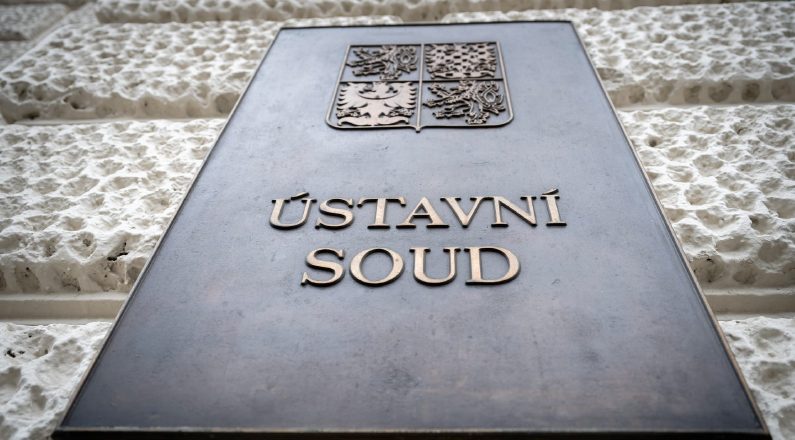
(ZENIT News / Prague, 04.02.2026).- A rare institutional collision between Church and State has unfolded in Central Europe after the Constitutional Court of the Czech Republic halted the ratification of a concordat signed with the Holy See, citing violations of the country’s constitutional order. The ruling, issued on April 1, freezes a treaty that had already cleared the Czech Parliament and was awaiting final presidential approval.
The agreement, signed in Prague in October 2024 by then–Prime Minister Petr Fiala and Vatican Secretary of State Pietro Parolin, was intended to define the legal framework governing the Catholic Church’s status in the Czech Republic. Like similar accords in at least 64 countries worldwide—including 25 in Europe—such treaties typically regulate matters ranging from religious freedom to institutional autonomy.
Yet in this case, two specific provisions proved decisive.
The first concerns the secrecy of confession, a cornerstone of Catholic sacramental practice. The contested clause granted the Church what the court described as an “absolute” protection of this confidentiality—placing it on a level comparable to legal professional privilege. However, the judges concluded that extending such protection exclusively to the Catholic Church, without equivalent guarantees for other religious communities, violates the constitutional principles of state neutrality and non-discrimination.
The second point of contention involves access to ecclesiastical archives. The treaty would have allowed Church institutions to determine independently how and when their historical documents could be made available to researchers. The court rejected this approach, arguing that such archives form part of the nation’s cultural heritage and must therefore remain accessible to the public. For historians, these collections are not merely internal records but primary sources essential to reconstructing the country’s past, particularly in a society marked by complex relations between religion and state power.
The constitutional review had been triggered by a group of senators, reflecting broader unease within parts of the political establishment. Even Petr Pavel, whose signature would be required for ratification, had previously expressed reservations about aspects of the agreement.
For now, the ruling does not permanently terminate the concordat but suspends its entry into force until the disputed clauses are revised. This places both Prague and the Vatican in a delicate negotiating position. Any amendment must reconcile two fundamentally different logics: the Church’s claim to doctrinal and institutional autonomy, and the State’s obligation to uphold constitutional equality and transparency.
The dispute over confession secrecy illustrates this tension in particularly sharp terms. In Catholic theology, the “seal of confession” is inviolable under all circumstances; a priest who breaks it incurs the gravest ecclesiastical penalties. From the perspective of secular law, however, granting absolute protection to one religious practice—without a broader legal framework applicable to all—raises questions about equal treatment under the law.
Similarly, the debate over archives touches on competing conceptions of ownership and memory. While the Church views its records as part of its institutional patrimony, the court has effectively classified them as elements of national heritage, subject to public interest and scholarly scrutiny.
The blocked concordat had also included provisions affirming freedom of thought, conscience and religion, as well as the right to conscientious objection in areas such as military service and medical procedures—elements that are unlikely to be contested in future revisions. But the ruling makes clear that even widely accepted principles can become entangled in legal disputes when translated into binding bilateral agreements.
For the Holy See, which has long relied on concordats as instruments of legal stability and diplomatic recognition, the Czech decision represents an unusual setback in a region where Church-state relations have historically been complex and often strained.
What follows will likely be a period of quiet renegotiation rather than open confrontation. But the episode has already exposed the fault lines that emerge when centuries-old religious norms encounter modern constitutional frameworks—especially in societies where the authority of both is no longer taken for granted.
Thank you for reading our content. If you would like to receive ZENIT’s daily e-mail news, you can subscribe for free through this link.

Publicaciones relacionadas:
 Statement of the Ukrainian Catholic Church on Pope Francis interview
 Pope Leo’s visit to Argentina unofficially confirmed after audience with President Milei
 Vatican Embassy in Kyiv Damaged Amid Escalating Russian Strikes
 Andorra will approve abortion despite the fact that its head of state is a Catholic bishop
