

(ZENIT News / Seoul, 04.08.2026).- In a move that reflects both technological urgency and pastoral ambition, the Archdiocese of Seoul has unveiled a long-term plan to restructure its entire information ecosystem, positioning artificial intelligence at the center of its future mission. Announced in April 2026, the initiative—named “Project Carlo”—signals a strategic shift: from managing scattered digital tools to building an integrated, data-driven pastoral infrastructure.
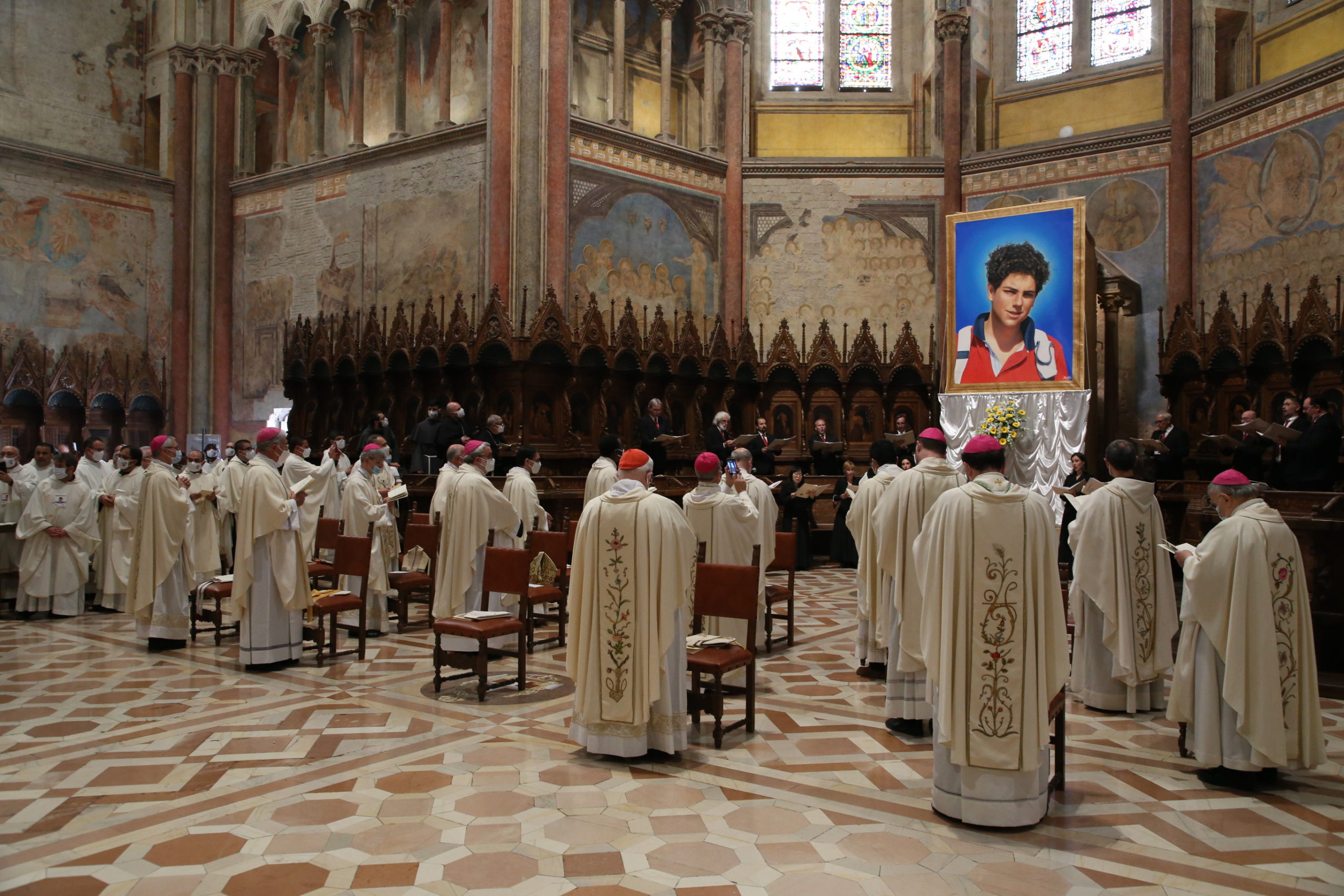
The choice of name is deliberate. Carlo Acutis, who died in 2006 at the age of 15, has become a global symbol of digital evangelization. Known for using early internet platforms to catalogue Eucharistic miracles and promote Catholic devotion, his figure embodies a synthesis the Church is now actively seeking: fidelity to tradition combined with fluency in emerging technologies.
At the operational level, the challenge facing Seoul is less about innovation than consolidation. Over the years, the archdiocese has developed multiple digital systems—news services, parish management tools, diocesan administrative platforms, and a wide array of departmental websites. These systems, however, have evolved in parallel rather than in coordination, resulting in fragmented datasets that limit both efficiency and pastoral responsiveness.
Information on catechetical programs, volunteer activity, and participation in parish life remains largely siloed. According to Father Kim Kwang-doo, who heads the archdiocese’s technology office, this fragmentation prevents the Church from offering coherent, personalized services to the faithful. In the emerging AI landscape, such limitations are not merely technical—they are structural. Artificial intelligence systems depend on well-organized, interoperable data to function effectively. Without that foundation, their potential remains theoretical.
Project Carlo seeks to address precisely this gap. Scheduled to begin in May 2026, the initiative will unfold in two major phases. The first focuses on listening and architecture. Consultants appointed by the archdiocese will engage directly with parishioners to assess needs and expectations, a step that reflects a growing awareness within Church institutions that digital transformation must be pastorally grounded rather than purely technological.
Based on these findings, the archdiocese will begin constructing an integrated data platform, alongside a comprehensive redesign of its digital presence. Central to this effort is the renewal of the “Good News” website, a longstanding online portal founded in 1998, which is approaching its 30th anniversary. The redevelopment, planned for the 2027–2028 period, aims to transform the site from a content repository into an interactive hub capable of supporting AI-driven services.
These services are expected to go beyond simple information delivery. The long-term objective is to create systems capable of providing responses and guidance autonomously, adapting to user needs in real time. While details remain limited, the direction is clear: a transition from static communication to dynamic engagement, where digital platforms become extensions of pastoral care.
The timing of the project is closely linked to a major ecclesial event. World Youth Day 2027, scheduled to take place in Seoul, is expected to draw large numbers of international pilgrims and will likely include the participation of Pope Leo XIV. Project Carlo is designed in part to support this event, not only through improved communication systems but also by enabling global initiatives such as the “One Billion Rosaries” campaign and expanded online spiritual programs.
In this sense, the project operates at the intersection of logistics and evangelization. Large-scale events like World Youth Day increasingly depend on digital infrastructure—not only for coordination, but for sustaining engagement before and after the gathering. Seoul’s approach suggests an awareness that the digital dimension of such events is no longer auxiliary but constitutive.
The second phase of Project Carlo, scheduled for 2029 to 2031, will extend the transformation to the archdiocese’s administrative systems. This stage aims to modernize internal processes, ensuring that governance structures are aligned with the new digital environment. It is a reminder that technological change in ecclesial contexts often requires institutional adaptation as much as technical deployment.
What distinguishes Seoul’s initiative is its explicit attempt to integrate artificial intelligence into the Church’s pastoral vision without reducing that vision to technology. By grounding its strategy in data organization, user engagement, and symbolic inspiration, the archdiocese is articulating a model in which AI is not an end in itself, but a tool for enhancing the Church’s capacity to accompany the faithful.
In a global Catholic landscape where digital transformation is advancing unevenly, Project Carlo may offer a glimpse of a more coordinated future—one in which the Church’s presence in the digital sphere is not improvised, but intentionally designed.
Thank you for reading our content. If you would like to receive ZENIT’s daily e-mail news, you can subscribe for free through this link.

Publicaciones relacionadas:
 Father Sirico continues his battle in Rome for media mogul Jimmy Lai’s liberation
 USA: Two Bishops Publish Letter on Gender Ideology (Full Text)
 Pope’s health as of Monday, February 24: general improvement; abstinence in prognosis by physicians
 Religious Life in Post-Pandemic America: Change, Resilience, and Stability
