

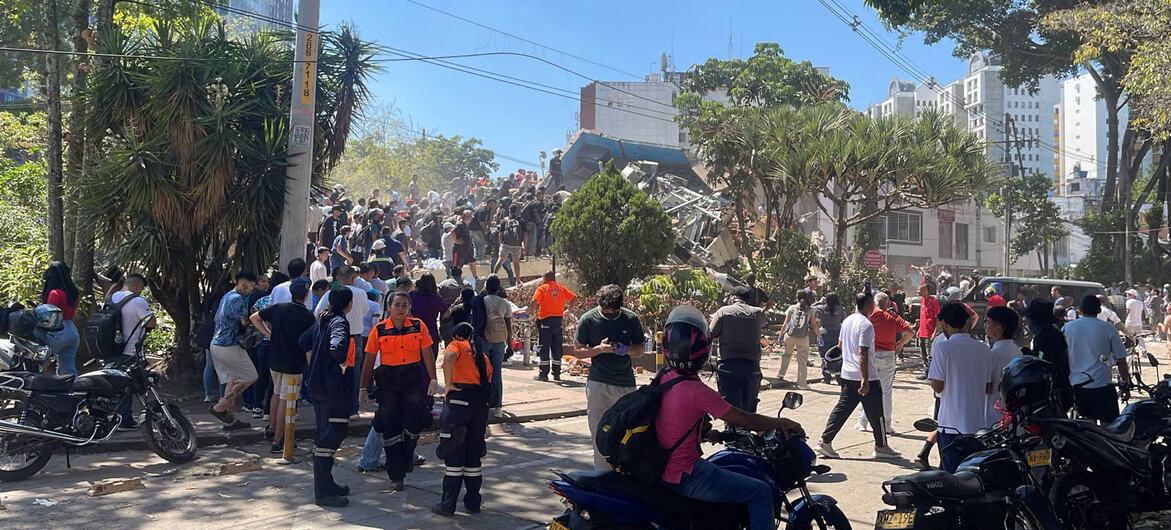
(ZENIT News / Bogotá, 08.12.2026).- The first response to Colombia’s devastating earthquake has been measured in lives lost, buildings destroyed and people still waiting to be found beneath the rubble. But in the days since the magnitude 7.4 earthquake struck on August 10, another response has been taking shape: a vast network of churches, dioceses, food banks, volunteers and Catholic relief organizations mobilizing alongside the national rescue effort.
For Pope Leo XIV, solidarity with Colombia has moved rapidly from words to action.
The earthquake struck western Colombia, with its epicenter near San José del Palmar in the department of Chocó, roughly 400 kilometers west of Bogotá. It was felt across Antioquia, Caldas, Cauca, Risaralda and Valle del Cauca, as well as in the capital. Early casualty figures changed rapidly as rescue teams reached devastated areas. By the latest reports supplied, more than 250 people had died, around 1,000 were injured and approximately 4,000 remained missing.
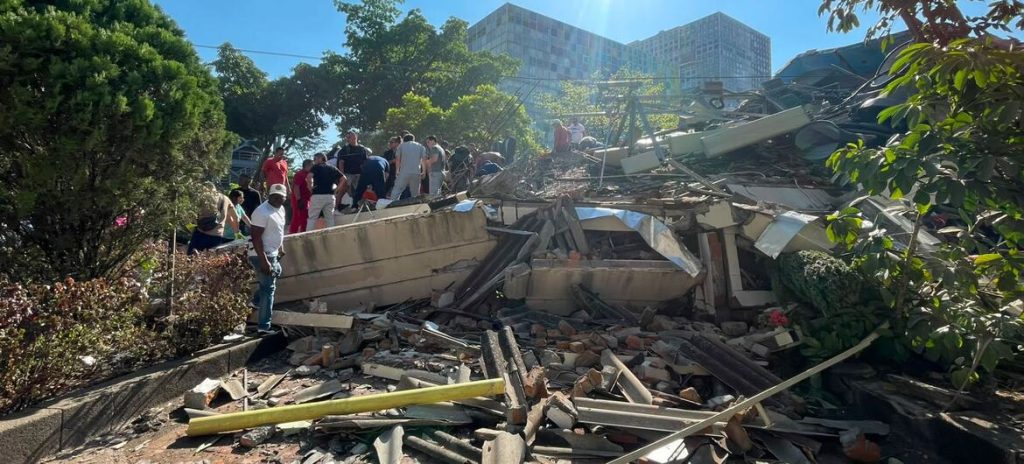
More than 1,500 buildings were reported damaged, with hundreds collapsing. Communications were also seriously affected, complicating efforts to establish the full scale of the disaster.
The human cost has been accompanied by a significant blow to Colombia’s Catholic heritage. Churches and other ecclesial buildings have suffered extensive damage, including the Cathedral of Manizales and the Basilica of the Lord of Miracles.
Yet the Church has not responded simply as an institution whose buildings have been damaged. In many of the affected communities, it has immediately assumed a role in feeding, accompanying and assisting people who have lost homes and possessions.
Leo XIV turns condolences into concrete assistance
Leo XIV sent his condolences to Archbishop Francisco Javier Múnera Correa, president of the Colombian bishops’ conference, on August 11. Through the Vatican Secretary of State, Cardinal Pietro Parolin, the Pope expressed his grief over the deaths, injuries and destruction and his gratitude to rescuers and others working in the emergency.
The following day, during his general audience, Leo again remembered the victims and those involved in rescue operations.
But the Pope’s response did not stop there.
An initial emergency contribution of €100,000 was sent through the Dicastery for the Service of Charity, under the direction of Archbishop Luis Marín de San Martín. The money was transferred directly to the National Secretariat of Social Pastoral and Caritas Colombia, which is coordinating assistance and distributing resources to the dioceses affected by the earthquake.
The Vatican has made clear that this is an initial contribution rather than a final commitment. Additional assistance is expected as local needs are identified.
The mechanism is significant. Rather than attempting to administer relief from Rome, the Vatican is relying on the Church’s existing local structures, with constant communication between the papal almoner, the Colombian bishops’ conference and the apostolic nunciature. The Vatican is also preparing a detailed assessment of urgent needs.
This is one of the less visible functions of the papal almoner’s office: it allows the Pope’s charitable assistance to reach people through local Catholic structures that already know the territory and the communities involved.
“No one can face an emergency of this magnitude alone”
Colombia’s bishops have framed the disaster not only as a humanitarian catastrophe but as a test of national solidarity.
They called on Catholics to respond through prayer and practical assistance, stressing that no one should have to confront a crisis of this scale alone. Cardinal Luis José Rueda, Archbishop of Bogotá, described the earthquake as a moment of trial but also as an opportunity to overcome divisions and rediscover a sense of common responsibility.
His language is significant. Reconstruction, he argued, must involve more than rebuilding walls. Colombia must also rebuild its social bonds.
That appeal is already being translated into action.
Food banks operated by the Archdioceses of Bogotá and Bucaramanga have begun collecting financial contributions and packaged food. Catholic relief organizations have likewise activated emergency networks. Aid to the Church in Need’s Colombian office has appealed for support for communities affected by the disaster.
The response reflects a characteristic feature of Catholic emergency relief: the parish, diocese and religious community can become part of a logistical network as well as a place of prayer.
Manizales faces a double loss
Among the most dramatic accounts comes from Archbishop José Miguel Gómez Rodríguez of Manizales, who described the earthquake as exceptionally violent even for a region accustomed to seismic activity.
The Cathedral of Manizales, one of the most recognizable landmarks in the region, suffered severe damage. One of its auxiliary towers collapsed and came to rest against the main structure. The building has been closed while engineers assess its condition.
The archbishop estimates that roughly half of the churches and ecclesial buildings in the area suffered serious damage. Residential buildings were also heavily affected, leaving many people homeless or unable to return to their homes until structural inspections are completed.
For the Church, this creates an unusual dual responsibility. It must care for people whose homes have become unsafe while simultaneously determining whether its own buildings can safely serve the population.
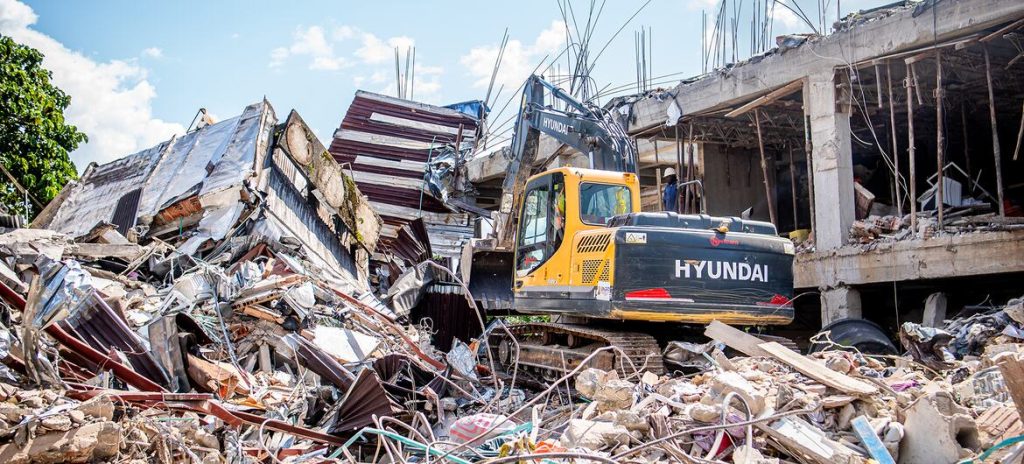
And the immediate needs are basic: shelter, food, essential goods and assistance for families who have lost almost everything.
The Church’s food bank was activated almost immediately, with volunteers and donors arriving to provide emergency supplies.
A fragile hope beneath the rubble
The rescue operation has also produced moments that resist the scale of the tragedy.
In Cali, rescuers and volunteers working around the destroyed Torres del Limonar complex recovered a woman who had spent approximately 36 hours trapped beneath the rubble with her newborn child. She had shielded the baby with her body. The mother suffered fractures, while the infant reportedly escaped with only minor injuries and was described as stable.
Such rescues cannot diminish the magnitude of the disaster. But they help explain why search teams continue working long after the first hours of an earthquake, when the odds of finding survivors begin to decline.
The Colombian Church’s response has therefore acquired two dimensions: mourning those who have died and refusing to abandon those who may still be saved.
That distinction is central to the Christian understanding of charity. Assistance is not simply an expression of sympathy after a tragedy; it is an obligation toward the person standing in front of you, particularly when that person has lost the basic security of home, food or family.
Colombia is not facing the crisis alone
The international response has expanded rapidly. According to the supplied reports, around $1.3 billion has been allocated to confront the emergency, while governments and international organizations have sent assistance. The United States announced $15.5 million for emergency shelter, food and protective supplies, while the European Union made its Copernicus satellite system available to help assess damage. The World Bank was also approached for a loan of up to $450 million after Colombia declared an economic emergency.
The international response is occurring alongside Colombia’s own mobilization and the work of countless ordinary citizens.
Italy’s bishops have also expressed solidarity. Cardinal Matteo Zuppi, president of the Italian bishops’ conference, sent a message to Archbishop Múnera Correa promising prayers for the injured, displaced and families who had lost their homes and livelihoods.
For Leo XIV, the Colombian earthquake is also a continuation of a pattern established after the devastating earthquake in Venezuela in June: immediate papal concern accompanied by direct financial assistance.
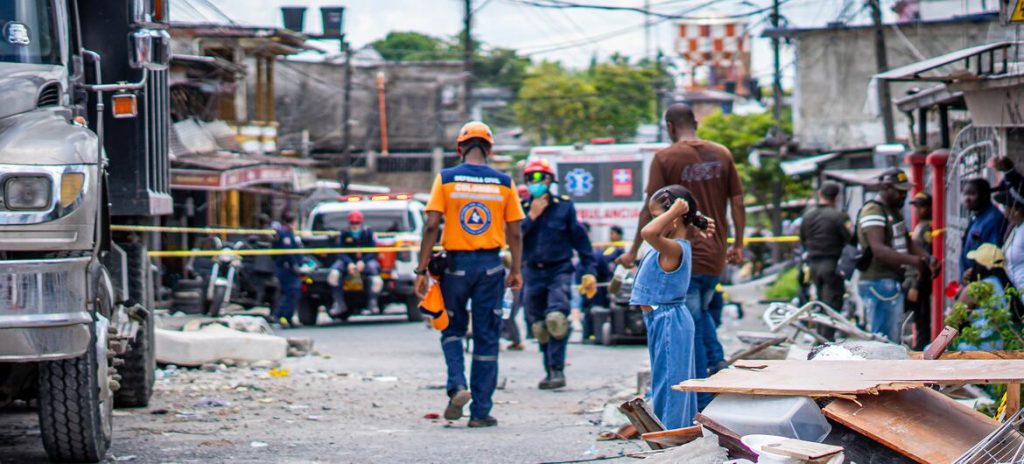
That approach gives particular meaning to the Vatican’s repeated description of the Church as a family. In an earthquake, that idea ceases to be theological language alone. It becomes a network of people carrying food, searching through debris, opening parish facilities, collecting donations and accompanying families through the first terrible days after the ground has stopped moving.
Colombia now faces the longer and harder phase: finding the missing, caring for the injured, housing the displaced and rebuilding thousands of damaged structures.
The churches will have to be rebuilt too
But Archbishop Gómez’s message from Manizales captures the more fundamental challenge. The objective is not merely to put damaged structures back where they stood. It is to rebuild stronger, to restore communities and to ensure that those who have lost everything are not left to face the aftermath alone.
In that sense, the most important work after Colombia’s earthquake has only just begun.
Thank you for reading our content. If you would like to receive ZENIT’s daily e-mail news, you can subscribe for free through this link.

Publicaciones relacionadas:
 US Congress: bill introduced to prevent revocation of Pope Leo XIV’s citizenship and tax issues
 Pope Leo XIV’s Beautiful Letter To Priests of Madrid (That Every Priest or Future Priest Should Read)
 8 out of 10 Americans approve of Pope Leo XIV. They also disapprove of Trump’s attacks on the Pope
 Day-by-Day Itinerary of Pope Leo XIV’s Visit to France, with Stops in Paris, Lourdes, and Metz
