

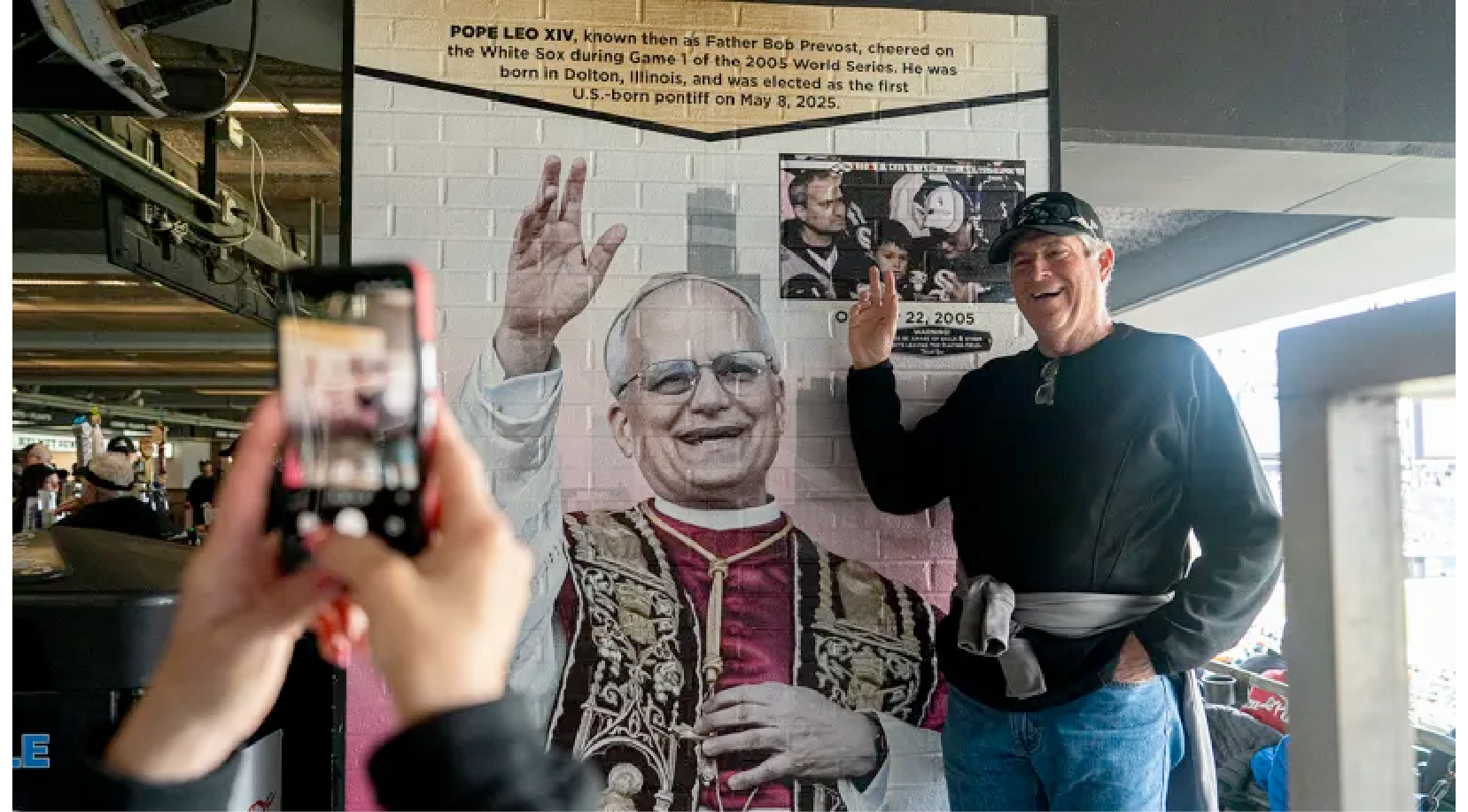
(ZENIT News / Rome, 06.20.2026).- More than a year after his election to the Chair of Peter, Pope Leo XIV continues to command broad goodwill among American Catholics, even as his relationship with U.S. political leaders has become the subject of increasing public debate.
A new survey released by the Pew Research Center indicates that 78% of American Catholics hold a favorable opinion of the first U.S.-born pope. While that figure is slightly lower than the 84% recorded during the early months of his pontificate in 2025, it still reflects remarkably strong support across a Church community that often mirrors the political polarization of American society.
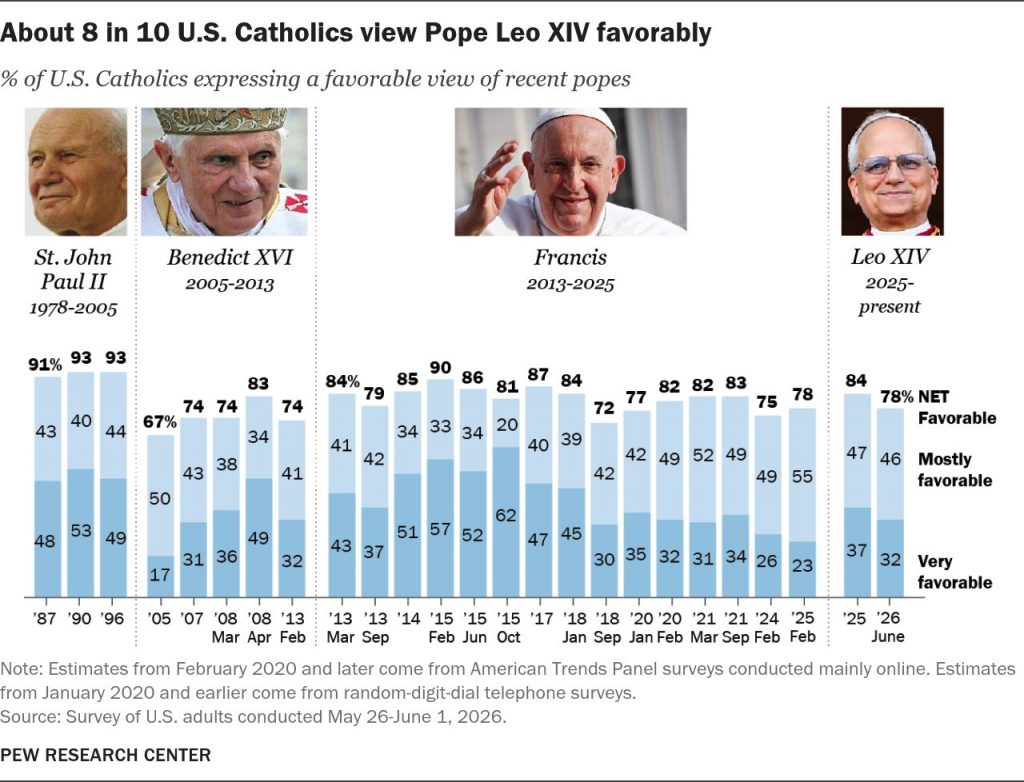
The findings suggest that Pope Leo has largely succeeded in maintaining credibility among Catholics of different backgrounds, levels of religious practice, and political affiliations. In an era when both religious and political leaders frequently struggle to unite their constituencies, such a level of approval remains notable.
The survey, conducted between May 26 and June 1 among nearly 10,000 American adults—including 1,848 Catholics—came at a particularly sensitive moment. Public tensions had recently emerged between Pope Leo and President Donald Trump, especially following disagreements over the conflict involving Iran and broader questions of international stability.
In April, the Pope strongly condemned war, warning against what he described as an “illusion of omnipotence” among political leaders. Trump responded sharply on social media, criticizing the pontiff’s approach to crime and foreign policy. Yet the Pew data suggests that many Catholics viewed the exchange through a different lens.
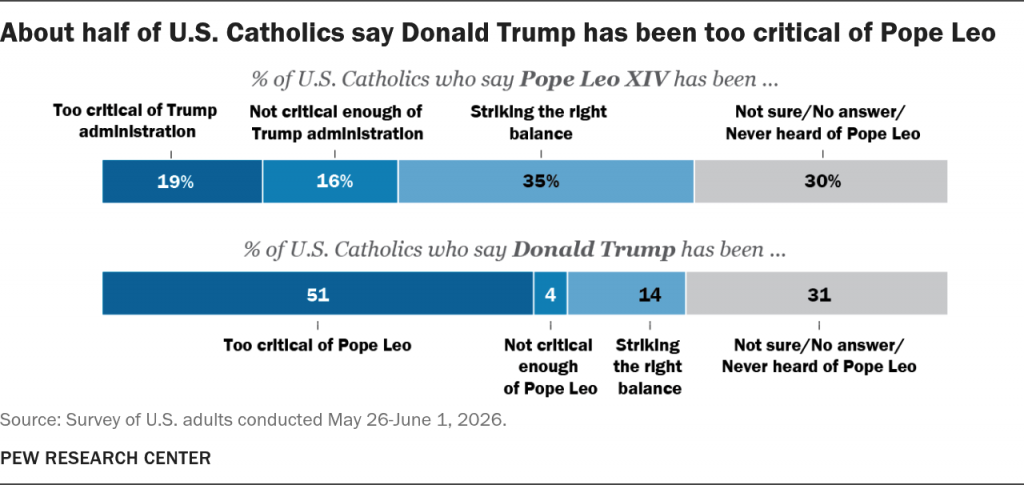
When asked whether Pope Leo had been overly critical of the Trump administration, only 19% of Catholics agreed. Sixteen percent believed the Pope had not been critical enough, while the largest group—35%—said he had struck the right balance. Nearly one-third expressed no clear opinion.
The picture changes significantly when Catholics evaluate Trump’s criticism of the Pope. A majority, 51%, believe the president has been too critical of Leo XIV, while only 4% think he has not been critical enough. Just 14% believe Trump’s approach has been appropriate.
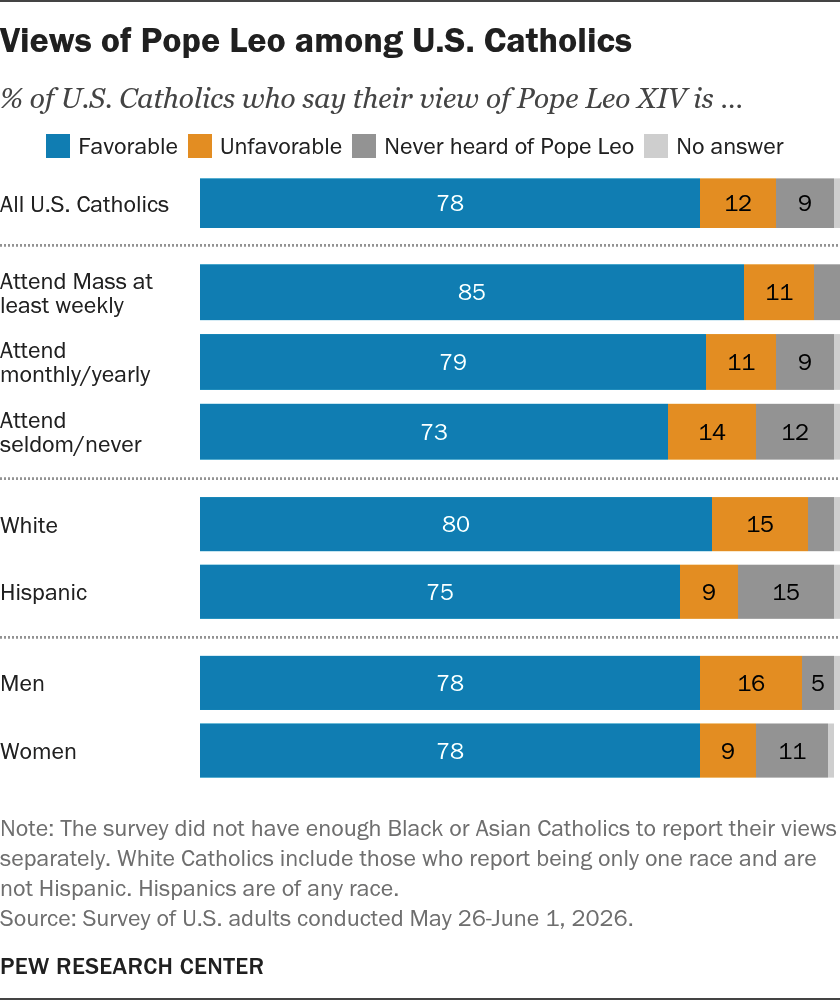
Perhaps the most striking aspect of the survey is the Pope’s ability to maintain broad support across different segments of Catholic life. Among Catholics who attend Mass at least weekly, 85% express a favorable view of Leo XIV. Approval remains high even among less-practicing Catholics, reaching 79% among those who attend occasionally and 73% among those who rarely or never attend Mass.
The results also reveal substantial support among both White and Hispanic Catholics, demonstrating that Leo’s appeal extends across some of the most important demographic groups within the American Church.
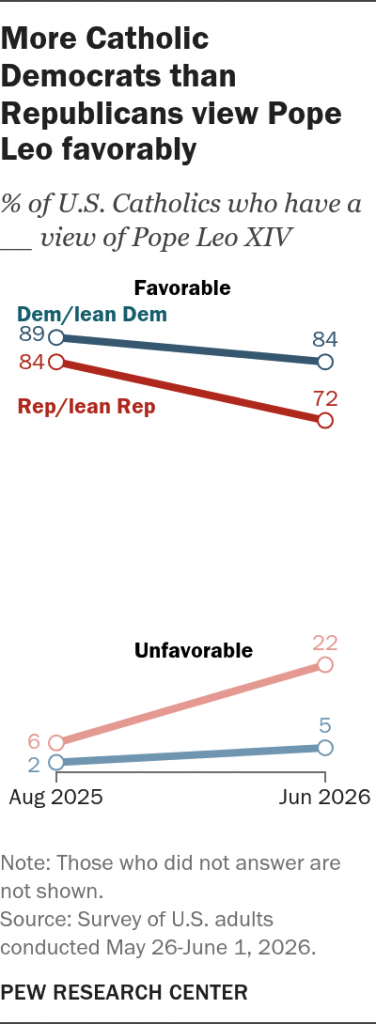
Political affiliation, however, remains a significant factor. Catholic Democrats and Democratic-leaning independents are somewhat more enthusiastic about the Pope than Republican Catholics. This pattern echoes trends observed during the later years of Pope Francis’ pontificate.
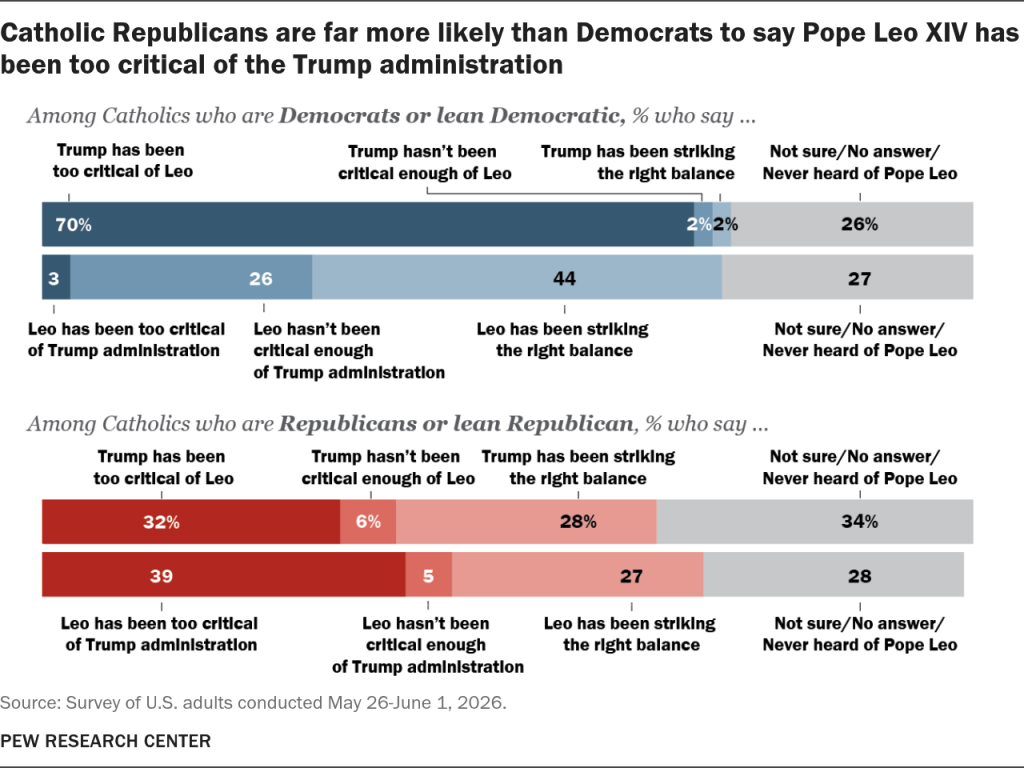
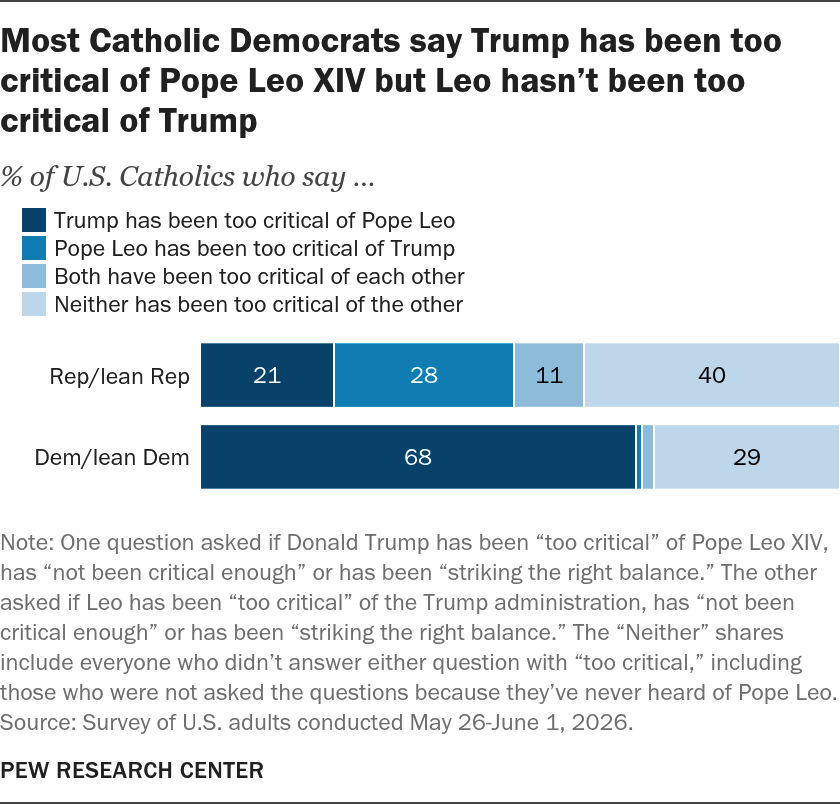
Among Catholic Democrats, sentiment is overwhelmingly favorable toward Leo XIV and distinctly critical of Trump’s attacks on him. Seventy percent believe the president has been excessively critical of the Pope, while only 3% think Leo has been too critical of Trump.
Republican Catholics present a more nuanced picture. Thirty-nine percent believe the Pope has been overly critical of the Trump administration, while 32% think Trump has gone too far in criticizing Leo. The data reveal a constituency divided not over whether they respect the Pope, but over how they interpret his engagement with political affairs.
These findings highlight an often-overlooked reality about the papacy in the United States. While media coverage frequently focuses on ideological conflict, most Catholics continue to distinguish between political disagreements and their broader perception of the Successor of Peter.
Historically, American Catholics have not always embraced papal leadership so consistently. Debates surrounding liturgy, social teaching, immigration, economic policy, and international affairs have periodically produced sharp divisions. Yet Pope Leo’s approval rating today is roughly comparable to the support enjoyed by Pope Francis during the final years of his pontificate, suggesting a degree of continuity rather than rupture.
This survey offers an important lesson. Although public disputes between Rome and Washington attract headlines, they do not necessarily determine how ordinary Catholics view the Pope. Most American Catholics appear willing to evaluate Leo XIV primarily as a spiritual leader rather than through a partisan lens.
Thank you for reading our content. If you would like to receive ZENIT’s daily e-mail news, you can subscribe for free through this link.

Publicaciones relacionadas:
 Leo XIV, China and attention to communities suffering for their faith
 Pope Leo XIV, Germany’s silent believers, and unexpected signs of a spiritual awakening opposed to the German synod
 One in three Mexican bishops will be replaced by Pope Leo XIV between 2026 and 2027
 The Middle East, the spread of war, and the position of the Pope and the Catholic Church
