

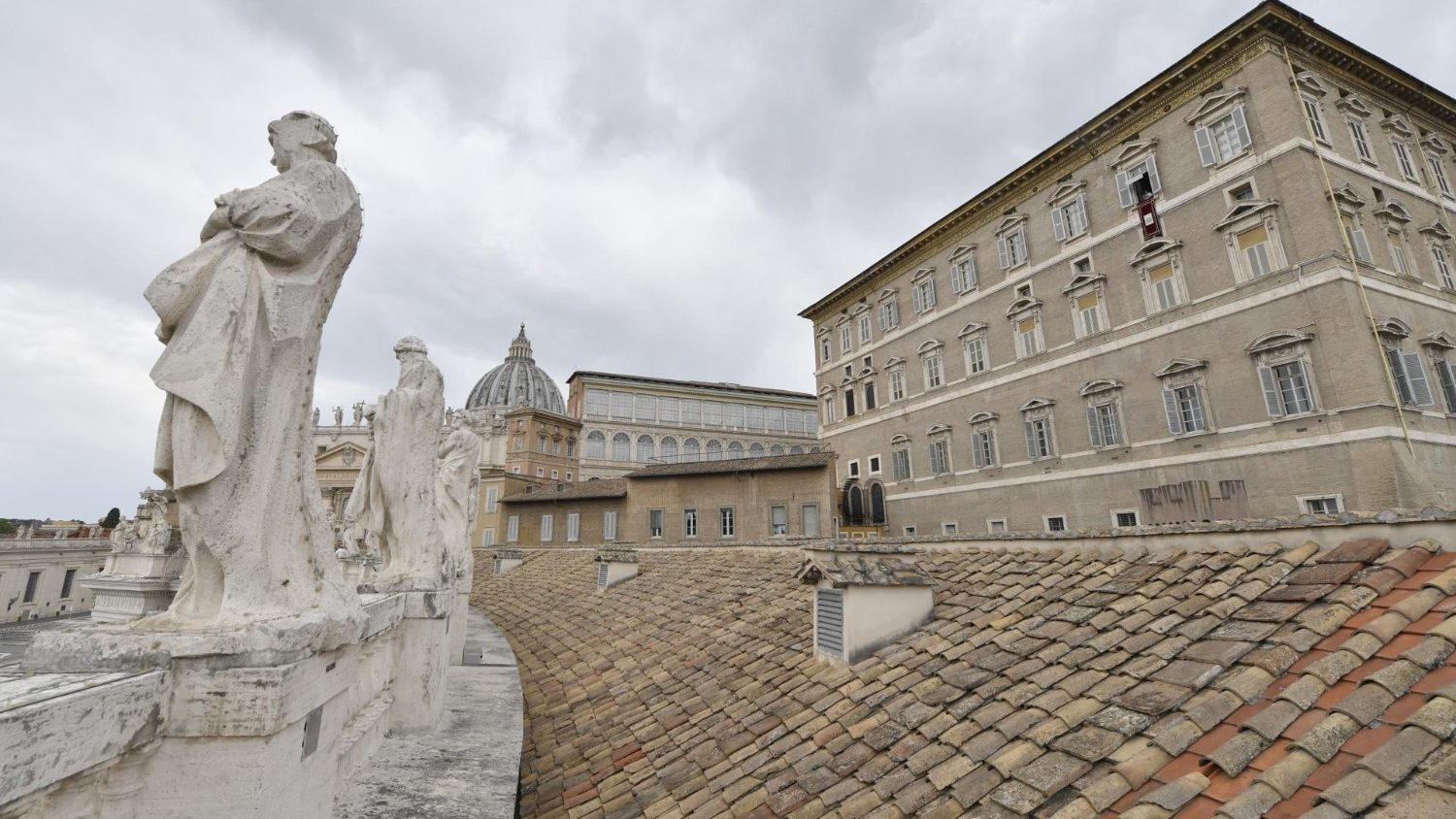
(ZENIT News / Hamburg, 08.20.2026).- A dispute over sex education in Catholic schools in northern Germany has acquired a significance far beyond Hamburg. At issue is not simply the content of a diocesan educational programme, but who ultimately defines the anthropological framework within which Catholic schools are expected to educate children: a local Church authority, or the universal teaching of the Catholic Church.
The Vatican has now intervened with a clarification that will be closely watched by Catholic educators and parents elsewhere in Germany. Responding to concerns raised by parents over the Archdiocese of Hamburg’s framework for sex education, the Dicastery for Culture and Education reaffirmed that the Church’s established position remains that set out in its 2019 document «Male and Female He Created Them.»
In a statement signed by Monsignor Matias Ambros, undersecretary of the dicastery, Rome explicitly referred back to that document rather than presenting a new teaching. The Vatican also thanked the parents for their commitment to Catholic education.
That response was welcomed by the parents’ network, but it did not settle the dispute. Varinia Arauco, a mother of three children attending a Catholic school in Hamburg and a spokesperson for the parents’ network for child protection and prevention, said that the Vatican had listened and responded. Yet the families’ next question was considerably more concrete: what does Rome’s clarification mean for the programme that Hamburg intends to implement?
The answer remains uncertain.
The diocesan framework is due to be introduced in 15 Catholic schools. Critics argue that parts of it conflict with Catholic anthropology and teaching on marriage, family and sexuality. After receiving the Vatican’s response, the parents’ network compared the Hamburg framework with «Male and Female He Created Them» and identified what it describes as 20 serious contradictions on fundamental anthropological and ethical questions.
On August 14, the group wrote to Archbishop Stefan Heße demanding the immediate withdrawal of the existing framework and asking that it be replaced by guidelines explicitly consistent with Catholic teaching and the Holy See’s educational principles. It also called for stronger protection of parental rights and children. According to the material provided, the parents requested written confirmation of the framework’s withdrawal by August 17, but had received no response by August 18. An inquiry to Archbishop Heße about the Vatican’s intervention and its consequences for the diocesan programme likewise went unanswered.
The distinction between Rome’s clarification and a direct disciplinary order is crucial. The Vatican has reaffirmed the principles contained in its 2019 document, but the material available here does not indicate that the Dicastery ordered Hamburg to suspend or withdraw its programme. Consequently, the diocesan framework has not automatically disappeared as a result of the Vatican statement.
That gap explains why the controversy continues.
At stake is also the principle of parental responsibility. Catholic education has traditionally understood parents as having the primary responsibility for the education of their children, while schools assist them rather than replace them. In the present dispute, the parents argue that this principle must have practical consequences when schools address highly sensitive questions concerning sexuality, identity, marriage and family life.
The issue is particularly sensitive because Catholic schools do not operate merely as private educational institutions carrying a religious label. Their educational mission is expected to reflect Catholic anthropology and doctrine. For parents who deliberately choose such schools because they want their children’s education to remain integrated with their faith, a perceived contradiction between diocesan teaching materials and the Church’s universal teaching is therefore more than a curricular disagreement.
It becomes a question of trust.
The Hamburg dispute also illustrates a recurring tension within the Catholic Church: the legitimate pastoral and administrative responsibility of a local bishop must operate within the wider unity of the Church and its Magisterium. Rome’s intervention does not resolve every disputed formulation in the Hamburg document, nor does the information available establish that every criticism made by the parents is correct. But the Vatican’s explicit reference to its 2019 teaching gives the families a clear point of reference from which to continue their objections.
For Arauco and her supporters, the matter is now larger than one archdiocese. She has appealed to Catholics across Germany not to remain silent, arguing that the education of children and the transmission of the Christian faith concern the whole Catholic community.
The coming weeks will therefore test whether the Vatican’s reaffirmation becomes the basis for a substantive revision in Hamburg or remains, in practice, a doctrinal clarification without immediate administrative consequences.
For Catholic parents, the difference is decisive. A statement about what the Church teaches is one thing; seeing that teaching reflected consistently in the classrooms of Catholic schools is another. The Hamburg controversy has placed that distinction squarely before both the diocesan leadership and Rome.
Thank you for reading our content. If you would like to receive ZENIT’s daily e-mail news, you can subscribe for free through this link.

Publicaciones relacionadas:
 Prefect of Dicastery for Doctrine of the Faith criticizes gender ideology in speech to German theologians
 Europe pledges aid to Nigeria in exchange for ideological colonization: Church and Islam speak out
 Vatican Limits Traditional Latin Mass in Texas Diocese Following Bishop’s Removal
 Full English Translation of the Vatican’s Response Letter Rejecting Lay People’s Homilies Requested by the German Episcopate
