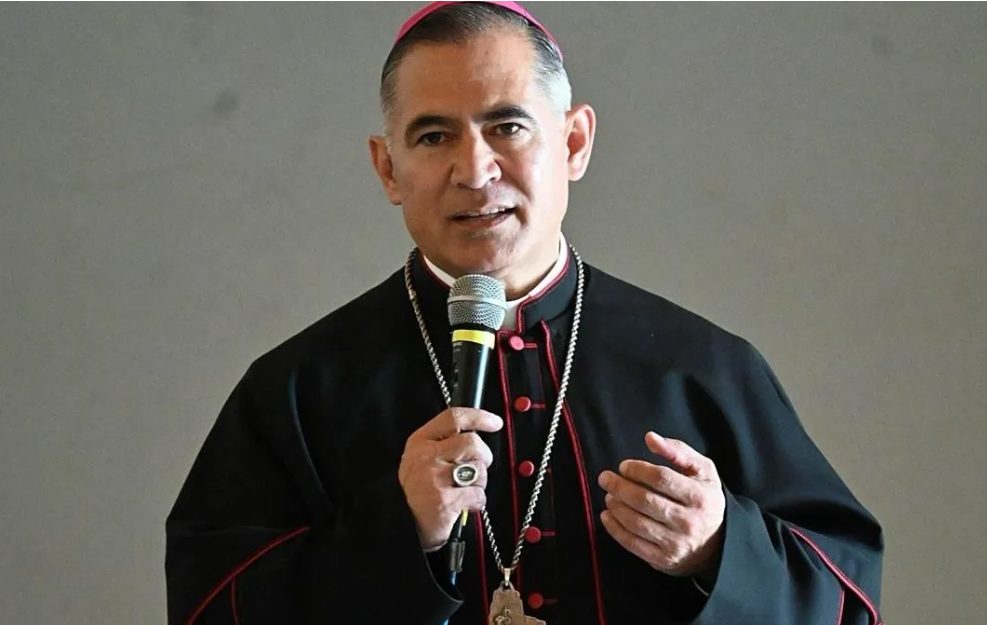
(ZENIT News / Mexico City, 08.28.2026).- The Diocese of Texcoco has drawn a firm line between lay participation and the functions reserved to ordained ministers, with Bishop Carlos Enrique Samaniego López issuing a decree intended to confront what he describes as growing confusion over who may legitimately preside over Catholic rites.
Promulgated on August 10, the measure does more than regulate who can lead a particular ceremony. It addresses a broader pastoral problem: the risk that Catholics may no longer be able to distinguish between legitimate lay ministries, the ordained priesthood and unauthorized individuals presenting themselves as religious celebrants.
Under the new provisions, laypeople who have not been instituted in the stable ministry of acolyte may not preside over celebrations of the Word, funeral rites, sacramentals or other liturgical acts proper to ordained ministers. The restriction applies not only inside diocesan churches but also when such ceremonies are attempted elsewhere.
That last point is significant because the decree responds to situations reportedly occurring outside normal parish structures. The Diocese of Texcoco expressed concern about religious ceremonies being organized in private homes, gardens, event halls and private cemeteries, sometimes involving people who present themselves as ministers despite lacking the faculties or authorization required by the Church.
The bishop’s concern is therefore not simply about liturgical aesthetics. It is also about accountability. When a person acts publicly as though he possesses an ecclesial authority that he does not have, the faithful can be left unable to determine whether what they are witnessing is an authorized Catholic celebration or something improvised outside the Church’s discipline.
Samaniego consequently directed priests serving in Texcoco, including visiting priests from other dioceses, to ensure that liturgical acts are celebrated validly and lawfully. They are specifically instructed neither to permit nor encourage illicit practices, abuses or deception, and to prevent laypeople from taking on responsibilities belonging exclusively to ordained ministers.
The decree also establishes a visible boundary. Laypeople covered by the provisions may not wear the alb or other sacred vestments reserved for the clergy, either during liturgical celebrations or outside them. The issue may appear secondary to the question of who presides, but vestments carry an institutional meaning: they communicate a person’s liturgical role to the congregation. In circumstances where unauthorized individuals are already presenting themselves as ministers, allowing them to dress in reserved sacred attire can deepen the confusion.
The Diocese of Texcoco subsequently reinforced the decree in a statement published August 21, describing its purpose as safeguarding liturgical discipline and maintaining distinct identities among the Church’s ministries. The diocese also urged Catholics to be cautious about individuals offering religious services independently and encouraged them to seek pastoral assistance through their parishes.
The distinction is particularly important in Mexico, where Catholic religious practice extends well beyond the walls of parish churches and where funerals, prayers and other devotional gatherings can take place in a variety of settings. The decree does not amount to a rejection of lay involvement in the Church. Rather, it insists that lay participation must remain within the forms and ministries recognized by ecclesial authority.
That distinction has become an international issue as well. In parts of Europe, particularly Germany, debate has intensified over the extent to which laypeople should exercise functions traditionally associated with ordained ministry. German bishops have sought authorization for laypeople to preach homilies during Mass, a request that Rome rejected. Some bishops have nevertheless indicated that they would not actively enforce the restriction in parishes where the practice had become established.
Texcoco’s approach points in the opposite direction. Instead of treating established local practice as sufficient justification, Samaniego has emphasized the bishop’s responsibility to ensure that liturgical life remains within the framework of Catholic law. His decree invokes, among other provisions, Canon 387 concerning the diocesan bishop’s pastoral responsibilities and Canon 838 concerning the regulation of liturgical worship.
The underlying issue reaches beyond a dispute about who may stand at the front of a church. Catholic worship depends upon recognizable ministries, defined responsibilities and the authenticity of the sacraments. Lay Catholics have an important and sometimes indispensable role in the life of the Church, but that does not mean every ecclesial function is interchangeable.
For Samaniego, preserving that distinction is ultimately a matter of protecting the faithful. His warning about so-called celebrants operating without authorization is framed in terms of possible abuse, confusion and fraud. His appeal is straightforward: Catholics should remain vigilant and turn to their parishes rather than entrusting religious rites to individuals whose ecclesial status cannot be established.
The bishop’s own appointment also places the decision within a relatively new chapter of his ministry. Born in Mexico City on October 8, 1973, Samaniego was ordained a priest in 2001 for the Archdiocese of Tlalnepantla and was appointed an auxiliary bishop of Mexico City by Pope Francis in 2019. Pope Leo XIV appointed him bishop of Texcoco in August 2025, succeeding Bishop Juan Manuel Mancilla Sánchez.
His August decree thus offers an early indication of how he intends to exercise episcopal responsibility in Texcoco: not by reducing the participation of the laity, but by insisting that participation should not erase the distinction between the baptized faithful and the ordained ministry. In a Church increasingly conscious of the need for both lay engagement and institutional accountability, that boundary is likely to remain an important point of discussion far beyond Mexico.
Thank you for reading our content. If you would like to receive ZENIT’s daily e-mail news, you can subscribe for free through this link.