

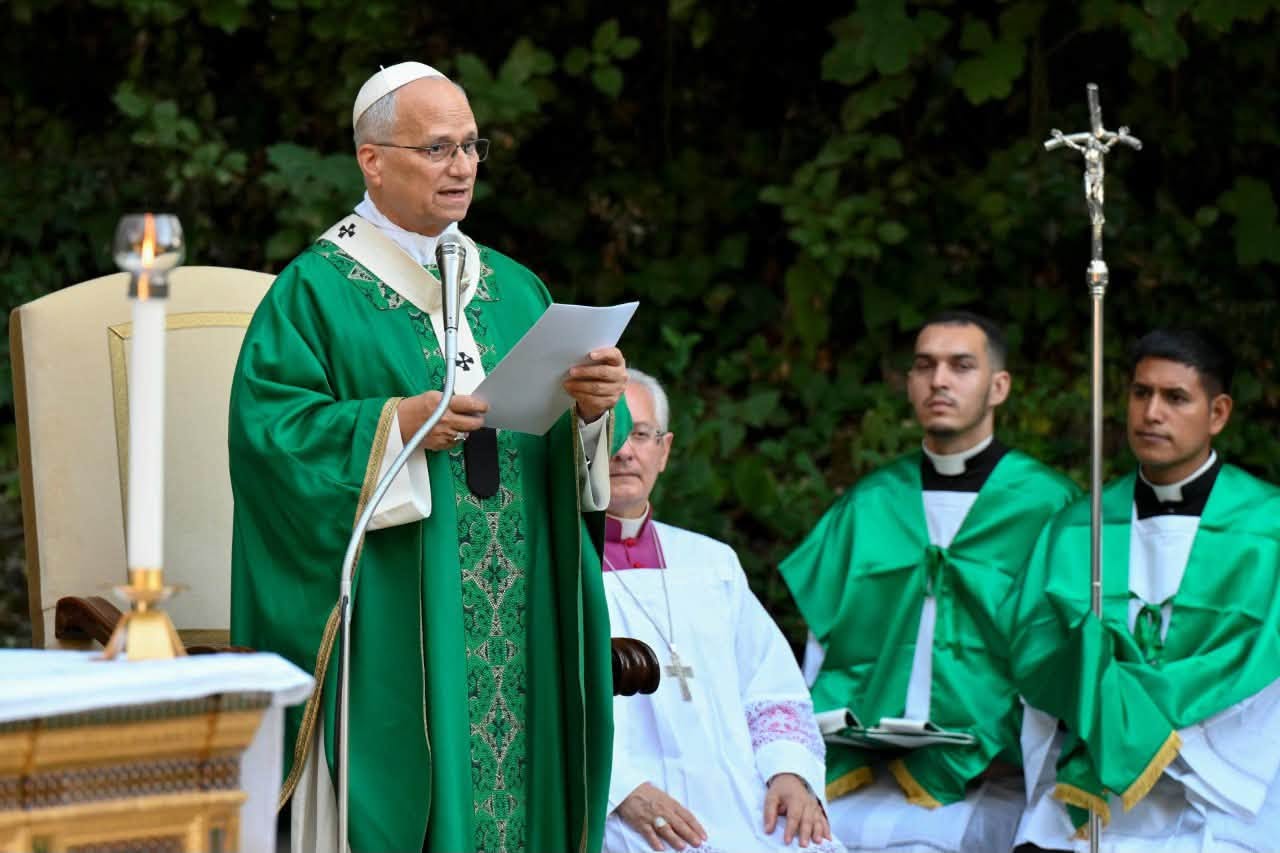
(ZENIT News / Rome, 09.02.2026).- The Catholic Church’s ecological teaching has taken a significant step forward with a new document that argues environmental destruction cannot be understood merely as a scientific, political or economic problem. It is also a matter of sin.
In a text published on September 2, the International Theological Commission calls for what it describes as an authentic ecological conversion and proposes a more precise expression for the moral reality involved: a “sin against creation and against the Creator.”
The formulation deliberately goes beyond the more familiar expression “ecological sin.” For the commission, the problem is not simply that human beings damage forests, water, air or biodiversity. Environmental abuse also represents a failure to recognize the divine meaning of creation and humanity’s responsibility within it.
The document, Caring for Our Common Home: A Responsible and Fraternal Response to the Triune God, runs to more than 29,000 words and was developed by a subcommission that worked between 2022 and 2025. It was approved by a majority of the commission’s members in July and authorized for publication by Cardinal Víctor Manuel Fernández, prefect of the Dicastery for the Doctrine of the Faith, after being presented to Pope Leo XIV.
Its central argument is clear: the ecological crisis is ultimately inseparable from the crisis of the human person.
The commission traces the present situation to what it calls a “triple transformation” in humanity’s relationship with nature. Over the centuries, the perception of the natural world as God’s creation weakened; an increasingly exploitative form of anthropocentrism emerged; and environmental degradation eventually developed into a crisis of planetary dimensions.
But the document refuses to respond by replacing one extreme with another.
It rejects what it calls “predatory anthropocentrism,” the idea that human beings are absolute masters entitled to exploit everything around them. At the same time, it rejects radical biocentrism and forms of deep ecology that effectively dissolve humanity’s distinctive place within creation.
Instead, the commission proposes what Pope Francis called a “situated anthropocentrism,” an expression also taken up by Pope Leo XIV.
Human beings, in this vision, are neither tyrants over creation nor insignificant intruders within it. They are administrators and servants — entrusted with a world that ultimately belongs to God.
That distinction gives the document a distinctly Christian approach to environmental responsibility.
The biblical command to exercise dominion over the earth, it argues, cannot be interpreted as a license for destruction. Humanity is called to cultivate, protect and responsibly use creation. Exploitation, pollution and the destruction of biodiversity are therefore not simply technical failures. They reveal a disorder in humanity’s relationships with God, with other people and with the created world.
That disorder is especially serious because its consequences are not shared equally.
The commission points to alarming environmental deterioration, including biodiversity loss, air and water pollution, and the ecological devastation caused by armed conflict. It stresses that poorer nations and communities often suffer the gravest consequences despite having contributed least to the damage.
For this reason, care for creation cannot be separated from justice for the poor.
The “cry of the earth,” the document argues, is closely linked to the cry of people whose livelihoods, homes and resources are threatened by environmental degradation. The ecological question is therefore also a question of solidarity between nations, generations and social groups.
The document’s theological foundation begins with the Trinity.
Creation, it says, bears not only a divine origin but a Trinitarian imprint. Drawing on St. Augustine, St. Hildegard of Bingen, St. Bonaventure and St. Thomas Aquinas, the commission presents the created world as capable of directing the human mind toward its Creator.
St. Hildegard’s description of creation as a kind of “second Scripture” helps explain the approach. Nature is not itself divine, but neither is it spiritually meaningless. It is creation — a reality that points beyond itself.
The commission also enters into dialogue with modern science and philosophy, including contemporary cosmology. Science can legitimately investigate how the universe developed, the document explains, but the Christian doctrine of creation addresses a different question: why there is something rather than nothing, and why the universe depends upon a Creator for its existence.
The result is an attempt to avoid the false choice between scientific knowledge and religious faith.
The document’s practical proposals are equally notable.
It calls for changes not only in technology and public policy but in personal and cultural habits. Scientific and technical solutions remain necessary, particularly in production, consumption, transportation and energy use. Yet the commission insists that technology alone cannot solve a crisis rooted partly in human desires, priorities and values.
Ecological conversion, therefore, must also involve conversion of the heart.
Among the principles highlighted are responsible consumption, moderation, asceticism, fasting, reverence for creation and a more balanced rhythm between work and rest.
The document gives particular importance to the biblical principle of the Sabbath. Rest is not presented merely as a practical interruption of work but as a challenge to the modern impulse to possess, dominate and consume without limits.
The same logic appears in the commission’s reflections on the Benedictine tradition of prayer and work. A healthy Christian approach to the world, it suggests, requires limits.
That is why one of the document’s most striking observations concerns consumption: purchasing decisions are not morally neutral.
The way individuals and societies consume resources expresses a vision of what human beings believe they need and what they believe they are entitled to take.
The commission’s response is not a rejection of legitimate human development or the responsible use of natural resources. Rather, it calls for necessity and moderation instead of indiscriminate exploitation.
The Eucharist occupies a particularly important place in this vision.
The document describes it as an “ecological school” because it teaches believers to receive creation not simply as raw material for consumption but as a gift. From that sacramental perspective can emerge, the commission argues, a positive and active relationship with nature — one based neither on exploitation nor on fear.
Its ecological vision is also explicitly connected with the sanctity of human life.
The document insists that human life possesses an unconditional and inalienable dignity that states must protect and promote. It links this principle with the rejection of war, which not only destroys human lives but can accelerate environmental devastation.
This is an important reminder of the document’s broader theological balance. Care for the environment does not mean reducing humanity to one species among many or treating nature as more valuable than the human person. Nor does human dignity justify treating the rest of creation as disposable.
Christian stewardship requires defending both human life and the world entrusted to humanity.
The commission also invokes the universal destination of goods, emphasizing that private property is not an absolute right detached from responsibility toward others and future generations.
Its proposed “jubilee logic” is one of fraternity, solidarity, gratitude and humility — a rejection of the impulse to accumulate everything without limits.
The final dimension of the document looks beyond Christianity itself.
The commission recognizes elements of environmental responsibility found in Judaism, Islam, Hinduism, Buddhism, Confucianism, African religions and Indigenous religious traditions from the Americas and Oceania. It calls for interreligious cooperation wherever believers can work together to protect creation and promote the flourishing of life.
The message is ambitious because the crisis it addresses is ambitious.
The International Theological Commission is not proposing that environmental policy be replaced by religious language. Its argument is more demanding: scientific solutions, political decisions and economic reforms are necessary, but they will remain incomplete if humanity refuses to confront the moral and spiritual causes of destructive behavior.
That is why the proposed expression — “sin against creation and against the Creator” — matters.
It identifies environmental destruction not as an abstract crime committed against an impersonal planet, but as a rupture of relationships: with God, with other human beings and with the world humanity has received as a gift.
More than a decade after Laudato Si’, the Church’s theological reflection is therefore moving toward an even sharper conclusion.
The ecological crisis is not only about what humanity is doing to the earth.
It is also about what humanity is becoming while doing it.
The document ends, however, not with despair but with hope. Ecological conversion, it argues, is possible because Christian faith does not regard history as trapped in irreversible decline.
The God who created the world has not abandoned it.
And the responsibility to care for the common home begins with recognizing a truth that modern societies often forget: creation may be entrusted to humanity, but it does not ultimately belong to humanity.
Thank you for reading our content. If you would like to receive ZENIT’s daily e-mail news, you can subscribe for free through this link.

Publicaciones relacionadas:
 Prefect of the Doctrine of the Faith, Christian Unity and Damaged Ecumenism
 Dicastery for the Doctrine of the Faith Clarifies the Term “Vulnerable Adult” in Cases of Abuse and Its Competence in This Regard
 3 ways to rekindle the gift of priesthood explained by Pope Francis
 Pope Leo Appoints New President of the Pontifical Academy for Life
