

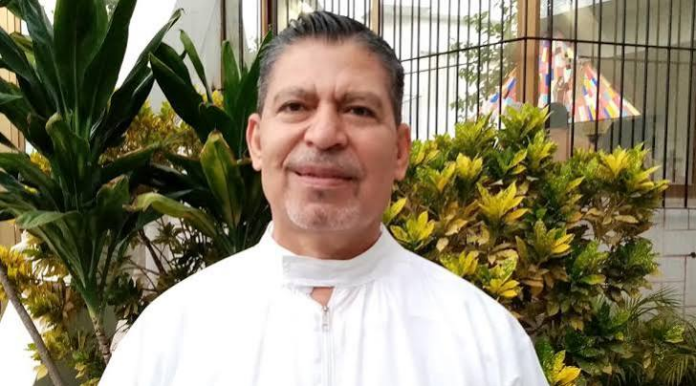
(ZENIT News / Culiacán, 11.031.2026).- The return of a Catholic priest to his parish after three days in captivity has brought renewed attention to the climate of violence in the Mexican state of Sinaloa, where disappearances, killings and other serious crimes continue to unsettle communities. The Diocese of Culiacán has confirmed that Father Clemente Morales Topete was abducted, beaten, burned and repeatedly threatened with death before managing to return home.
Morales, pastor of the parish of Jesus Christ Risen, was seized on October 24 by a group of unidentified individuals and taken to an undisclosed location. According to a circular letter issued on November 1 by Bishop Jesús José Herrera Quiñónez, his captors demanded information that the priest did not possess. Unable to provide what they wanted, he remained in their custody for three days, during which he suffered physical assaults, serious burns to different parts of his body and repeated death threats.
A search notice was issued by the Sinaloa government following his disappearance. On October 27, the priest unexpectedly returned to the parish residence, driving his own vehicle. Members of his community, fellow priests, medical personnel and authorities were there to assist him. He was subsequently taken to a clinic for specialized treatment.
Although his injuries did not pose an immediate threat to his life, the diocese described the burns as serious and said that he had also sustained multiple blows and suffered psychological and emotional trauma. His condition is improving, but his recovery will require time, medical care and sustained support.
Bishop Herrera Quiñónez has condemned the attack in unequivocal terms, rejecting not only the physical violence inflicted on the priest but also the psychological torture, arbitrary detention and enforced disappearance that continue to devastate families across the region. No religious mission, personal circumstance or other consideration, he insisted, can justify threats or violence against a human being.
The bishop was careful, however, not to speculate about the motives behind the abduction or identify those responsible. The investigation remains open, and the diocese has said it will not release information that could compromise the authorities’ work. Its stated commitment, the bishop emphasized, is to establish the truth rather than fuel rumors or accuse anyone without evidence.
The fact that Morales returned alive must not obscure the fate of those who remain missing, Herrera Quiñónez warned, expressing solidarity with their families and with all victims of violence in Sinaloa. After more than two years of insecurity in the state, he said, disappearances, unlawful detentions, violent deaths and femicides continue to affect ordinary people. The measures taken so far have not restored the peace that the population needs.
The bishop called on municipal, state and federal authorities to maintain coordinated efforts, clarify what happened, identify those responsible and bring them before justice. Public statements and statistical reports, he argued, cannot substitute for demonstrable progress in preventing violence, locating missing people, prosecuting crimes and assisting victims. What citizens need is not simply reassurance, but tangible results and a restoration of trust.
He also addressed those responsible for violence directly, urging them to stop inflicting suffering on innocent people and to recognize the value of every human life. The diocese said it would also pray for those who commit evil, while making clear that forgiveness and the possibility of change do not diminish the need for justice.
The bishop reserved a further appeal for the wider community. He urged residents, institutions and the media to avoid premature judgments, mockery and online commentary that could deepen the suffering of victims and their relatives. Social networks can provide solidarity, he observed, but they can also spread misinformation and turn personal opinions into supposed facts through repetition.
Herrera Quiñónez stressed that no one should be threatened or attacked for fulfilling a religious mission, while calling on civil society, families, religious communities and public institutions to work together for peace, justice and respect for life.
Recalling remarks made by the apostolic nuncio to Mexico, Archbishop Joseph Spiteri, during a pastoral visit to Culiacán, the bishop returned to an idea expressed by Pope Francis: social peace is an artisanal undertaking. It requires patient, collective work rather than slogans.
Thank you for reading our content. If you would like to receive ZENIT’s daily e-mail news, you can subscribe for free through this link.

Publicaciones relacionadas:
 Colombian President Harasses Catholic Priest Live on Air for Speaking Out Against Communism
 U.S.: Sexual abuse of individuals under the pastoral care of a clergy member is classified as a specific crime in the Civil Penal Code
 Are There False Accusations of Abuse Against Priests? An Italian Case Ends with the Accuser’s Conviction
 A new Swiss law requires priests and monks to perform military service based on the premise that, in modern society, the clergy is no longer essential
