

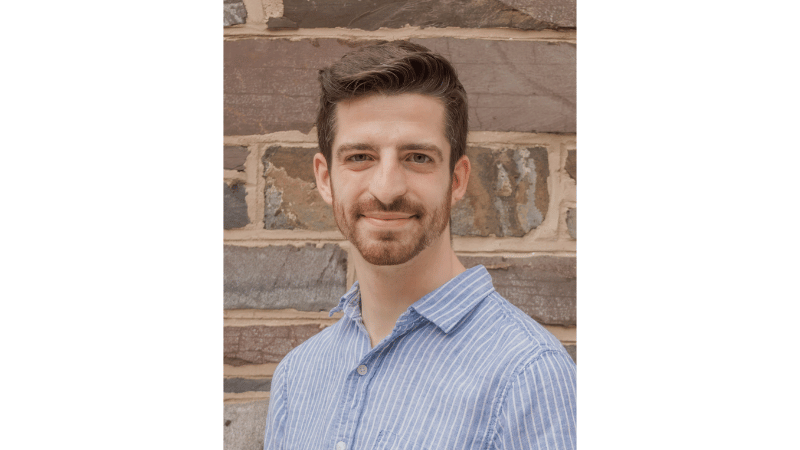
(ZENIT News / Guadalajara, 12.10.2026).- A Princeton University philosophy doctoral student recently announced his conversion to Catholicism, though he told EWTN News that for years he had struggled with what he viewed as uncertainties regarding the faith, including the problem of evil and the «problem of divine hiddenness.»
McKay is the second Princeton Philosophy student to convert to Catholicism this year. Earlier in the summer, Joe Schmid announced his own return to the faith, after years of running an agnostic-themed Philosophy channel on YouTube.
Schmid is perhaps one of the most surprising cases of 2026. He holds a PhD in Philosophy from Princeton and was known for years for his YouTube channel, «Majesty of Reason,» which focused on the Philosophy of Religion, Metaphysics, Epistemology, and arguments regarding the existence of God.
What is striking is that, for years, he maintained an agnostic stance and even criticized arguments in favor of God’s existence. On August 21, 2026, he announced his return to Catholicism.
His intellectual journey was gradual: first, he regained the conviction that God exists; later, he came to accept Christianity; and finally, the Catholic Church. Among the arguments he cites are those concerning contingency and miracles, specifically, those miracles he views as confirming Catholic doctrines.
The McKay Case
«I was never an atheist, and I don’t think I was ever an agnostic,» McKay told EWTN News. However, he experienced deep uncertainty during high school and university, doubts partly stemming from what he described as «difficulties regarding the reliability and interpretation of the Bible.»
Although he never completely abandoned his belief in God, «what firmly convinced me of theism were, first, the design arguments based on the fine-tuning of physics for the emergence of life and, second, the empirical evidence of contemporary Christian miracles,» he said. «Arguments based on conscience, moral knowledge, and natural beauty also played an important role,» he added.
It is perhaps not surprising that a Philosophy scholar was drawn to the Church, in part, through academic inquiry. Schmid told EWTN News shortly after his conversion, for example, that «arguments from contingency» helped convince him of God’s existence.
Meanwhile, McKay cited the «evidence for Catholic miracles justifying his conversion,» as a factor that specifically led him to the Catholic Church.
Those miracles «presuppose distinctive teachings of the Catholic Church,» he noted, and the evidence for them, he argued, is as good as, or better than, the evidence for the «more generic Christian miracles» in which McKay already believed.
He told EWTN News that, for the sake of consistency, he felt he had to either accept all Catholic miracles or reject them all. «And the evidence was too compelling for rejecting them all to be reasonable!» he asserted.
According to him, the evidence for those miracles was not the only thing that convinced him of the truth of the Catholic faith, but «it motivated me to investigate the history and theology of the Church more closely,» and the evidence he found in favor of Catholicism was «very solid.»
I urge those considering converting to Catholicism for the first time, or those thinking about returning to it, to begin by investigating these miracles.
In a recent interview with Catholic YouTube apologist Cameron Bertuzzi, McKay argued that «if you already accept that Christianity is true, the inference to Catholicism is irresistible.»
He admitted that his decision to join the Church caused «anguish» for his close friends and family, given his Protestant background.
But «I believe that Catholicism — if one is well-informed, if one truly considers all the evidence — I believe Catholicism becomes basically irresistible,» he said.
Speaking to EWTN News, he also urged potential converts and those returning to the faith to: «Pray!»
«Praying the Rosary was especially helpful to me when I was discerning my Catholic faith,» he said. «Just ask God to help you seek the truth sincerely and to provide the means for you to discover it. Those who seek Christ fervently and in prayer will find Him.»
«I am going to ask God to make Himself known to everyone who reads this article!» he added.
Other Cases of Young Philosophers
Joe Schmid and Noah McKay are young Philosophy researchers who came to Catholicism after seriously examining arguments against the existence of God, Christianity, and the Church.
At the same time, in Spain, Ernesto Castro, another young philosopher, arrived at Catholicism via a different path.
He is a Spanish philosopher, professor of Aesthetics, and popularizer of Philosophy, born in 1990. He also became known for his Philosophy videos on YouTube and his association with leftist cultural movements.
In 2026, he publicly announced that he had been baptized, confirmed, and had received the Eucharist for the first time, following a conversion process that included about a year and a half of catechesis.
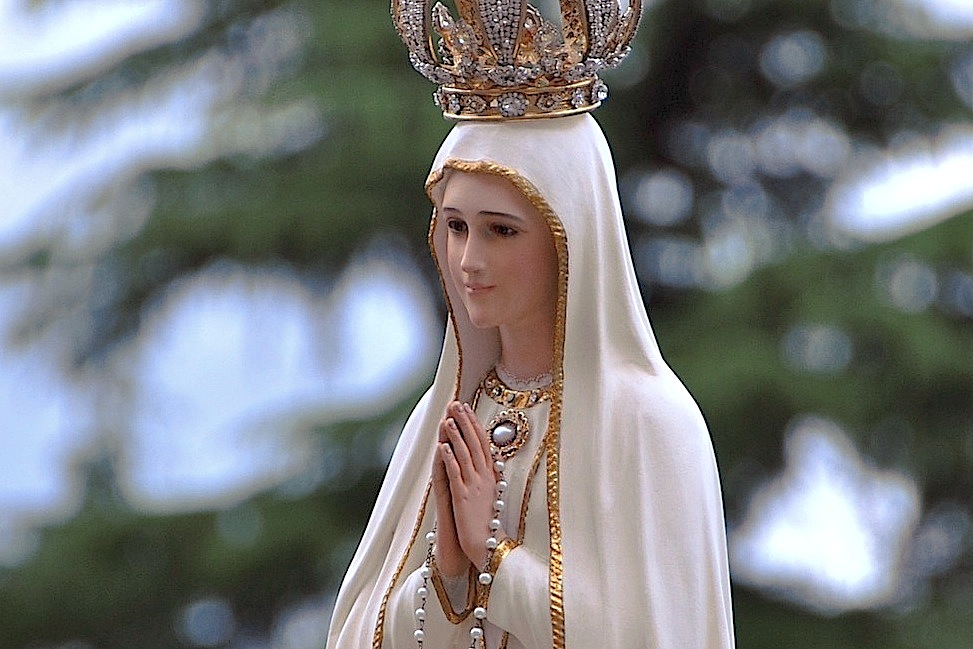
His testimony is particularly interesting because he describes his conversion as something he was not initially seeking. He recounted that, after going through a deep personal crisis, he visited the Montserrat monastery accompanied by the woman who is now his wife. Before the image of the Virgin, he experienced, by his own account, a profound peace that played a decisive role in his journey toward faith.
There is a common thread in these three cases: an intellectual search for truth, which ultimately opens up the question of God and the ultimate meaning of existence.
Saint Augustine himself describes his own journey as a passionate search. In the Confessions, he acknowledges that he sought outside of God what he could only find in Him: «You made us for Yourself, O Lord, and our heart is restless until it rests in You.»
What is extraordinary is that Augustine, while describing in his works a search that had begun with his senses, his intellect, and his desires, ultimately discovers that God was closer to him than he was to himself.
Thus, the phenomenon of these contemporary philosophers can be viewed not merely as «intellectuals who convert,» but as individuals who pursue a philosophical question to its ultimate consequences.
One might conclude that some of these new converts did not abandon Philosophy upon finding faith; rather, they came to discover that the philosophical quest for truth could lead them toward a reality that Philosophy alone could not fully exhaust: God.

Publicaciones relacionadas:
 Ukraine: Catholic diocese provides life-saving aid to people traumatized by the war
 Martha, the Young African Girl Who Gave Her Testimony Before the Pope: She Fled Her Village Because of Terrorism, but Has Kept Her Faith
 Miracle in Lisbon’s WYD: 16-Year-Old Girl Recovers Her Sight after Praying the Rosary with the Pope
 This is the priest (and the story) in which a miracle was worked that will make Pier Giorgio Frassati a saint
