


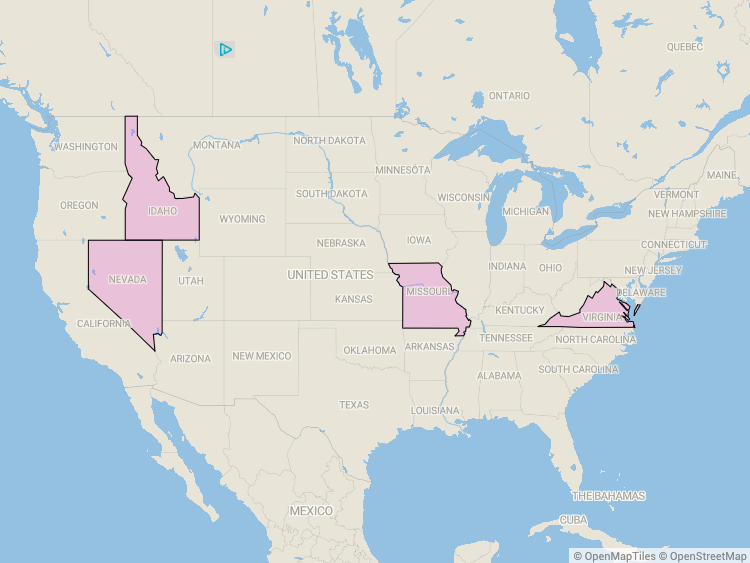
(ZENIT News / Rome, 10.19.2026).- Abortion remains a defining cause for many American religious leaders, but its political prominence appears to be waning among voters as the November 2026 midterm elections approach. With ballot measures in Idaho, Missouri, Nevada and Virginia, churches and faith-based organizations are mobilizing across the country. Yet new polling suggests that the issue no longer commands the same electoral attention it did four years ago, even as the legal and moral disputes surrounding unborn life become more complex.
An October survey by the Pew Research Center found that 46% of registered voters considered abortion “very important” when deciding how to vote, down from 56% during the 2022 midterm elections. The economy, at 84%, and the future of American democracy, at 73%, ranked substantially higher.
Religious differences remain pronounced. White evangelical Protestants were the most likely to regard abortion as a very important voting issue, at 58%. The figure was 42% among Catholics, 40% among Black Protestants, 31% among white non-evangelical Protestants and 45% among voters with no religious affiliation.
The decline in electoral urgency does not necessarily mean that convictions have weakened. As University of Miami political scientist Anne Whitesell has observed, voters can focus on only a limited number of issues, even when some remain matters of deep personal concern. For religious pro-life advocates, however, the political challenge is increasingly clear: sustaining public attention after the Supreme Court overturned Roe v. Wade in 2022.
The post-Roe landscape has changed the debate
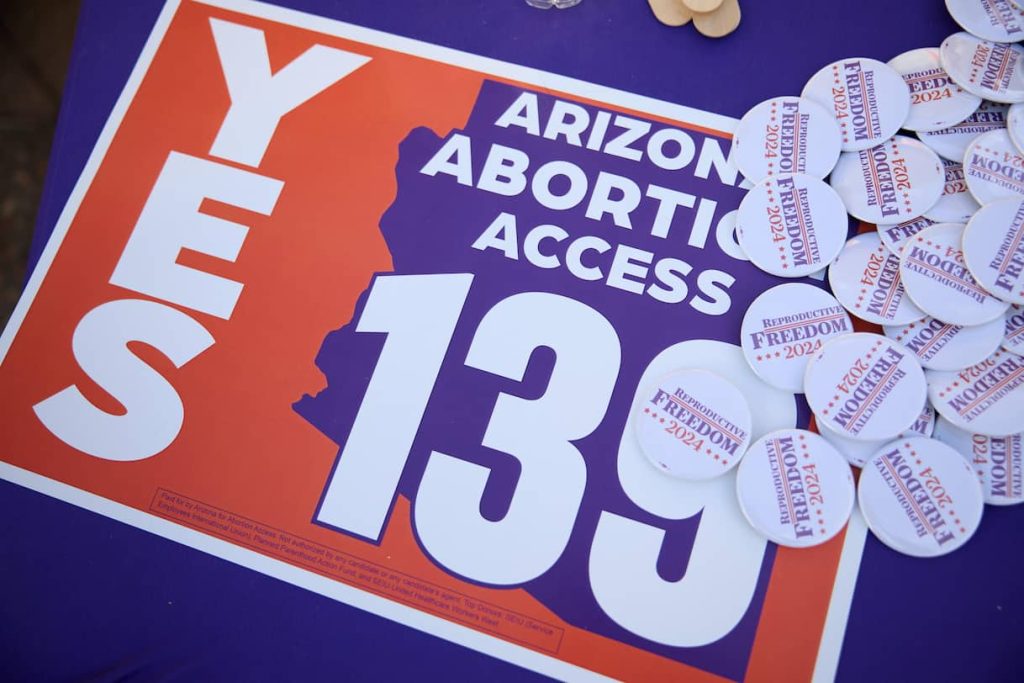
The reversal of Roe did not end the abortion controversy. Instead, it transferred much of the struggle to state legislatures, courts and ballot boxes. National abortion numbers have risen slightly in the period following the ruling, according to data cited by the health policy research organization KFF. Medication abortion now accounts for the majority of abortions in the United States, making access harder to restrict in practice even in states with extensive prohibitions.
This shift has become a central concern for pro-life organizations. Hayden Sledge, chief of staff of the March for Life, has identified medication abortion as a major focus for the movement. During October, Catholic bishops across the United States have encouraged prayer against abortions involving medication and urged priests to address the issue in their preaching.
The four state contests illustrate how different the political and legal questions have become. Some voters are being asked to preserve or expand constitutional protections for abortion; others are being asked to reverse changes approved only two years earlier.
Four states, four distinct struggles
In Missouri, voters are considering a measure that would repeal the constitutional right to reproductive freedom approved in 2024. That amendment covers abortion, birth control and obstetric care. Under the proposed replacement, abortion would generally be prohibited, with exceptions for medical emergencies, fetal anomalies, rape and incest; the latter two exceptions would apply only through 12 weeks of pregnancy. The proposal would also prohibit gender-transition surgeries, hormones and puberty blockers for minors.
Public opinion has shifted during the campaign. A February 2026 SLU/YouGov poll found that 50% of Missouri residents supported restoring the abortion ban triggered by the Supreme Court’s Dobbs decision. By August, support had fallen to 43%. Peter Northcott of National Right to Life has described the contest as an important test of whether voters will reverse what pro-life advocates regard as an expansive abortion measure adopted in 2024.
Students for Life of America, led by activist Kristan Hawkins, has concentrated campaign efforts in Missouri, including plans for more than 50 volunteers to canvass in St. Charles. Four Catholic bishops in the state, including St. Louis Archbishop Mitchell Rozanski, have urged prayer and fasting for the measure’s success. Catholics for Choice, by contrast, argues that abortion access and reproductive justice are compatible with religious faith and accuses religious opponents of seeking to overturn the electorate’s earlier decision.
Idaho presents a different picture. The state prohibits almost all abortions from conception, but a citizen-led initiative would legalize abortion until fetal viability, after which restrictions could apply except in medical emergencies. A November 2025 survey by Boise State University’s School of Public Service found that roughly six in ten residents supported the proposal.
The Church of Jesus Christ of Latter-day Saints has actively opposed the initiative. It donated $1 million to the political action committee Too Extreme for Idaho and urged members to vote against the measure. Idaho Chooses Life has also supplied churches with materials for campaigning against it. The religious mobilization reflects a broader pattern: the abortion debate increasingly draws together groups that may disagree on many other questions but share opposition to legal abortion.
In Nevada, the vote concerns a constitutional amendment protecting abortion rights up to fetal viability, a standard already reflected in state law. The measure must pass in two separate elections to become part of the constitution; voters approved it once in 2024, with 63% support. Archbishop George Leo Thomas of Las Vegas has directed priests to read a letter urging opposition to the amendment, arguing that Catholic teaching calls for the protection of unborn children. Latter-day Saint leaders have likewise spoken against the proposal.
Virginia’s ballot presents a particularly broad dispute over the meaning of constitutional rights. Abortion is currently legal through 26 weeks and six days of pregnancy. Question 1 would add a right to reproductive freedom to the state constitution, while Question 2 would remove existing constitutional language defining marriage as the union of one man and one woman.
A 2025 poll by Virginia Commonwealth University found that 62% of Virginians supported the abortion-rights amendment. Nevertheless, opposition has been organized across religious communities. Arlington Bishop Michael Burbidge has urged Catholics to reject both measures, asking priests to read a letter during Mass and promoting a campaign encouraging prayer, fasting and voting against them. Nearly 400 Virginia pastors had signed an open letter opposing the two questions by October 14. Virginia is also the only state with an abortion-related ballot measure to have hosted a March for Life in its capital this year.
Faith is not a single voting bloc
The campaigns reveal why religious identity alone cannot predict how Americans vote on abortion. Pew data cited in the reports show that 74% of white evangelical Protestants believe abortion should be illegal in most or all cases. Among Catholics, however, 57% say it should be legal in most or all cases, despite the Catholic Church’s clear opposition to abortion as a grave moral wrong. Separate surveys have found support for legal abortion in most or all cases among 56% of American Muslims and 75% of American Jews.
These figures expose a persistent divide between institutional religious teaching and the views of some people who identify with a faith tradition. They also demonstrate that both sides are seeking to frame their political positions in religious terms, rather than leaving faith-based arguments exclusively to one camp.
For Catholic leaders, the ballot campaigns are not simply exercises in partisan politics. Their stated concern is the moral status of unborn human life and the responsibility of public policy to protect the vulnerable. At the same time, debates over constitutional rights, reproductive health and religious liberty raise questions about how competing convictions are accommodated in a pluralistic society. Religious participation in public life should not be dismissed merely because it is religious; nor does a faith-based claim automatically settle a contested public-policy question.
Thank you for reading our content. If you would like to receive ZENIT’s daily e-mail news, you can subscribe for free through this link.