

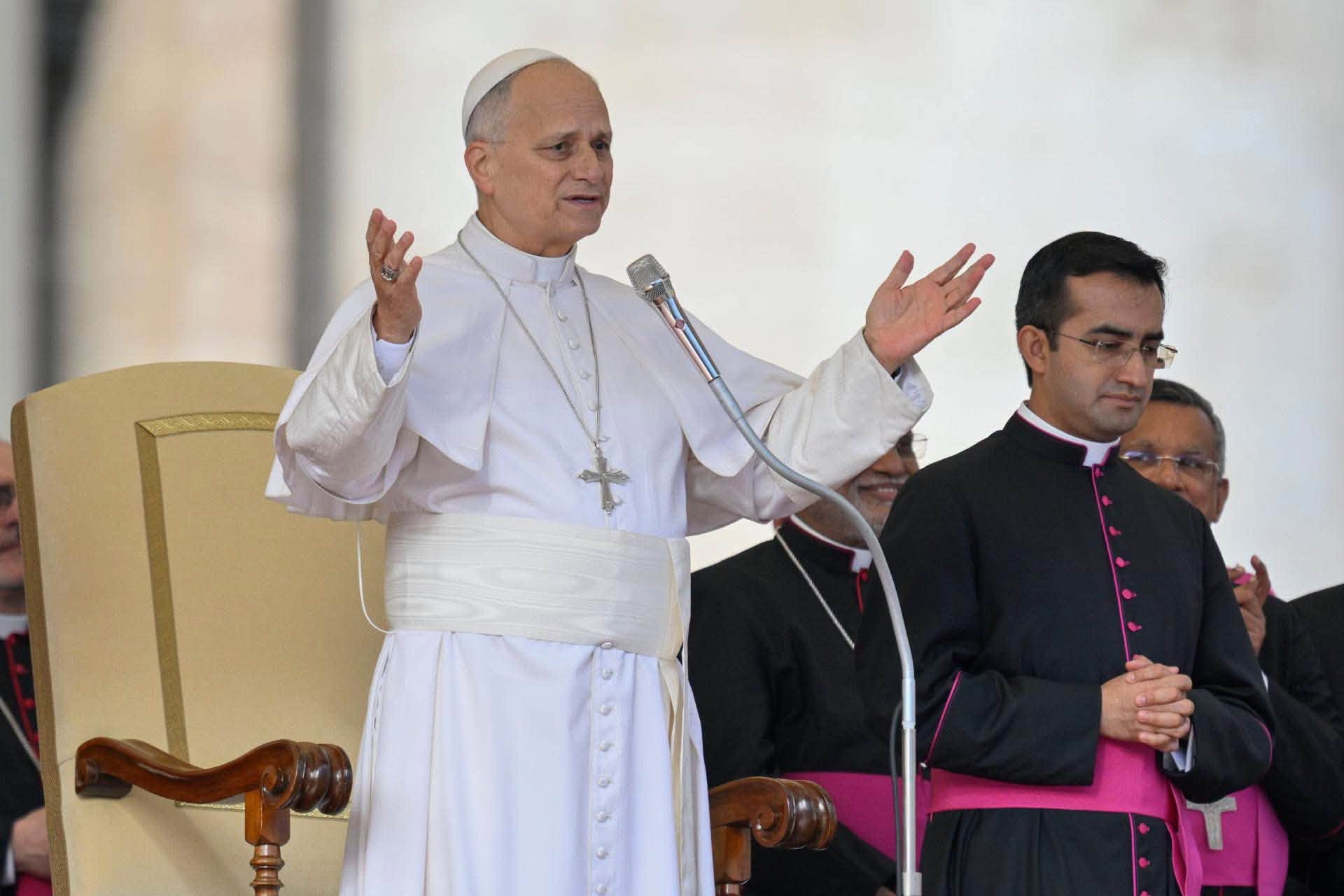
(ZENIT News / Rome, 10.27.2026).- Pope Leo XIV will use his forthcoming apostolic journey to Uruguay, Argentina and Peru to express solidarity with victims of clerical abuse, the Vatican announced on October 27, placing the protection and healing of survivors among the concerns accompanying his first major visit to these three Latin American countries.
The trip, scheduled for November 6–17, will include encounters intended to reaffirm the Church’s responsibility toward those whose lives have been damaged by abuse committed by members of the clergy. According to the Holy See Press Office, the Pope wants not only to stand alongside survivors but also to help develop accessible paths toward healing and ensure that the Church becomes a safe and spiritually healthy environment in which the Gospel can be lived and proclaimed.
The announcement gives a practical dimension to commitments Leo has made in recent months during private meetings with survivors. In Madrid on June 8, he received members of Proyecto Repara, an initiative of the local archdiocese, at the apostolic nunciature. He expressed his closeness, together with that of the wider Church, and promised that the proposals presented by the victims would inform further efforts to make ecclesial communities safer places where wounds could find comfort and healing.
A second meeting, held in Lourdes on September 27, brought the Pope together with seven survivors for approximately two hours. Five participants subsequently described the encounter, reporting that Leo stressed the need for the utmost vigilance and determination in pursuing truth, justice, forgiveness and reparation. He also highlighted the importance of establishing a culture of prevention and protection against abuse.
These conversations have helped define the Pope’s approach: listening to survivors must lead to concrete measures, rather than remain a gesture of sympathy. Forgiveness, within this framework, cannot substitute for truth or justice, while the promise of healing does not remove the Church’s obligation to confront wrongdoing and prevent further harm.
Speaking to journalists aboard the flight from Metz to Rome, Leo underlined why abuse within the Church carries particular consequences. Sexual abuse, he said, is fundamentally a human problem, but when it occurs within a religious institution, it can profoundly damage—and sometimes destroy—the faith of those affected. The Church therefore has a particular responsibility to accompany survivors and help them find a path toward recovery.
For victims, the damage can extend beyond the original crime to include the loss of trust in priests, religious communities and the faith itself. That reality makes safeguarding not merely an institutional or legal concern, but also a pastoral responsibility. A Church that proclaims the dignity of every person must demonstrate that commitment through accountability, protection and sustained care for those who have suffered.
Leo’s meetings abroad have been preceded by several encounters at the Vatican. He has received representatives of Ending Clergy Abuse, an international association advocating for survivors, fifteen Belgian survivors and David Ryan, an Irish man who was abused as a child at a boarding school in Dublin.
The Pope is also continuing a practice established by his predecessors. Benedict XVI met victims during visits to the United States in 2008 and later in the United Kingdom, Australia and Germany. Pope Francis likewise held encounters with survivors during trips to Chile, Ireland, Portugal and Belgium.
Madrid marked Leo’s first meeting with abuse survivors during a foreign trip, but the forthcoming Latin American journey offers another opportunity to translate his stated commitments into action. The Vatican has presented the encounters as part of a wider effort to ensure that those who have suffered are heard and that their experiences contribute to institutional change.
Thank you for reading our content. If you would like to receive ZENIT’s daily e-mail news, you can subscribe for free through this link.

Publicaciones relacionadas:
 New chapter in the protection of minors: Pope Leo XIV receives six victims of clerical abuse at the Vatican
 Leo XIV emphasizes the need for safe spaces within the Church to experience love with Jesus Christ
 Here’s How the Meeting Between the Pope and 7 Abuse Victims in Lourdes Unfolded (As Told by the Victims Themselves)
 Pope Francis expels founder of Sodalitium Christianae Vitae from Sodalitium
