

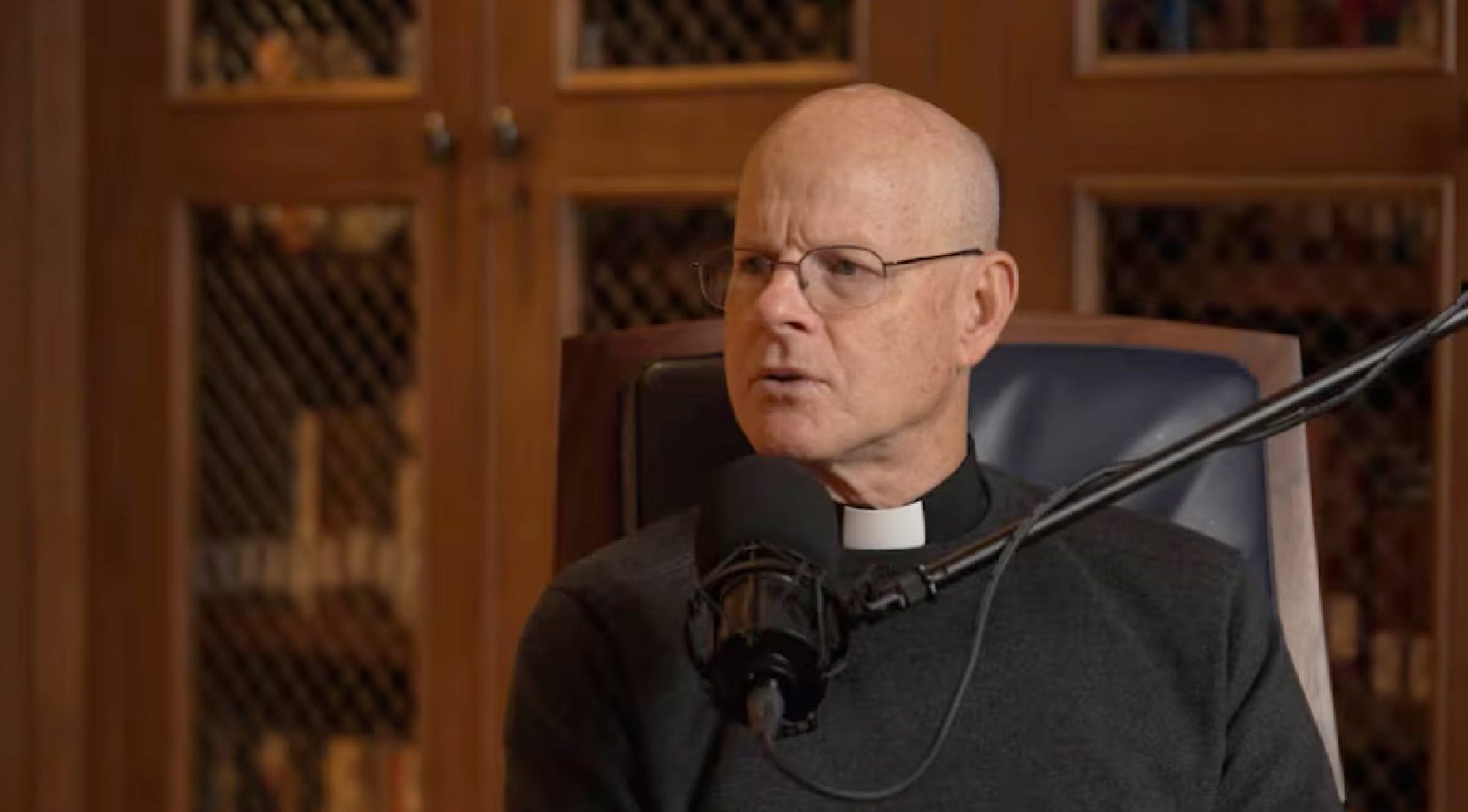
(ZENIT News / Washington, 06.04.2026).- A controversy has led to an unusually public disciplinary decision within the Catholic Church. On June 3, Cardinal Robert McElroy, Archbishop of Washington, removed Monsignor Stephen Rossetti from his role as archdiocesan exorcist after the priest publicly suggested that many reported UFO sightings could be manifestations of demonic activity.
The decision was accompanied by a second measure of considerable significance: the Archdiocese of Washington also severed its institutional ties with the St. Michael Center for Spiritual Renewal, the Washington-based ministry directed by Rossetti and known internationally for its work in spiritual healing, formation programs, and assistance to clergy and laity.
The dispute arose after Rossetti published a video in late May addressing renewed public interest in extraterrestrial life and unidentified aerial phenomena. In that presentation, the priest argued that while the existence of intelligent life elsewhere in the universe cannot be excluded in principle, he personally believed that many, perhaps most, UFO reports were better understood as manifestations of demonic activity. He suggested that demons could produce phenomena beyond ordinary human capabilities and that deceptive appearances have long been part of their traditional modus operandi.
Those remarks triggered a swift response from the archbishop. In a statement announcing the decision, Cardinal McElroy said that Rossetti’s comments linking UFOs to demonic presence, together with aspects of the center’s recent use of social media, seriously undermined accurate Catholic teaching regarding the devil, demons, and the ministry of exorcism.
The case highlights an important distinction often overlooked in public discussions of exorcism. The Catholic Church firmly teaches the existence of Satan and demonic powers, and it maintains an official rite of exorcism. At the same time, the Church generally requires prudence when interpreting extraordinary phenomena. Catholic doctrine does not identify UFO reports with demonic activity, nor does it provide an official teaching on extraterrestrial life. Historically, theologians have regarded the possibility of life beyond Earth as a legitimate subject of scientific and philosophical inquiry rather than a matter settled by doctrine.
Rossetti, one of the most recognizable exorcists in the English-speaking Catholic world, has built a substantial following through books, conferences, podcasts, and social media. A trained psychologist as well as a priest, he has frequently spoken about spiritual warfare and the growing public fascination with exorcism. His online presence alone reaches a vast audience, including more than 148,000 followers on Instagram.
Following his removal, Rossetti issued a conciliatory response. He expressed sadness over the archdiocese’s decision and asked forgiveness for any failure to remain faithful to the Church’s magisterial teaching, specifically referencing the video concerning “aliens and the demonic.” He reaffirmed his commitment to ecclesial obedience and thanked the Archdiocese of Washington for supporting his ministry during the nineteen years he served as an exorcist there.
Notably, Rossetti did not engage in a public confrontation with Church authorities. Instead, he emphasized his desire to remain faithful to the Church and encouraged others to do the same, repeating a phrase he has often used in his ministry: remaining in the “Barque of Peter.”
The St. Michael Center has indicated that it intends to continue its work elsewhere despite the end of its relationship with the archdiocese. Meanwhile, the video that sparked the controversy was removed from public view shortly after the disciplinary measures were announced.
The episode illustrates a broader challenge facing the Church in the digital age. Priests and religious figures can now reach audiences of hundreds of thousands with a single online post. As a result, questions that once circulated in niche circles—ranging from exorcism and spiritual warfare to extraterrestrial life—can quickly become matters of ecclesial governance. That Church authorities are increasingly attentive not only to what is taught, but also to how speculative ideas are presented when they risk being perceived as official Catholic doctrine.
The debate is less about UFOs themselves than about the limits of theological speculation. The Church permits discussion of mysteries that lie beyond current scientific knowledge, but it also insists on a careful distinction between personal theories and authoritative teaching. In Washington, that distinction became the decisive issue.
Thank you for reading our content. If you would like to receive ZENIT’s daily e-mail news, you can subscribe for free through this link.

Publicaciones relacionadas:
 Gender Ideology Comes to Christmas Cribs… Including with the Help of a Priest
 Controversial Antwerp bishop expands on his idea of ordaining married men and shares his thoughts on women
 Pope Francis donates third ambulance to Ukrainian hospital
 Bishops in Kenya launch brand of wine for Mass: the existing brand lost its sacred character
