

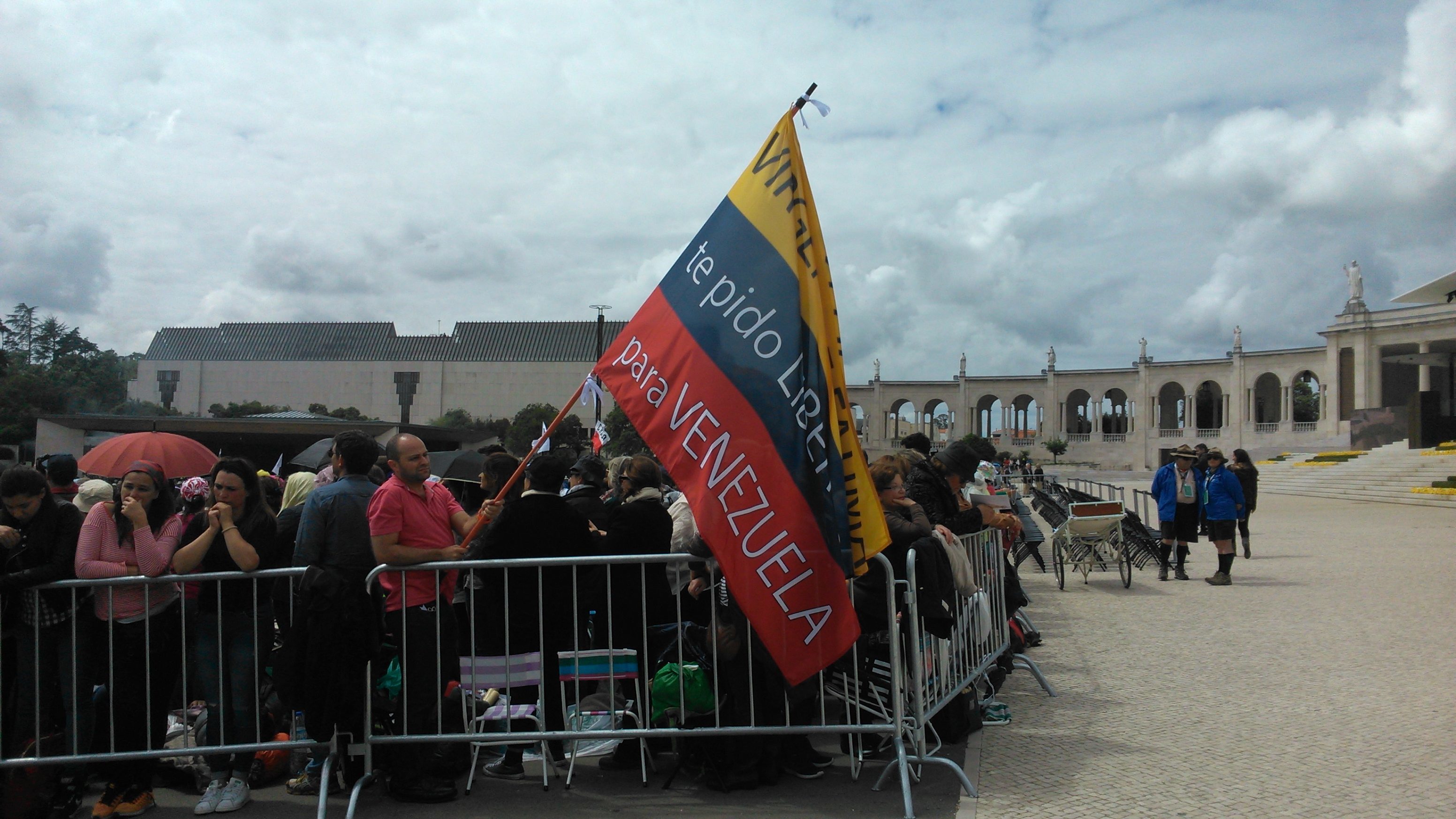
(ZENIT News / Caracas, 01.22.2026) – The Venezuelan Episcopal Conference issued a message on January 3, following Maduro’s arrest by North American forces, urging serenity and rejecting violence.
“In light of the events our country is experiencing today, let us ask God to grant all Venezuelans faith, wisdom, and strength. The Episcopate expressed solidarity with the injured and the families of the deceased. It also called for preserving national unity and paving the way for reconciliation: «We call upon the People of God to live more intensely the hope and fervent prayer for peace in our hearts and in society. We reject all forms of violence.”
The prelates called on those who lead the country to make decisions guided by the common good and that «our hands be opened for encounter and mutual support.»
Archbishop Jesús González de Zárate, President of the Venezuelan Episcopal Conference and Archbishop of Valencia, Venezuela, was interviewed by the National Catholic Reporter, a conversation published on January 13. In the interview, he stated that «these have been tense days, lived in a tense calm and with mixed feelings.»
Businesses are reopening, schools are resuming classes, and Archbishop González notes that many Venezuelans remain shaken by the violence and its consequences. «The greatest impact is on their emotional state: anxiety, fear.»
Regarding the role of the Church, the Archbishop explained that its activity is evident in the attendance of the faithful at Sunday Masses, which had become almost routine. There were precautions imposed by government-mandated measures, but the life of the Church has been conducted with calm and prudence.
And he clarified that «the Catholic Church has long been one of the most trusted institutions in Venezuela amidst political polarization and economic collapse. Clergy throughout the country report that parishioners seek tranquility and clarity, in the face of events that raise profound questions about legality, sovereignty, and the rule of law.»
Moreover, he stated that «the Catholic Church continues to be a primary moral reference point for the majority of the Venezuelan people. Its role in public life is characterized as pastoral, not political, a fact underscored by recent polls. We, the Venezuelan Bishops, have worked diligently to maintain unity among ourselves and within our dioceses, respecting the plurality of perspectives and striving for inclusion.»
The complexity of the situation calls for calm interventions, according to the Archbishop: «The fact that initiatives to find a solution with everyone’s participation have been thwarted for so long has generated, in vast sectors of the population, great distrust and even discredit toward anything that smacks of dialogue and negotiation.»
Regarding the material needs of Venezuelan Catholics, the prelate suggested: «The economic reality of Venezuela is one of widespread impoverishment, which means that the vast majority of the population can barely cover basic needs such as food, healthcare, and transportation. We live in a fragmented economy where wages have been decimated and are subject to high rates of inflation.»
And he reported that the Church’s action in response to needs is constant: «With the help of international institutions, but above all thanks to the generosity and training of a broad network of social volunteers, we carry out various programs to address child malnutrition, pregnancy and breastfeeding, as well as situations of environmental risk. Food assistance programs have also been developed at the local level (community kitchens, soup kitchens for children and the elderly), along with various health services, legal defense for displaced and vulnerable people, and formation in the Social Doctrine of the Church.»
He also noted that the Church’s positions have been questioned by the authorities and other political sectors. There were moments of tension that affected many communities.
And he added: «Trust in institutions will only be restored through concrete actions. This is the great challenge. A change of personnel is not enough. There must be a true transformation of the values that underpin the institutions of the country’s social, political, economic, and cultural life. Here, issues such as truth, justice, responsibility, honesty in administration, and the fair distribution of resources belonging to all Venezuelans are very important.»
The Archbishop considered that the responsibility for meeting the expectations of Venezuelans lies with the entire nation. External aid is necessary, but it will be ineffective without the participation of the population in addressing their needs and problems. The Church promotes action throughout Venezuela to overcome any difficulty.

Publicaciones relacionadas:
 England and Wales Catholic Bishops release statement on gender, criticize gender ideology and sex-change operations
 Research Shows That Only 35% of American Catholics Have a Favourable Opinion About Biden
 British police arrest Catholic priest for publicly supporting the Palestinian cause
 The 7th shrine dedicated to Mary, mother of persecuted Christians, will open in Iraq
