

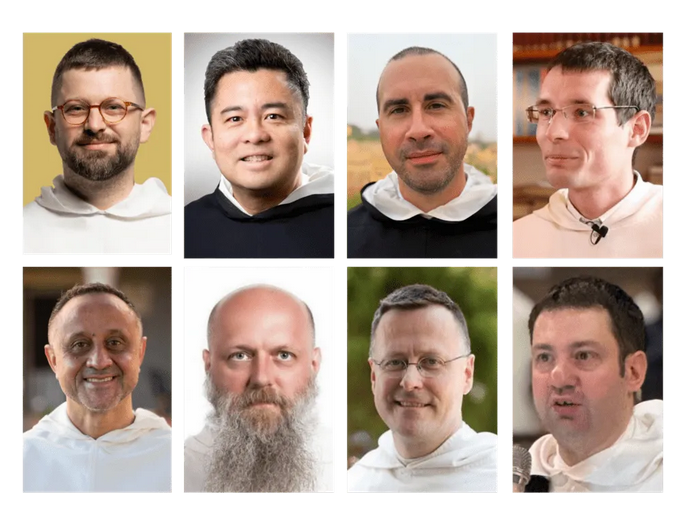
(ZENIT News / Rome, 10.07.2026).- Brother Gerard Francisco Timoner III, OP, Master of the Order, has appointed eight friars to a Study Group on Artificial Intelligence and Emerging Technologies, carrying forward a mandate of the General Chapter of Kraków in 2025. The group will examine how these technologies affect consecrated life, preaching and the institutions of the Order.
In the letter of appointment, the Master named Brother Dominik Jarczewski, OP, as chair. The appointment responds to the General Chapter’s call for reflection on the challenges and opportunities of emerging technologies, with attention to the Dominican mission to preach the truth, offer ethical guidance and uphold the dignity of the human person called to live the life of grace.
Brother Nicanor Austriaco, OP, Brother Salvatore Di Fazio, OP, Brother Ghislain-Marie Grange, OP, Brother Rodrigo Hidalgo Torres, OP, Brother Łukasz Mścisławski, OP, Brother Anselm Ramelow, OP, and Brother Gabriele Scardocci, OP, will serve as members of the study group alongside Br. Dominik. The group is asked to collaborate with the Socius for the Apostolic Life and the other Socii and offices of the Curia concerned with their work.
The study group will examine artificial intelligence’s implications for preaching, including discernment and truthfulness when information and images can be generated or manipulated. In his encyclical letter Magnifica Humanitas, a reference for the group’s work, Pope Leo XIV writes, “Our first task is neither to demonize nor idolize technological tools, but to utilize them on the basis of a fundamental principle, namely that truth is a common good and not the property of those with power or influence.” Members will explore theological, philosophical and ethical implications for consecrated life.
The study group’s mandate extends to houses of study, formation programs and libraries. Members will offer guidance on using new technologies responsibly and fruitfully in intellectual formation while preserving personal study, lectio and disputatio, disciplines integral to the Dominican tradition.
The group will also propose guidelines, or points for further legislation, concerning artificial intelligence in governance, administration and communications. This reflection will encompass every level of the Order, from the General Curia to individual communities.
Its pastoral task includes preparing ethical guidance that friars can share with the faithful. Particular concerns include human dignity, the nature of human labour and the ordering of technology towards the common good.
Collaboration will bring the group into contact with the Order’s universities, study centres and other competent bodies, as well as relevant Dicasteries of the Holy See where useful. Members are also asked to engage friars undertaking initiatives, including an artificial intelligence research tool at the Institut dominicain d’études orientales in Cairo designed to promote dialogue and counter extremist narratives.
In naming the group, the Master expressed his hopes for their mandate, saying, “I am confident that this Study Group, grounded in the Order’s long tradition of putting reason at the service of faith, will help us discern with wisdom and courage how best to live our charism of preaching in this new technological age, always safeguarding the dignity of the human person called to live the life of grace.”
Thank you for reading our content. If you would like to receive ZENIT’s daily e-mail news, you can subscribe for free through this link.

Publicaciones relacionadas:
 Order of Malta speaks out regarding the appointment of a Jesuit cardinal as the cardinal patron of the Order
 Opus Dei and Pope’s Modification of Canon Law Numbers: How Did It Get to This Point ?
 Valentina Alazraki Named President of International Vatican Journalists’ Association
 The Global Alliance is launched: an international platform for research and action on integral ecology, spearheaded by the Catholic Church
