(ZENIT News / Rome, 09.19.2026).- A Vatican hospital is earning international recognition not only for the sophistication of the medicine it practices, but for the way it is extending that expertise far beyond Rome.
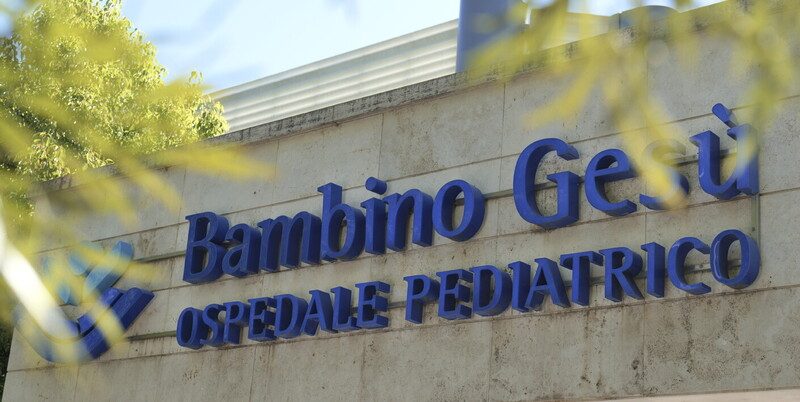
The Bambino Gesù Children’s Hospital, owned by the Holy See, has risen to fourth place worldwide in the 2027 Newsweek–Statista ranking of specialized pediatric hospitals, moving up two positions from the previous edition and retaining its position as the leading pediatric hospital in Europe. It is the only Italian institution among the world’s top 25 in pediatrics. The ranking assessed around 800 institutions in 35 countries before selecting 250 hospitals for the final list.
The result is significant because the ranking is not based simply on technological capacity. Professional reputation accounts for 85 percent of the score, drawing on assessments by thousands of doctors, healthcare professionals and hospital directors in more than 30 countries. Quality certifications and accreditations represent another 10 percent, while the remaining 5 percent measures the use of patient-reported outcome programs—systems designed to capture how patients themselves experience recovery and quality of life.
The Bambino Gesù also received particular recognition for two areas within pediatrics: oncology, already highlighted in the previous edition, and neonatology, newly identified among its standout specialties. Its maximum three-ribbon assessment for patient-reported outcomes points to another dimension of its model: listening to patients and families is treated as part of medical quality rather than as an accessory to it.
For President Tiziano Onesti, however, the international ranking ultimately has meaning only if excellence translates into better care. Families entrust the hospital with their children at moments of profound vulnerability, he noted, making the combination of treatment, research, training, innovation and attention to the person inseparable from its mission. The hospital, he said, intends to turn scientific progress into better and more accessible opportunities for children.
That principle is now being applied on a much broader geographical scale.
On September 16, the Bambino Gesù renewed for another four years its framework cooperation agreement with the Italo-Latin American Institute, deepening a partnership that has existed for almost two decades and was relaunched through an agreement in 2020. The objective is not simply to treat children who reach Rome, but to strengthen pediatric expertise where children already live: through professional training, clinical and scientific exchange, technical assistance and the development of durable healthcare networks in Latin America.
The distinction matters. International medical cooperation can become little more than the temporary export of specialists or equipment. The model being pursued here places greater emphasis on transferring knowledge and building local capacity, so that hospitals and professionals can continue providing specialized care after an individual project has ended.
There are already concrete examples. Since 2020, programs have included advanced training in epilepsy surgery in Paraguay; emergency assistance during the COVID-19 crisis in Paraguay, El Salvador and Ecuador; pediatric cardiac surgery training in El Salvador and Ecuador; epilepsy surgery training in Panama; and a multidisciplinary program in Sullana, Peru, covering infectious diseases, hematology-oncology, neonatology, intensive care, general surgery and neonatal surgery.
The cooperation is also moving upstream, toward prevention. A Spanish-language educational program focuses on the first 1,000 days of a child’s life, a period identified in the program as crucial for physical, cognitive and emotional development and for the prevention of disease later in life. The initiative is aimed not only at healthcare professionals but also at families and teachers, with educational material being made available through the Bambino Gesù MedTraining distance-learning platform. A major conference and workshop on the subject were held in Panama in June 2026.
The next phase will extend into child neuropsychiatry. In autumn 2026, a training program combining online learning with sessions at the Rome hospital is scheduled to involve professionals from Argentina, Bolivia and Chile, with particular attention to the prevention and management of suicide risk among children.
This combination of advanced treatment, prevention and education gives the Vatican hospital’s international activity a distinctive logic. The ambition is not merely to make the Bambino Gesù an outstanding destination for complex pediatric cases, but to multiply its expertise through the professionals, families and institutions with which it collaborates.
The renewed agreement therefore places a Vatican institution in a role that reaches well beyond the boundaries of its Roman campus. Its latest international ranking measures where the hospital stands among the world’s leading pediatric centers; its expanding Latin American partnerships offer another measure of what it intends to do with that expertise.
As Onesti put it, the challenges facing children’s healthcare cannot be addressed by one institution alone. The wager behind the new cooperation is that medicine becomes more durable when excellence is shared—and that protecting the health and development of children means investing not only in today’s patients, but in the capacity of entire communities to care for the next generation.
Thank you for reading our content. If you would like to receive ZENIT’s daily e-mail news, you can subscribe for free through this link.